Kurt Cobain And The Soul Power Of Music

It’s been 19 years since Kurt Cobain hopped the wall of his rehab facility, went home to Seattle, and killed himself with a lethal dose of heroin and a shotgun blast to the head. With the passing of time it’s become easy to forget the asteroid-sized impact of Nirvana on the music scene. After all, Kurt Cobain was not a great guitar player. He sang in a harsh, unschooled style that incorporated blood-curdling screams and howls of torment. His lyrics seemed troubled, but were most often simply inscrutable. With his back twisted from scoliosis, unwashed hair in his face, Kurt Cobain was as far removed from today’s American Idol pop stars as Little Richard was from Pat Boone.

And yet, Kurt Cobain was briefly the brightest star in the rock firmament. He was the face of rock music in 1992 and 1993. His suicide led to an outpouring of grief unseen in popular culture since the murder of John Lennon, and not seen again since that April day. Just as Lennon’s murder made the almost universally despised Yoko Ono a sympathetic figure, the suicide of Kurt Cobain changed Courtney Love (briefly) from the parasitic grunge hanger-on to the beloved widow. Since his death Cobain has been the subject of documentaries, biographies, and endless speculation. By dying, he achieved immortality. He remains frozen in time, encased in the amber of memory where nobody can touch him.

But that question remains. How did a mediocre lyricist and guitar player with a remarkably rough singing voice become so popular in the first place? How did the howling, screaming wails of this troubled soul from the Pacific Northwest break through to the masses?

It’s far too glib to say, as many have, that Cobain was the voice of his generation. His lyrics were far too personal and, often, far too bad to tap into the consciousness of millions of people. Their breakthrough song was “Smells Like Teen Spirit” but how exactly did “A mulatto/An albino/A mosquito/My libido/Yeah!” embody that generational voice?

No, it wasn’t Kurt’s words that spoke to the fans. What elevated Cobain into the stratosphere was that the music meant everything to him. A good friend of mine once said to me, “Kurt Cobain’s conviction highlighted the complacency of the entire musical scene at that time.” This is about as perfect a description of the reasons for Cobain’s status as a rock icon as I’ve heard.

To understand the significance of Nirvana you must also remember what rock radio sounded like in 1991. It was the era of Phil Collins and Michael Jackson. Guns ‘n’ Roses was the gem amidst the junk of the Los Angeles hair metal scene (and for many of the same reasons that Nirvana stood out). Mainstream rock was exemplified by bands like INXS, Toad the Wet Sprocket, the Spin Doctors, and Billy Idol. The slickly produced sound that defined the 1980s was starting to wane a bit by 1990 and 1991, but it was still heavily represented on the radio. It was still the era of the so-called “corporate” sound…music that sounded like men in suits sitting around a conference table were dreaming it up. Nirvana would later write a song called “Radio Friendly Unit Shifter” because that was the jargon that record companies used to refer to hit singles.

Meanwhile, there were underground bands starting to make headway. Bands like Jane’s Addiction, Smashing Pumpkins, Soundgarden, Screaming Trees, Metallica, Mudhoney, and Alice In Chains spoke to those fans who were tired of slick production and insubstantial, often crudely misogynistic, songs about partying at the trendiest clubs in Los Angeles. Here, for the first time since punk rock came out of the New York City Bowery and the London housing units, were songs that were played and sung as if lives depended on it. The subject matter was often dark and the guitars were sludgy and tuned down, but what these songs had was a sense of urgency. The listener may not have been able to fully appreciate (or even understand) the lyrics, but they responded to the passion that poured out of the bands. What the bands were saying was largely irrelevant. What was important was that they clearly meant every single word. It was important to them that this song be written and played. And because it was important to the band, it became important to the listeners.

It is impossible to overstate the importance of craft in songwriting. Popular music is filled with songs where the style, structure, and performance are better and more important than the substance. Many of these songs are intensely enjoyable (believe me, I’ve got far more Monkees songs on my iPod than any human being should be allowed to have). But these songs rarely define a time like Elvis did, like the Beatles did, like punk rock did, and like Nirvana did. For that, you need conviction. For that you need to believe that your very life, and maybe the lives of your audience, depends on what you are doing.

Kurt Cobain believed in what he was doing. Music, for him, was a way to escape his life as a neglected child and a bullied teen. It was a way to forget the stomach problems that kept him in a perpetual state of nausea, and it was a refuge from the sycophants and toadies that clamored around the band, seeking to bathe in reflected glory. In the end, Cobain was not strong enough to withstand it. His addictions were too intense, his demons too powerful. He turned to the wrong people for advice, preferring to surround himself with fellow addicts who assured him that everything would be fine if he just took another hit. He was his own victim.

But the intensity and passion he brought to his art still shine. It’s the same passion that you hear in the voices of Elvis Presley, John Lennon, Louis Armstrong, Marvin Gaye, Robert Johnson, Ella Fitzgerald, Mavis Staples, Howlin’ Wolf, Eddie Vedder, Bob Dylan, Levon Helm, Billie Holiday, Chris Cornell, and Jack White. It’s the soul power of music that comes from deep reservoirs of emotion, love, rage, and humor. It’s a connection to a musical history that is appreciated, studied, and respected.

Musical ability is great. Pitch perfect singers of astonishing range, musicians of awesome technical skills…these things can move the listener to gasps of appreciation. But talent is not enough. If it was, Yngwie Malmsteen would be a household name. What matters in the end is not the gasp of appreciation. What matters is how the heart is moved, and how the soul is touched. There are thousands of acts who can play their instruments and sing their songs perfectly, with every note in place and every lyric perfectly enunciated. Just watch American Idol or The Voice and you’ll see them.

Kurt Cobain did not have great musical talent, but he had enough. He did, however, have a great musical heart, and he wore it on his sleeve for the world to see and hear. That is why he is still relevant. It is why all great art and music endures.

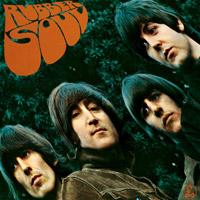
The Beatles: Rubber Soul

beatles-rubber-soul

In 1965, the squalling musical brat known as rock ‘n’ roll took its first steps to becoming the music that would dominate the rest of the 1960s all the way through the mid-1990s: rock. The transition wouldn’t really be complete until 1966, but the “new” music started the year before. The difference between the two forms, often referred to interchangeably, is stark. You could dance to rock ‘n’ roll, and the lyrics were usually pretty benign odes to teenage love and lust. It was the music of kids. Rock music, on the other hand, was heavier, noisier, lyrically expansive (love and lust were still the biggest topics, but of a somewhat less innocent nature). In folk music, Bob Dylan was expanding the vocabulary of lyricists everywhere. This wasn’t lost on the young rock musicians like the Beatles and the army of guitarists who followed in their wake.

The Byrds were the first to make explicit the connection between Dylan’s lyrics and wordplay and the beat laid down by the rhythm section of Paul McCartney and Ringo Starr. But in 1965 the Bard of Greenwich Village also made the connection when he laid down his acoustic guitar and brought in a heavily amplified backing band. The Beatles, too, made the connection in the opposite direction by using more acoustic instruments and using far more colors in their lyrical palette.

The new music in 1965 was heralded by six of the best albums of the 1960s. Since Dylan already had the words aspect of songwriting down to an art, it was his music that was most radically different. The Byrds were the perfected synthesis of the 1964 Dylan and 1964 Beatles. The Beatles, already restlessly inventive with their music, turned their attention to the words.

The fact that Rubber Soul, one of the best albums of all time, is only the second or third best album of 1965 is testament to the fact that Bob Dylan had just changed the landscape with the two masterpieces he released that year, Bringing It All Back Home and Highway 61 Revisited. The fact that Rubber Soul is a better album than the Beatles’s own Help! or the first two Byrds albums, Mr. Tambourine Man and Turn! Turn! Turn! is testament to just how great the Beatles were at this time.

The album was cannibalized for release in America, as usual, but in this case the album didn’t suffer too greatly. In some ways, it was strengthened.

U.S. Edition U.K. Edition
1. I’ve Just Seen A Face*
2. Norwegian Wood (This Bird Has Flown)
3. You Won’t See Me
4. Think For Yourself
5. The Word
6. Michelle
7. It’s Only Love*
8. Girl
9. I’m Looking Through You
10. In My Life
11. Wait
12. Run For Your Life
1. Drive My Car**
2. Norwegian Wood (This Bird Has Flown)
3. You Won’t See Me
4. Nowhere Man**
5. Think For Yourself
6. The Word
7. Michelle
8. What Goes On**
9. Girl
10. I’m Looking Through You
11. In My Life
12. Wait
13. If I Needed Someone**
14. Run For Your Life
*Originally released on the British LP Help!
**Released in America on the LP Yesterday…And Today

It’s possible that my personal experience colors my opinion here. I grew up with the American LP and while the album is certainly not improved by losing John Lennon’s masterful “Nowhere Man” and George Harrison’s excellent “If I Needed Someone”, the fact is that “I’ve Just Seen A Face” belongs here. Lost in the middle of side two of the British LP Help!, this fantastic McCartney track, with its furiously strummed acoustic guitar rhythm and propulsive vocal, is the perfect first song for Rubber Soul, miles ahead of the surprisingly pedestrian “Drive My Car”. And while “It’s Only Love” is somewhat slight, musically it’s a perfect fit with the rest of Rubber Soul. The same can’t be said of the equally slight country pastiche “What Goes On”. On an album that is so clearly influenced by both Dylan and the Byrds, “Drive My Car” and “What Goes On”, enjoyable as they are, sound jarring to the ear, like throwbacks to A Hard Day’s Night.

And yet, these are quibbles. In fact, it feels like a sin to criticize an album this good over such trifles. The American version of Rubber Soul hangs together a little better musically. But it is shorter, misses one Beatles classic and one near-classic, and is the product of record company control, not artistic control.

“Drive My Car” starts the album with a heavy electric guitar lick and riff, underlined by crashing piano notes, and a lyric that sounds like it was tossed off. But the “beep beep mmm beep beep, yeah!” hook is now indelible in Beatle lore, and the song is great fun. At the end of the day, that’s all it is: great fun. There’s nothing wrong with that, but “Drive My Car” could have fit comfortably on With The Beatles. Any indications that the Beatles were growing by leaps and bounds were not present here.

The same could not be said of “Norwegian Wood”. Lennon’s ode to an affair was such a massive leap forward for the band in terms of their songwriting that it still is a marvel. Lyrically it was a straightforward tale of infidelity, but told with Dylan’s sense of wordplay combined with Lennon’s dark humor: Boy meets girl, they go to her house, they drink and talk, he’s certain they’ll end up in bed, she turns the tables on him and goes to bed alone after first laughing at him, he drunkenly curls up in the tub to sleep, in the morning she’s gone and he sets fire to her home. What?! Had there ever been a lyric like this outside of blues murder ballads? And musically the tune was lovely, a strummed and picked acoustic guitar provided the bulk of the accompaniment, but the lead was played on a sitar, the Indian instrument that George was just beginning to learn. Odd, droning notes sound throughout, and then the brief instrumental hook of sharp notes that must have sounded like nothing else on a pop music record in 1965. No drums, but Ringo makes his presence felt with tambourine and maracas. “Norwegian Wood” is lyrically fascinating (written mainly by Lennon, but with help from McCartney), exotic music, and Lennon’s brilliant vocal performance. The musical world shifted on its axis in the barely two minutes it took Lennon to tell his tale. It stands shoulder-to-shoulder with “Like A Rolling Stone”, “My Generation”, and “(I Can’t Get No) Satisfaction” as one of the essential songs of 1965.

“You Won’t See Me” is one of the underrated gems on the album. Had it been released as a single, and almost every song on Rubber Soul was single-worthy, it would have been a huge hit. Macca sings the lead with the confidence of a man who knows he’s writing better and better songs, and the backing vocals from Lennon, and those gorgeous “ooh la la la” harmony vocals are the icing on the cake. McCartney’s piano and Ringo’s percussion are the main instruments, with a simple guitar part played by George, but the triumph of the song lies in the vocals and the melody, a endlessly repeating hook that drives into your brain and stays. As a trivia note: at 3:30, it was the longest Beatles song to date. Macca knew a good thing when he had it.

The vocals that made “You Won’t See Me” so good are even more clear on Lennon’s brilliant self-analysis “Nowhere Man”. Clearly inspired by The Byrds (who were, of course, inspired by the Beatles), the ringing, jangly guitar was played by Lennon (George played the solo using an identical style of guitar), “Nowhere Man” is one of the first Lennon/McCartney originals that was not a love song. The double-tracked lead vocal and the harmonies from Paul and George beat the Byrds at their own game while Ringo lays down a smooth shuffle beat and McCartney plays a busy bass line that practically skips along. Yet despite the bouncing music, the lyric is a harsh examination of a life that Lennon felt was getting away from him. Despite the fame, money, women, intoxicants (the often unmentioned influence on Rubber Soul was marijuana—just check the cover art), Lennon looked at his life and found himself to be a nowhere man, making plans for nobody. The dichotomy between lyric and music, like that of “Help!” earlier that year, makes the song all the more gripping.

While George Harrison was not yet anywhere near as prolific as Lennon or McCartney, the songs he was writing at this point were nearly as good. They also were clearly influenced by his elders in the band. “Think For Yourself” is a driving rock tune that, unlike “Drive My Car”, manages to sound of a piece with the rest of Rubber Soul. While there is guitar on the song, the lead is played by McCartney’s bass. Macca plays a great bass line, and then doubled it using a fuzz tone on his bass. The result is that one of the bass lines sounds like a heavily distorted guitar. It’s a great sound if used tastefully, as McCartney does here. His bass lines were always tasteful. The guy doesn’t get anywhere near the credit he deserves at one of rock music’s greatest bassists. The beauty of the fuzz tone on the bass is that it brings McCartney’s prodigious talents as a bassist to the fore, putting it in a can’t-miss lead position. George sings lead and, for the first time, he sounds like he knows what he’s doing. He’s still not the sublime singer he became a couple of years later, but at least he no longer sounds like a randy scouse git. He’s helped considerably by the way John and Paul come in with harmonies after the first line of each verse. This was George’s best song so far, though only until the record was flipped and “If I Needed Someone” came on. It was also not a love song, indicating George, too, was starting to think beyond the confines of the traditional rock ‘n’ roll subject matter.

Lennon’s “The Word” was about love, but in a decidedly different way. Far from the eros of young love, “The Word” makes the case for agape and philia. It’s an early example of a hippie ethos, perhaps, or the first pass at songs that took a more universal approach to the subject of love, like “All You Need Is Love”. It’s got a nifty upright piano lick that kicks it off and Ringo’s drumming is stellar throughout. The music itself proceeds at a syncopated gallop, unlike anything the Beatles had ever attempted before and the lyric definitely caught the zeitgeist of the hippie era a full year before that movement became widely known. There are a few lyrical hiccups (“in the good and the bad books that I have read”) but it’s so unusual for 1965 that those problems don’t matter.

The problems that plague “Michelle” do matter, however. It’s considered a Beatles classic, but I’m not sure why. Yes, there is a lovely sing along melody, and the Greek feel of the guitar is an extrapolation on what had been done a year before with “And I Love Her”. But ye gods, those lyrics. McCartney brought his amazing ear for melody to the song, but the lyrics are so trite and hackneyed they are cringe-worthy. Yes, the “ooh”-ing backing vocals are beautifully done, but there’s simply no forgiving the lyrics. The fact that many of them are sung in French makes it even worse. “Michelle” is not a bad song. Musically it’s quite good, and the vocal performance is as good as any on the album. It’s simply too bad that McCartney didn’t take ten more minutes to write some better lyrics.

Side two begins somewhat disappointingly. Yes, “What Goes On” is thoroughly enjoyable, but the faux-country music didn’t suit the Beatles any more here than it did on “Act Naturally”. Like that earlier song, this one was given to Ringo as his number. The Beatles could be admired for ensuring that all voices were heard on every album, but it seems clear that the songs given to Ringo were likely the ones that Lennon and/or McCartney thought were substandard.

It’s also clear that Lennon especially was firing on all cylinders at this time. His stunningly gorgeous “Girl” is a near perfect masterpiece of both lyrics and music. That Greek feel once again raises its head, but in a far more convincing way than on “Michelle.” The very simple rhythm provided by Ringo’s percussion and McCartney’s bass give all the support the song needs. Musically the only thing that matters is that beautifully played guitar. The lyrics were worthy of Dylan, with lines that paint a picture of the unnamed girl as a full flesh-and-blood person. The sharp intake of breath that punctuates the single, repeated word of the chorus could make the girl seem breathtaking, or mimic dragging on a joint. The backing vocal, amazingly missed or misunderstood by the critics of the day, features the chant of “tit tit tit.” Yet this is not a drugs or sex song; it’s a meditation on a toxic relationship. “She’s the kind of girl who puts you down when friends are there”, “when I think of all the times I tried so hard to leave her”, “she promises the earth to me and I believe her/after all this time I don’t know why”. And does the singer threaten or promise to kill himself at the end, when all of his efforts to appease this girl have proven fruitless? This is pretty heady stuff from the guy who only two years earlier just wanted to hold your hand.

Immediately on the heels of this comes “I’m Looking Through You”, McCartney’s jaunty take on a similar situation. In this case it’s a relationship that has gone bad. It’s nowhere near the sophistication of “Girl”, but that doesn’t mean it’s not a treasure chest of pop hooks and jangly guitar. It’s easy to picture “I’m Looking Through You” as the musical template for the Monkees. Even as a child I couldn’t hear this song without hearing the similarity to a dozen Monkees songs. It’s a pop music gem that often gets overlooked because it’s sandwiched between two of the greatest Beatles songs ever.

“In My Life” is the flip of “Girl”. Instead of a poisonous romantic relationship, Lennon surveys all the many good relationships that have marked his life. It’s now a wedding favorite, and one of the most covered songs in the Beatles canon. This is Lennon’s “Yesterday” though it’s superior to that McCartney song in almost every way. But it’s not simply Lennon’s song. McCartney claims to have written the music (Lennon claimed McCartney wrote the melody) and their producer George Martin is responsible for the gorgeous, Bach-like piano solo (sped up so that it sounds like a harpsichord). Ringo plays a beautifully sympathetic drum part and George plays the simple lead guitar hook that opens the song and leads into the verses. This was a band effort, marrying some of the best music the Beatles ever did to one of Lennon’s best lyrics. On an album that is stuffed to the breaking point with timeless pop music gems, “In My Life” stands alone at the top. It is one of the most transcendent pop songs of the 20th century.

Of course, anything after that is bound to be a bit of a letdown, but it’s only in comparison to what came before that “Wait” and “If I Needed Someone” suffer in any way. “Wait” was originally recorded for Help! and it’s a mystery why it was bypassed in favor of “Dizzy Miss Lizzy” or “Act Naturally.” Of course, “Wait” was also sweetened for Rubber Soul with several overdubs and vocal harmonies. It’s possible that without this sweetening the song was considered sub-par. But “Wait” remains a lost gem in the Beatles songbook. Ringo rides a tambourine for all it’s worth, and the shared lead vocals between John and Paul are the two singers doing what they do best. Lyrically it’s nothing to write home about. Essentially it’s a lyrical rewrite of “When I Get Home” or “Things We Said Today” but the music fits in as part of the new “folk rock” sound.

This is true in spades for George’s “If I Needed Someone”. The guitar and wordless harmony vocals are heavily inspired by “The Bells Of Rhymney” from the Byrds. But if “Think For Yourself” was George’s best song to that point, it was quickly surpassed here. “If I Needed Someone” is the greatest song the Byrds never did. It’s a wonder they didn’t cover it, probably because they knew they couldn’t improve on it. The lyrics are pretty simple, an ambivalent look at a prospective lover that could be boiled down to an even more simple “You’ll do in a pinch”. George wasn’t writing anything near the quality of Lennon or even McCartney when it came to the words. But the arrangement is glorious, all ringing guitars, Byrds-like vocals, a throbbing bass line underlining it all. It was also George’s best vocal, although he got much help from John and Paul on the verses.

There’s no doubt that Rubber Soul does not end as well as it should. “Run For Your Life”, a song Lennon absolutely hated, is much more of a by-the-numbers song, built around a lyric lifted verbatim from Elvis Presley’s Sun Records classic “Baby Let’s Play House”. The song is nowhere near as bad as Lennon believed, but it’s more a victory of style over substance. This is a top-notch performance of a decent song, and I can see why the guy who had just written “Norwegian Wood”, “Girl”, and “In My Life” might think it was garbage. But it isn’t garbage. It’s just not on the same level as the other songs Lennon was writing at the time.

Rubber Soul is the first masterpiece LP by the Beatles, showing them responding to the gauntlet thrown down by Dylan and the Byrds. This is the album that inspired Brian Wilson to do his greatest work on Pet Sounds. It was the clearest example yet that the Beatles were far more than flash-in-the-pan lovable Moptops, that they could craft a full album’s worth of songs that were as good as or better than the best of their contemporaries. Astonishingly, it was just the beginning.

Grade: A+
The Rolling Stones: Black And Blue

blackandblue

True story: I was eleven years old when Black and Blue was released. At the time, I had recently discovered my brother’s worn, scratchy copy of Hot Rocks, the gateway drug to the Rolling Stones for almost everybody of my generation. I was also very familiar with Aftermath, from my sister’s record collection. I was a budding Stones fanatic. I listened to side two of Hot Rocks obsessively, losing myself in “Mother’s Little Helper”, “Paint It Black”, “19th Nervous Breakdown”, and “Under My Thumb”. When I found out that the Stones were about to release a new album, I was practically giddy with anticipation. I begged my mother to take me out to buy it as soon as it came out, which she did. I may have used my mother’s money, but Black and Blue holds the place of honor as the first record I ever bought.

When I got home, my sister and her infant daughter dropped by, forcing me to sit and be with our guests while all the time that slab of vinyl was burning a hole in my brain, teasing me. Finally my sister left and I raced to my room to put the album on. Visions of Aftermath, “Let’s Spend The Night Together”, “Ruby Tuesday”, and “Satisfaction” swirled in my head. I put the record on, put on my headphones, and lowered the needle on to the first groove.

“What the hell is this mess? This is the worst music I’ve ever heard!”

Time has been a little kinder to Black and Blue than my original reaction, but there is no question that this is one of the oddest of all Stones albums. Even after all these years, the album opener “Hot Stuff” is five and a half minutes of suck. The song sounds like a meandering jam over a slinky funk/disco groove that repeats itself endlessly. Of course, that’s what most of this album is.

Black and Blue is the most groove-oriented album in the Stones collection precisely because the Stones were using the recording sessions to audition guitar players to replace Mick Taylor. There’s a very loose, jammy feel to much of the album. With a few exceptions, the songs are little more than ideas that are taking a rough shape.

At the time of recording, the Stones were actively auditioning numerous guitarists. Everyone from Jeff Beck to Rory Gallagher to Steve Marriott passed through the doors. In addition to Keith Richards, there are three guitar players on Black and Blue. Taylor’s eventual replacement, Ron Wood, plays on half the album and is credited as “inspiring” the song “Hey Negrita.” For “Hot Stuff” and “Memory Motel” the lead guitar duties are handled by Harvey Mandel, while Wayne Perkins plays lead on “Hand of Fate” and “Fool To Cry” and acoustic rhythm on “Memory Motel”.

From the repetitive funk/disco of “Hot Stuff” the album segues into the best track, “Hand of Fate.” This is the tightest, most fully realized song on the album, featuring Wayne Perkins’s extraordinary imitation of Mick Taylor. “Hand of Fate” is a lost gem in the Stones catalog: a tough, hard-hitting riff rocker with a great lyric. Lyrically it takes a cue from the outlaw anthems of reggae, telling the tale of a man on the run from the law. The song carries a reggae groove to it, but remains indisputably rock. The Stones would have done well to break this song out of the closet for some of their recent tours, but Black and Blue as a whole has largely gone down the memory hole and this unheralded Stones classic is collateral damage.

It’s not surprising. “Hand of Fate” is sandwiched between “Hot Stuff” and the reggae cover “Cherry Oh Baby”. About the best thing that can be said of the latter song is that it’s the shortest on the album, falling just short of four minutes. Again, this sounds like the Stones sitting in the studio and doing a loose jam on a song they all liked. It’s not a great song, but it’s a decent jam. At four minutes it’s at least a minute too long, maybe two. Coming after “Hand of Fate” it’s an incredible let down.

“Memory Motel” continues the schizophrenic tone of the album. The closing song of the old side one, the sound of “Memory Motel” is a distilled essence of 1976 radio. As such, the song suffers from sounding like it was entombed in a tar pit during that Bicentennial year. However, it’s a lovely song featuring a great vocal from Mick on the verses, while Keith chimes in as the lead voice on the “she got a mind of her own” hook. At a certain point in the song, the listener can be excused for thinking, “Is this song still playing?” At over seven minutes, it’s one of the longest studio songs the Stones ever released. Pretty melody or not, “Memory Motel” falls victim to the jamminess of the album. The Stones had a good song here but didn’t know when to stop, and the song overstays its welcome. Still, at the right time and in the right mood, “Memory Motel” is one of the highlights of the album.

Side two opens with “Hey Negrita” and it’s difficult to see this as much of an improvement over the side one opener, “Hot Stuff.” Like the earlier song, “Hey Negrita” is little more than a riff with a shouted, mostly nonsensical lyric grafted on top. It’s almost impossible to imagine that this song would have been seen as more than it is: a Ron Wood riff that led to an impromptu jam with probably extemporaneous lyrics.

Even worse is “Melody,” a loose, piano-led lounge song that sounds like it was recorded after a night spent at the studio bar. Even a nice horn arrangement that comes late to the party can’t save the song precisely because there is no real song to save. The fact that this trifle is nearly as long as “Memory Motel” but lacks the sweet instrumentation and solid vocal performance of the earlier track makes the situation even worse.

“Fool To Cry” was the hit single from the album, reaching the Top 10 in America and England. Musically, it’s a continuation of “Memory Motel”, bearing an almost identical keyboard sound. At the very least, it is one of the only fully realized songs on the album. Sure, it drags on too long, and Jagger’s falsetto vocal can be a bit tiring, but at least “Fool To Cry” sounds like somebody came to the studio with an actual song, rather than a bag of riffs. That said, despite the ear-worm chorus, “Fool” is one of the lightest and most forgettable singles the Stones have ever released. It’s not the worst they would ever release, but it was the worst to this point. One can only imagine why “Hand of Fate” was skipped in favor of “Fool To Cry” and “Hot Stuff” as single material. My hunch is that as funk and disco were starting to become more mainstream and more popular, Jagger wanted the band to sound apace with their contemporaries. “Hand of Fate” was a prime slice of vintage Stones. “Fool To Cry” was the Stones in 1976.

Black and Blue does end well. “Crazy Mama” is another tough rocker, concise at four and a half minutes, with an impassioned vocal from Jagger and nice guitar work from Richards and Wood. It’s easy to see with “Crazy Mama” why Wood made the cut as Taylor’s replacement. It’s the earliest example of Wood and Richards practicing what Richards calls “the ancient art of weaving.” It’s also a foreshadowing of where the Stones would go next. Now that the auditions and jams were over it was time to hone everything to a razor sharp edge and use the twin rhythm/lead guitar attack in a way they’d never done before. Black and Blue isn’t a very good album for repeated listens. There are too many formless songs, loose jams, and lengthy tracks. Throwing it on at a party every once in a blue moon would probably make it sound better than it actually is, but the sad fact is that this is near the bottom of the barrel for Rolling Stones albums.

Grade: C-

An Open Letter To Jack White

Dear Jack,

Allow me to gush for a minute. I’m second-to-none in my admiration and respect for the music you create, and the music you champion. Although I was an admirer of the White Stripes after my first exposure to them (White Blood Cells, as is true for most people), it was after the release of Elephant that I signed on the Jack White train. Since then I’ve looked at the White name as being an imprimatur for quality music. The Stripes, sure, but also the Raconteurs, the Dead Weather, the Third Man stable of singles, and most recently Blunderbuss, an album I rated as a solid A+ and compared to Revolver. If it’s got the Third Man logo on it, chances are good that I own it. And that includes The Vault premium membership releases. I admire your playing, your singing, your songwriting. If you recommend the work of another artist, I go out of my way to give that artist a listen (Seasick Steve, for example).

The thing that has always struck me the most, though, is that you get it. Whatever “it” may be in terms of music, you get it. You understand the power of the music. You get the romance of sitting down with an LP, lowering the needle onto the vinyl, and losing yourself for 30-40 minutes. Most people don’t. They like music, of course. They may even consider themselves “fans” of this band or that singer. But only music obsessives (like me and, I assume, like you) know the rush of putting on the new album by one of your favorite artists, or a time-worn classic that you just can’t get out of your system, and listening to it to the point where it becomes hardwired into your DNA. There are so many albums like that for me: the entirety of the Beatles oeuvre, Quadrophenia, Sticky Fingers, Bringing It All Back Home, Forever Changes, just to name a few. I know every note on those albums. That little drum fill, the sudden change-up in the bass, the slight break in the singer’s voice. You know what I’m talking about, Jack.

You get it.

Then, of course, there’s the other side: seeing your favorite acts performing live. For me, that rush of blood to the head seeing Paul McCartney live and thinking, “This is a Beatle. In front of my very eyes.” Or seeing the Stones, the Who, the Kinks, Stevie Ray Vaughan, and countless others. It is electric to see these people demonstrating their art, showing their mastery, hearing them speak (“How are you, New York?” Well, I’m doing just great now that you’re on stage. Thanks for asking.). You get almost giddy seeing that stage set up, hearing the piped in music as the crowd comes in around you, waiting for the house lights to dim, seeing the movement on the fringes of the stage. Then the mounting anticipation when you finally hear those first notes as the musicians hit a few strings to make sure they’re live and in tune. You know what I mean, Jack.

You get it.

So what the hell happened at Radio City Music Hall on September 29th?

I admit that I wasn’t there, but I know people who were, including music obsessives like me and you. These were people who spent hard-earned money in bad economic times to come see you; people who decided that the greatest birthday celebration would be to see Jack White live at one of the great venues in all the world; people who spent money on gas, tolls, and parking. More to the point, these were people who went through all the feelings of anticipation that I described above. And what did they get? A 50-minute show (at best) plus a couple of snotty comments directed at them from the man they paid to see. Then a walk-off the stage. No encore. No bringing out the female band.

And no explanation.

There are a lot of things that can go wrong at gigs. I understand that. I saw The Who when Pete Townshend had a fever of 102 degrees. “A lot less jumping around, but I played some great guitar that night,” he said of the two-hour show. I saw Los Lobos play a short set when Cesar Rosas couldn’t get an amplified note out of his guitar for the first ten minutes…but they played their full, alloted time. I saw Albert Collins in a small bar when his guitar kept cutting out on him (he played for 90 minutes). I’ve been to concerts with lousy sound, and in lousy conditions. I’ve been to great shows, and a couple of really, really bad shows. Lonnie Brooks was incendiary in his first set when I saw him. By the second set he was so wasted he had to sit on a chair to play.

But the act you pulled at Radio City Music Hall was like something you read about in the biographies of the most unreliable rock stars. This was Jim Morrison passing out before the show. This was Sly Stone wandering off stage never to return. This was Axl Rose slamming his microphone on the stage and shouting “I’m going home.”

My friends left the show that night confused and angry. But the root of the anger…and you get this because you get it…was disappointment. You’ve always seemed to be something of an anomaly in rock music. You’ve always come across as a straight shooter who cares about his fans. Through Third Man Records you seek to bring great music to more people.

But leaving a show halfway through with no explanation, and no apologies, is prima donna behavior of the worst kind. It shows contempt for the thousands of people who laid out their money and sacrificed their time to see you perform. Those people made the effort. Where was your effort? The sound in the audience was, by all accounts, good. Maybe on stage it wasn’t great, but is that any reason to disappoint thousands of fans and admirers? You made a crack that the audience was like “an NPR convention” but the people I know who were there said the audience was lively and loud. But even if the audience had sat on their damn hands and kept their mouths glued shut, is that any reason to walk off stage? Some audiences are harder to please than others. Deal with it. There was apparently some sort of disagreement with “a shirtless fan” in the front. If he was that bad, you could have had security escort him out. There was talk that you didn’t like the ubiquitous cell phones that were snapping pictures and videos of the show. Well, I hate to break this to you but that’s all part of freedom in the 21st century. Look up the word “ubiquitous” and realize that this is how it is, and there’s no going back. The same night you did this, Justin Bieber vomited on stage and then rushed off. He came back out a few minutes later, apologized, joked with the audience and finished his damn show. I never thought I would say that Jack White could learn something from Justin Bieber, but there you go.

There are a lot of people out there who are willing to give you the benefit of the doubt, and who may be willing to put this aside as just a really bad night for Jack White. But you need to give them a reason. Your failure to explain why you did what you did just shows the contempt in even greater clarity.

Best wishes,
The Disappointed.

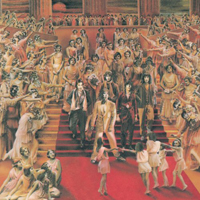
The Rolling Stones: It’s Only Rock ‘N’ Roll

With Goats Head Soup, the Rolling Stones showed some indications that the fuel that had burned in them since 1968 was starting to run out. With 1974’s It’s Only Rock ‘N’ Roll, the band was clearly in a holding pattern. As with Soup there are several real gems on this album. The highlights of the album are at least the equal of its predecessor and might even be slightly better. The lowlights were lower, though, and there’s simply no denying that an audience expecting a new Sticky Fingers or Exile On Main Street was going to be extremely disappointed.

Like some of Bob Dylan’s early 70s albums (e.g., New Morning, Planet Waves), both Goats Head Soup and It’s Only Rock ‘N’ Roll sound better in retrospect. Time has distanced them from the ragged genius that cemented the Stones legend, and this allows the albums to be taken on their own merits, as well as judged by their own flaws.

It’s Only Rock ‘N’ Roll is the work of a highly accomplished band. By this point the Stones knew exactly how to craft down and dirty rock and roll in their sleep. That’s actually something of a drawback in rock music. When a band reaches this level the temptation is there to coast, and that’s just what the Stones are doing throughout this period. The mid 70s were a fallow time for rock music. The wave of Sixties titans was largely over: the Beatles were no more and the solo Beatles, with the exception of McCartney who was still riding high, had drifted off. The Who were still releasing great albums but the tour following Quadrophenia was a disaster. The Kinks were releasing convoluted concept albums that made no sense to anyone. By 1974 Glam Rock was nearing its expiration date, with David Bowie, Elton John, and T. Rex peaking a year earlier. Punk rock was emitting its first cries, but was unknown outside of small venues in New York. Disco was arriving, but not quite there. The so-called Progressive rock of Yes, Pink Floyd, and Emerson, Lake and Palmer, was big in the world of FM radio, but the mid 70s were still very much an AM radio era.

Where there was inspiration was in black music. Funk, reggae, and soul were big. The radio grooved to such soul classics as Dobie Gray’s “Drift Away” (which was recorded, but not released, by the Stones for this album). And as they had done in the mid 60s, the Stones turned to this music for inspiration for two of Rock ‘N’ Roll‘s best tracks.

“Ain’t Too Proud to Beg” is a fierce, rocked up version of the classic Temptations song. Kicked off by Charlie Watts, a man who never played a bad drum part, and featuring both a funky clavinet and barrelhouse piano from guest Billy Preston, this is one of the most convincing non-blues Stones covers. Jagger never tries to emulate the soulful vocals of the original, opting instead simply to be himself. The soul is stripped from the song, turning it into a visceral, drunken howl. “Luxury” is the first attempt by the Stones to do pure reggae. The Stones make their mark in the guitars, which are more distorted and raw than you find in reggae, but there’s no mistaking this song as anything other than proof that the Stones were listening to a lot of Bob Marley. Reggae was a well from which the Stones would draw a lot of inspiration over the next ten years or so, but to these ears their first attempt was also their best. “Luxury” has a melody that would have made Marley proud, and the toughness of sound at which Peter Tosh excelled.

It’s a shame in some ways that the Stones fell back into by-the-numbers rockers and extended ballads. With the exception of the title track, which is still about two minutes too long, there’s nothing else on the album that you haven’t heard before. “If You Can’t Rock Me” is a fine, hard-charging album opener, now rendered redundant by the fact that the Stones seem incapable of putting out an album that doesn’t have at least one song extolling the virtues of “rocking”. But as good as “You Can’t Rock Me” is, it also never rises above the level of professional, competent rock music. It’s enjoyable, and not particularly memorable.

The same criticism can be leveled at the rest of the rockers on the album, but those tracks are usually not even as memorable as “You Can’t Rock Me”, which at least benefits from being the first thing you hear. “Dance Little Sister” is okay, the kind of song that sounds better live. It, too, is helped by Charlie’s unerring sense of swing. His rapid fire fills and the sterling guitar work from Keith Richards and Mick Taylor, and Jagger’s excitable vocal all combine to make something this is…meh. Once again, it’s a matter of coasting over inspiration. Yes, this is good. Coming from another band, it would probably be a career highlight. Coming from the Stones, it’s just an album track that is enjoyed, and forgotten. Far worse is “Short and Curlies,” a throwaway track that is about exactly what the title implies. It’s a dumb attempt to write another raunchy, not-fit-for-radio song in the mold of “Star Star”, and best forgotten.

The Stones draw more inspiration from black music with “Fingerprint File”, this time tapping funk music. At six and a half minutes, it’s far too long and far too repetitive. The basic groove of the song is good, but there is a lengthy jam in the middle that goes nowhere. Cut down to three minutes, “Fingerprint File” might have been one of their better funk moments, but at this length it merely sounds like self-indulgent album filler.

With “Angie” from Goats Head Soup, the Stones hit chart gold and discovered singer/songwriter-ish balladry. “Till The Next Goodbye” is It’s Only Rock ‘N’ Roll‘s “Angie.” A spare, acoustic number with lilting piano from Nicky Hopkins and a lovelorn lyric and vocal from Jagger, it’s actually a better song than “Angie.” But once again, it suffered. Because “Angie” came first, and the Stones were likely wary of putting out a too similar ballad as a single, this lovely song is almost unknown. “Time Waits For No One”, which immediately follows “Till the Next Goodbye”, is both a genuinely great Stones track and a prime slab of Radio Friendly 1974. Although it was not released as a single (it creeps toward the seven minute mark), the sound of the song almost defines the era. “Time” is the ballad version of Sticky Fingers‘s”Can’t You Hear Me Knocking.” It’s a lengthy song that is end-loaded with an extensive guitar solo from Mick Taylor (his last brilliant moment with the Stones). Taylor wisely avoids the “Santana lite” jazz he played on “Can’t You Hear Me Knocking” in favor of a fluid, lyrical solo. It was not only Taylor’s last truly great moment with the Stones, it was the last time such a solo would ever be played on a Rolling Stones song. It’s a sad reminder of what the Stones miss with Taylor’s absence: a genuine virtuoso who for several years managed to keep his ego in check and lend a dimension of musicality the Stones never had before and haven’t had since.

As good as “Time Waits For No One” is, there’s also “If You Really Want To Be My Friend.” One of the problems with It’s Only Rock ‘N’ Roll is that there are three songs that crack the six-minute mark. The Stones have always been at their best when they were more concise. Sure, there are exceptions like “You Can’t Always Get What You Want” and the live “Midnight Rambler” but as a general rule, the more songs that hit that five and six-minute length, the more you know the Stones are running low on ideas. “Friend” is one of the low points of the album, with an overwrought vocal from Jagger and a backing vocal section from the soul group Blue Magic that is completely unnecessary. The extended, jammy fade seems designed to add gravitas to the song, but it falls flat.

The Stones had been brilliant in their career, and had failed gloriously with the experimental Satanic Majesties. What they had never been up to this point was boring. The album is redeemed by the classic title song, co-written with Face, friend, and future Stone Ronnie Wood, and a handful of great album tracks, but is ultimately undone by the undeniable mediocrity of the rest. Shortly afterwards, Mick Taylor left the band to pursue stardom with the mercurial Jack Bruce in what remains the stupidest career decision in rock history. The Stones were about to change again, becoming yet another type of band. But first they needed to make a transition.

Grade: C+