Gods And Generals, by Jeff Shaara

In The Killer Angels, author Michael Shaara wrote what many consider to be the greatest novel of the Civil War ever written. When you consider that this company includes both Gone With The Wind and The Red Badge Of Courage, you realize you’re talking about some pretty heady company.

After Shaara died, his son Jeff picked up the mantle and began writing books in the same format and style as his father. Jeff Shaara doesn’t get a lot of points for originality since his style is virtually indistinguishable from that of his father, but he does score with his novels nonetheless.

Gods And Generals is Jeff Shaara’s prequel to his father’s The Killer Angels. The latter book focused entirely on three days in July 1863…the three bloodiest days in American history, at a tiny town in Pennsylvania that has become synonymous with all that is horrific in, and all that is honorable about, war: Gettysburg.

Gods And Generals starts just as the Civil War is about to begin. Fort Sumter has not been shelled, but war is in the air and seems inevitable. The book ends as the Southern commander, Robert E. Lee, begins his march north towards Pennsylvania and the turning point of the war. In between are battles at Harper’s Ferry, two battles at Bull Run (Manassas), Antietam and, acting as the centerpiece of the book, the horrible carnage of Fredericksburg and the confusion and incompetence that turned Chancellorsville into a humiliating Union defeat.

The battles are described with an historian’s eye for accuracy, and a storyteller’s eye for narrative. The problem with this book, and almost any book that attempts to describe the mass confusion generated by hundreds of thousands of men hurtling themselves at each other, is that there is so much going on at any given time the narrative can become confusing. The Killer Angels was remarkably coherent, which may explain its reputation. Stephen Pressfield’s Gates Of Fire was also an amazingly detailed, yet easy-to-follow, view of the battle of Thermopylae. Ditto Stephen Harrigan’s brilliant novel of the titular battle in The Gates Of The Alamo. In Gods And Generals, the overall narrative is sometimes lost in the thirst for accuracy and the seeming need to cover all bases.

It’s difficult to criticize the book, however, because in general it is so well done. Shaara may be copying his father’s style, but he does so flawlessly. If the descriptions of troop movements are a little confusing, there are maps to help out. If it’s sometimes hard to tell the difference between many of the supporting characters, you can take solace in how well the main characters are drawn. I don’t know if there’s a finer portrayal of George Washington in fiction than in Jeff Shaara’s The Glorious Cause. In Gods And Generals, he applies the same fine brush to paint convincing portraits of Robert E. Lee and Stonewall Jackson especially, but also Joshua Chamberlain and Winfield Hancock on the Union side.

With Lee and Jackson, we feel the astonishment as one inept Union general after another blows one opportunity after another. What should have been a decisive Union victory at Chancellorsville, one that may even have ended the war two years and hundreds of thousands of lives earlier, instead becomes a panicked retreat from a vastly outnumbered Confederate force. What could have been a Union victory at Fredericksburg instead is handed to Lee’s forces on a silver platter: Lee’s forces sweep in and occupy the high ground while the Union forces are prevented by their leadership from crossing a shallow river because they don’t yet have pontoon bridges in place. Poor leadership on the Union side was so rife; it’s no surprise that Lee and Jackson genuinely believed that God was on the side of the South. One can only wonder what history would be like if Lincoln had not brought in Ulysses Grant to take over the Union forces.

There is talk early in the book about the why of the Civil War. As a college professor, Joshua Chamberlain pontificates about slavery as he makes his decision to enlist in the Army. Robert E. Lee and Stonewall Jackson are both opposed to slavery, but view the encroaching war as an attack on the sovereignty of Virginia. For them, the issue is not slavery, but the right of individual states to make their own laws. These arguments largely disappear once the battles begin. I suppose that there is honesty in that. Contrary to what you’ll find in B-movies galore, my guess is that the average soldier rarely spends too much time debating the geopolitical events that landed him in a trench at Fredericksburg, or the Somme, or Bastogne, or Baghdad. But as a reader of a historical novel, it would have been good for Shaara to have the horrific battles of the Civil War placed in some context. Slavery was unquestionably the catalyst for the war and the main evil that the war was fought to address, but it was not the only issue. Without the exploration of these other issues, Lee’s and Jackson’s decision to take arms up in support of an institution they both abhorred seems odd.

As the war begins, many characters struggle with the idea of what to do. Many of the Southern military leaders were in the U.S. Army when hostilities erupted, and had to make a choice whether to stay loyal to the country, or their home state. Nowadays that seems like an odd thing about which to be conflicted, but at the time people considered themselves first off as citizens of their state, and secondly as citizens of the United States. In many ways, the Civil War was the bloody culmination of the debate between the Federalists and Anti-Federalists. The Federalists won the debate in 1787, but Anti-Federalism was a way of life for many Americans outside of the immediate orbit of Washington, D.C., especially down South. The snake in the cotton fields of the South, of course, was slavery. While it was understandable that slavery was not outlawed by the Constitution when it was first crafted in 1787, the price of this compromise would be long and brutal.

A little more…not too much, lest it become tendentious…of the why of the war would have placed these combatants in the middle of a cause where they were fighting for what they believed was right, rather than subjecting them to the hail of musket fire and the end of the bayonet blade for reasons that many modern readers might find murky.
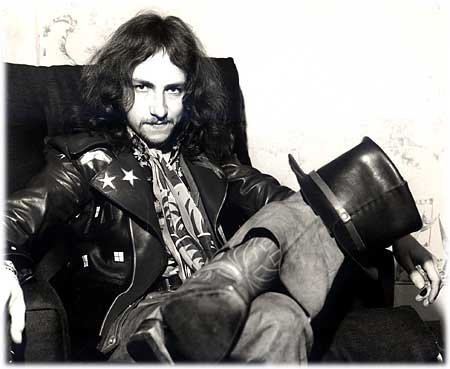
Mitch Mitchell, RIP

A couple of weeks ago, a friend of mine and I went to see The Who play at the Izod Center (formerly Continental Arena, formerly Brendan Byrne Arena). It was almost 26 years to the day since we had last seen The Who at the same venue on their farewell tour.

In 1982, Keith Moon was dead and Kenney Jones was gamely filling in on the drums. Jones was a fine drummer, but no Keith. This time around, John Entwistle was also gone, replaced by Pino Palladino, also a fine bass player (no Entwistle, but who is?).

The fact that it was “Half The Who” was on our minds as we sat in the parking lot, drinking a cold beer (or two…or three). We started talking about how many of the old bands were nearly gone now. Levi Stubbs of the Four Tops had died not too long beforehand, leaving only one remaining original member of that great vocal group alive. I asked the question, “Are any of the old bands gone?” We couldn’t come up with any. The Ramones have one surviving member, the Beatles and Who have two, Badfinger has one, the Mamas and Papas have one. Stunningly, the Stones have lost only one original member, and it isn’t Keith Richards. Sooner or later, we reckoned, one of these bands would be entirely gone.

Unfortunately it happened sooner, rather than later. Last week the news came through that the sole survivor of The Jimi Hendrix Experience, drummer Mitch Mitchell, had been found dead in his hotel room, after playing on a tour called Experience Hendrix with guys like Johnny Lang and Kenny Wayne Shepard filling in for Jimi.

Jimi, of course, was the first to go, in 1970 at the age of 27. Bassist Noel Redding made it to 2003 before dying. On November 12, 2008 it was Mitchell’s turn. In the grand scheme of events, I’m well aware how unimportant a rock drummer is but for music geeks, like myself, this was like watching a part of history die. The days when these musical colossi roamed the Earth used to seem so recent. Now it suddenly seems like just another bygone era, somewhere between the Victrola and the iPod. It’s one thing when a towering solo superstar dies. Death can come at any time and claim an Elvis, an Otis, a Buddy. This was an entire band, though. They once stood on top of the world as a collective unit and now they are nothing but memory.

In this spirit, allow me to express a word or two of appreciation for Mitchell. His name is not as well known as Keith Moon or John Bonham, but Mitchell was nearly as fiery a drummer. A jazz freak, he brought a distinctly Elvin Jones-ish feel to rock drumming. Prior to guys like Moon and Mitchell, rock drummers kept the beat and threw in a few fills here and there. Moon exploded the concept by playing lead drums, arms pinwheeling, drumsticks twirling, his kit laced with explosives. Keith was a show unto himself, and he placed the drummer at the front, equal in every way to the guitarist and the singer.

Mitchell (who auditioned for The Who but lost out to Moon) took a more traditional role. There was no way to share the stage equally with Jimi Hendrix, and Mitchell knew it. While he contented himself to remain a supporting player, he brought that jazz style to Jimi’s Martian blues and psychedelic excursions. Rolling around the toms, Mitchell sounded like a rumbling deep inside the earth. While Jimi kissed the sky, Mitchell shook the ground. You may have been so busy reaching for the clouds with Jimi that you didn’t notice what else was happening, but a large portion of the sensory overload that was the Experience came from the back.

Mitchell was technically a better drummer than Moon, though not as influential or as much fun to watch, but he served the same purpose in the Experience that Moon served in the Who. If you watch old footage of The Who you’ll notice something strange. During guitar solos, instead of stepping forward and taking the spotlight like a good lead guitarist, Pete Townshend would frequently step back until he was next to Moon. He’d put his head down, sometimes even put his foot on the drum riser…and Moon would spur Townshend on, and Townshend would inspire Keith to new heights, like two parasites feeding off each other.

Mitch Mitchell did the same thing for his lead guitarist. Jimi Hendrix never shunned the spotlight but, like Pete and Keith, Hendrix would lock in with Mitchell and the two of them would become an unstoppable force, a blinding blizzard of technical proficiency and deep soul. Mitchell was the perfect drummer for Hendrix, which explains why Hendrix went back to Mitchell after the Band of Gypsys experiment. As Hendrix played the role of alchemist, turning noise and distortion into cosmic beauty, Mitchell kept it all rooted with those endless rolls across the kit, as relentless and as powerful as the ocean. Mitchell’s skill made Hendrix better; Hendrix’s genius spurred Mitchell on to ever greater heights. Together they spiraled up into the stratosphere, like a rocket kept on course subtly and capably by Noel Redding’s bass, I frequently wondered what Stevie Ray Vaughan would have sounded like if he had a Mitch Mitchell behind him rather than the lead weight of Chris Layton. It would have been amazing. Compare Hendrix’s version of Earl King’s “Come On” with Stevie’s version of the same song to hear the difference a drummer can make to a guitar player.

So there it is. The first (as far as I can tell) of the great Sixties bands to become extinct. The next ten to twenty years will see many more. Mitch Mitchell, dead at 62. RIP.

Update: As if you needed another reason to appreciate that The Raconteurs are the coolest band on the planet right now, they have replaced their usual website home page with a great picture of Mitch Mitchell, which I have ruthlessly appropriated below. Gotta love this band…they know their history.

Mitch Mitchell

The Happiest Place On Earth

Walt Disney World likes to bill itself as “The Happiest Place on Earth”, and it may just live up to the title.

I’ve just returned from spending a week trolling the grounds at the Magic Kingdom, Epcot, Animal Kingdom, and the Disney Studios. I’ve been to Disney before as a kid, but this was my first time as an adult, with my better half by my side.

There are many reasons that Disney is a fun place to go on vacation. There are thrilling rides (Tower of Terror, Big Thunder Mountain, Space Mountain, Splash Mountain, Expedition Everest, Mission to Mars, Test Track), fun shows, quick blasts of international culture and cuisine at Epcot, water parks, fireworks, concerts (yes! Los Lobos at Epcot!), daily parades, great shopping, and slower-paced experiences for when your feet get tired (many of the Fantasyland rides, the African safari at Animal Kingdom).

All of these things might get Disney a reputation as the funnest place on Earth, but not the happiest. In fact, there are things that weigh heavily against that “happy” part: stifling heat (even in November…I can’t imagine what it’s like in July), crowds, long lines, overtired children crying, closed attractions (my wife was denied the experience of the Hall of Presidents for the fourth time in her life). Worst of all, there’s the monstrosity of the It’s A Small World ride, an attraction that would be made considerably better if you were allowed to throw baseballs at the marionettes singing that wretched song.

What allows Disney World to effortlessly overcome the unavoidable annoyances that can cast a damper on a vacation is simple: customer service. The overwhelming hospitality that greets people everywhere they turn can not help but make you feel good. Our plane was delayed by several hours and we arrived at the Animal Kingdom Lodge a little after two o’clock in the morning. We were tired, hungry, and cranky. The lobby was an immediate pick-me-up: huge, decorated in an African motif, with artwork, a fireplace, comfortable seating. It was immediately apparent that a considerable amount of thought and care had been put into this. It helped that we were the only people in the lobby at that hour, which gave us a good opportunity to appreciate the size and scope without a lot of hustle and bustle. Within seconds of our arrival we were greeted with a huge smile by the woman behind the registration desk. She asked about our travels, sympathized with our delays, and took a bit of time to talk to us. As bedraggled and cranky as we were, this little dollop of hospitality made us feel like we’d been welcomed home. As someone who’s stayed in hotels all across the country, I’ve rarely been greeted with anything other than monosyllables and perfunctory acknowledgements. It was the difference between “Hello! Let me help you!” and “Hey, you want to check in?”

And of course, it didn’t stop there. For the next week we were greeted with warmth and smiles by everyone from hotel maids to ticket takers to waiters to shop keepers to bus drivers. Not just a few people. They all did it. Whatever their personal feelings and emotions may have been, when they interacted with us the Disney staff was never less than happy and helpful. They took the time to make small talk, to answer questions, to walk with us if we didn’t know where we were going. They were happy, and the feeling was contagious.

My wife knew people who worked at Disney and we took them out to dinner one night. From talking to them I realized that the smiles and warmth that Disney employees show their guests is not artificial. It is far more than being told that their jobs depend on keeping a smile plastered on their faces no matter what happens. Disney invests in their employees. They don’t simply hand out the Kool-Aid and tell their workers to drink it. No, the happiness is real because the company does their best to train their employees and keep them happy. Disney has figured out that happy employees mean happy customers.

This is called “customer service” and it is, I fear, a dying art in modern America. Too many retail stores are staffed with people who seemingly could not care less whether you can find what you’re looking for. Too many hotels think their obligation to you begins with the reservation and ends with cleaning the room. Too many bus drivers take your ticket or your money, grunt, and avoid eye contact at all cost. Too many waiters and waitresses make no effort to make your dining experience a little more enjoyable just by talking and asking you how your day is going.

There’s a bar near where I live that has a slogan: “Where the customer is always an inconvenience.” It’s a funny slogan, and in a long tradition of self-deprecating bar slogans (another bar near me had the tag “Purveyors of warm beer and lousy food”). But I’m seeing this becoming more of a reality all the time. We all know what happens if we have to call customer service for our cable company or cell phone provider.

Disney World stands in stark contrast to this. It is the triumph of customer care. Disney World is the Happiest Place on Earth precisely because it is the most hospitable place on Earth. By treating every guest like friends and family, they give a respite from a world filled with bad news, overbearing bosses, messy commutes, rude people, and poor customer service. It’s a lesson that needs to be learned by a lot of other business out there.

Dracula, by Bram Stoker

For many years, I avoided reading Bram Stoker’s classic vampire novel, Dracula. This is because many years ago I read Mary Shelley’s Frankenstein. Perhaps it’s because I spent my childhood watching the old Universal horror films, perhaps because I was at an impressionable age when Count Chocula and Frankenberry were released, perhaps because I know that the origins of both books can be traced back to one seriously wasted night in Switzerland during the Year Without A Summer, but Dracula and Frankenstein have always been linked in my mind.

Frankenstein is not a fun book to read. It’s the product of an extremely clever 19-year-old mind. The prose is as dry as kindling, and there are scenes that are just laugh-out-loud bad. (The monster teaches himself to read when he finds a copy of Goethe’s The Sorrows of Young Werther? There’s that too clever 19-year-old again.) Not a lot happens in the book. Far from Boris Karloff’s hulking brute with the plugs in his neck, Shelley’s “monster” is a good-looking guy who wants to have lengthy philosophical debates with his creator. Dr. Frankenstein spends much of the book saying things like, “I am a wretched man for having created such a wretched creature and I am all the more wretched for wretchedly abandoning the wretched thing! Wretched!” Whenever I was asked if the book was any good, my reply was usually a simple, “Wretched!” Only H.P. Lovecraft’s incessant use of the non-descriptive cheating word “indescribable” matches Shelley’s use of this wonderful, but antiquated, word.

But Frankenstein is also a fascinating book. Whether she knew she was doing it or not (and I doubt she did), Mary Shelley created a myth that still resonates today. She was certainly aware that she was borrowing from mythology. Her subtitle, after all, is “The Modern Prometheus.” But instead of fire, Victor Frankenstein uses electricity to create life. At the time the book was written, the concept of electricity was fairly new and imbued with all sorts of possibilities, both positive and negative.

Shelley was writing a cautionary tale for the Enlightenment (this I strongly doubt she knew). Mary and her husband, the brilliant poet Percy, were champions of the Enlightenment and the French Revolution, among the first generation to be raised in the aftermath. But even while they praised the Enlightenment ideals of reason and science, Mary Shelley was writing a tale warning against the idea of men taking on the powers of God. Frankenstein is among the first novels of the Enlightenment, and it is a tale of horror.

If you fast forward to the end of the 19th century, you will find that the Enlightenment fascination with electricity and science and reason no longer carries the same weight. In the years between Frankenstein and Dracula, Charles Darwin wrote The Origin of Species, which turned him into a literary and scientific rock star. Electricity had been replaced with genetics and blood. Clearly, a new horror was required for a new time.

Vampire myths are probably as old as mankind, and Dracula was not the first vampire novel. Dr. John Polidori’s The Vampyr (concocted that same wasted night in Switzerland, and inspired by Lord Byron), the novel Varney the Vampyr, and even a lesbian vampire novella called Carmilla by Sheridan LeFanu, all preceded Dracula. But it was left to Abraham Stoker to write the classic vampire novel, Dracula. The name itself is now synonymous with vampirism.

Unlike Frankenstein, the writing in Dracula is almost breathless. The story hurtles along briskly and, even though the actual character of the Count disappears from the book about four or five chapters in and, for the duration of the novel, makes only slightly more appearances than Boo Radley for the rest of the book, the spirit of the vampire hovers over everything. It’s no small accomplishment to make a minor character the entire focus of a lengthy tale and make no mistake; Count Dracula is a minor character in his own book. The major characters are those hunting the elusive Count: the stalwart Jonathan Harker who unintentionally sets the events of the novel into motion; Harker’s wife, the pure of heart Mina; the grieving Lord Holmwood; the rogue Texan Quincey Morris; the psychologist Dr. Seward; and most of all Dr. Van Helsing, who is both a brilliant psychologist and a little cracked himself. Also figuring here is Lucy Westenra, the fiancé of Lord Holmwood who becomes the first victim of the Count on his arrival in England.

The story is well known. Jonathan Harker travels to Transylvania to work out a real estate deal with Count Dracula. While there, he becomes a prisoner and all too aware that something really bad is going on at the good Count’s castle. He is eventually freed and, by this time, quite mad. While Mina diligently searches for her missing betrothed, Dracula is on his way to England, courtesy of the real estate deal worked out for him by Harker. Once there, he attacks Lucy and eventually kills her. Lucy then rises from her grave to become the “bloofer lady” who kidnaps and kills small children. Van Helsing figures out what’s going on and, with help from his friends, kills Lucy once and for all by driving a stake through her heart, cutting off her head, and stuffing her mouth with garlic. The intrepid band of vampire killers then go in search of the Count who, unbeknownst to them, has turned his attentions to Mina. They eventually track down the Count, who flees back to Transylvania. Van Helsing and company follows him and eventually kills him in a very anti-climactic ending.

But it is what’s between the lines that is so fascinating here. Written in 1897 in Victorian England, there are scenes in this book that, with a word change or two, could have emerged from a letter to Penthouse. Jonathan Harker trembles with “dreadful anticipation” as three beautiful women go down on their knees in front of him. The passage that follows is a seduction scene, though because Harker is powerless to stop the women, it is also a rape scene. Jonathan Harker is about to be orally raped by the brides of Dracula, and he’s both terrified and cool with the whole idea. It is only the last second appearance of the Count, bearing strong words for his wives, and a half-smothered baby for them to snack on, that prevents the rape.

Similarly, when Lucy is having her blood drawn by the Count the description is that of a woman who is…well, orgasmic. It is not until the next day that Lucy appears weak and ill.

Harker’s guilt over the close encounter provides the thrust of the storyline. He writes of the incident, but prays Mina never sees it. Even though he was powerless to stop it, he seems to feel guilty of committing a sin of a sexual nature. He may not have been able to do anything to stop it, but the sin may be that he didn’t want to do anything to stop it. A foursome with three beautiful women was going to be the highlight of his trip to the Old Country. Realizing that he has sinned in spirit, if not in the flesh, his response is to go mad and get lost in the Transylvania countryside.

But the ramifications of his sin spread. Dracula goes to London. Mina’s cousin, the virginal, sweet Lucy is killed. Her Undead corpse then kills innocent children. Eventually, after Harker makes his way back to England and sanity, and marries Mina, the sin follows. Mina, too, becomes “infected” using Van Helsing’s word. It is the innocent women and children who must pay for Harker’s sin.

A quick look at the author shows a man who was very much a night owl, who slept during the day, who knew how to have a good time in the nightlife of 19th century London. In fact, that nightlife gave him the syphilis that later took his life. Was Dracula a metaphor for the disease that infected the author? Possibly. There is certainly little doubt that if Jonathan Harker had been sensible and stayed to himself within the castle walls as he was instructed to do, that many of the events that occurred would never have happened. Is it coincidence that Dracula chose to go after Harker’s friends and relatives? Surely not. London was a big city even then. Harker’s loved ones are paying the price for his dalliance with Dracula’s brides. The sin follows him, and infects those he cares about.

There is a question in “lit-crit” circles about whether or not Dracula is a romance of sorts. Certainly the popularity of the current Twilight saga is based on the notion of tween girls falling for dreamy vampire hunks. But whether the reaction of Dracula’s female victims, or Harker’s reaction to the brides, can be classified as erotic or, at least, sexual in nature, is something of a distraction to the larger point. Erotic, perhaps. Romantic, absolutely not. Dracula was a vampire and vampires are vicious, cruel, blood-thirsty monsters who seek death and turn the innocent into the demonic. If they happen to use time-honored seduction techniques (staring into the eyes, caressing the neck, etc), that really just makes them more evil. "I can love," Dracula says, but the love of a vampire is based on violence and death, consummated by a penetrative act that is a sick parody of affection and that leaves the recipient weaker and, eventually, either dead or monstrous.

Let the tweens reading Twilight suck on that.

The Ruins, by Scott Smith

I’ve purchased a lot of books that carried a cover blurb by Stephen King. Generally speaking, the guy’s got pretty good taste when it comes to recommending horror novels. I read (and thoroughly enjoyed) both Clive Barker’s Books of Blood and Dan Simmons’ Summer Of Night based on a few words from King pasted on the back cover.

So it was with this in mind that I bought and read The Ruins by Scott Smith. It was the "best horror novel of the new century" according to King. There was a movie earlier this year, but I haven’t seen it yet.

It’s not the best horror novel of the new century. I haven’t read all that many, but King’s own Duma Key is better. So was The Terror which I reviewed earlier on this blog. In fact, The Ruins is pretty blah.

Don’t get me wrong. It’s a very good read. The characters are well-drawn, the situation certainly tense. But it’s 500 pages long and could have been cut by about, oh…400 of those pages. This is a novella engorged to novel length.

In many ways, it reminded me of Stephen King’s short story, "The Raft," published in his anthology Skeleton Crew. In that story, about 20-30 pages if I remember right, a handful of people swim out to a moored raft in the middle of a lake, only to find that they are trapped there by a spot on the water that resembles an oil slick, but moves independently and with thought, and which dissolves the flesh of anyone unlucky enough to contact it.

In The Ruins, a handful of people go to some ancient ruins near Cancun, Mexico only to find themselves trapped there by vines that move independently, can mimic sounds and even human voices, and which dissolve the flesh of anyone unlucky enough to get trapped by them. Also, like "The Raft" the entire story here could be staged as a play. Aside from a brief prologue in a beach resort, a short tale of the journey to the ruins, and a brief trip into a hole in the ground, all of the action takes place in one setting.

What is missing from The Ruins, aside from any real action, is a reason. Sure, we’re given a reason for the five intrepid vacationers to be there. But the murderous vines are never explained. What are they? Where are they from? I’ve read every page and I still don’t know.

What we have here is nihilism. Things happen, but there is never a reason for it. The book is little more than an excuse to describe some gruesome deaths. Since there is no point to the deaths, then everything leading up to it is rendered pointless as well. The essence of tragedy is when bad things happen to people for whom the reader cares. The endings of, say, Nevil Shute’s On the Beach or Daniel Keyes’ Flowers For Algernon are certainly sad, even depressing. But the ending of The Ruins just makes me wonder why I went through 500 pages to get to this point. The ending is not pathos as it is in the Shute or Keyes book. It’s just bleak.

The book is a diverting read. It’s certainly a fast read, like a Dean Koontz or Stephen King book. You could do a lot worse than to curl up in bed on a rainy weekend and lose yourself in this world (you could be reading a James Patterson novel, for instance), and once you start the book is pretty compelling. It’s no-holds-barred horror in the tradition of other "go-straight-for-the-throat-and-don’t-let-go" writers like James Herbert or the team of John Skipp and Craig Spector, and it shares something of the latter duo’s dark world view (but not their sense of humor which lightened even gloomfests like The Bridge). But when it’s over you may just find yourself asking why you didn’t read something else.

Read it if it’s there and you like a decently scary story that doesn’t require too much thought.