The Listening Post: March-June 2014

Music to fade out the long, cold winter, slide through spring, and crash into summer.

  • Morning PhaseBeck. The most instantly noticeable thing about the latest offering from Beck is the sound. It is crystalline in its clarity, with a precise separation among instruments; each individual note can be heard clearly, as if the band was playing in your living room through the world’s greatest sound system. In other words, it sounds almost exactly like Beck’s 2002 masterwork Sea Change. In fact, the similarity in the sound is so striking a casual listener could easily believe that both albums were recorded at the same time, in the same studio, by the same producer. But Morning Phase is Beck’s album, even if the production borrows very heavily from Sea Change producer Nigel Godrich’s sonic palette. Beck has described this album as his “1970s California-sound, singer-songwriter” album, but it’s definitely not that. There are barely any trace elements of Jackson Browne, the Eagles, James Taylor, or any of the other artists associated with that state and that decade. There is a hint of Byrds in the vocals, especially in the the layered voices of songs like “Heart Is A Drum”, and the prominent acoustic guitar that provides the musical accompaniment for the songs was the weapon of choice for the sensitive songwriters. But this is Beck, so there are all sorts of odd elements thrown into the mix. Synthesizers swish in like wind, chimes ring, understated piano fills gaps. It’s a very laid back album, perfect for early Sunday mornings, but it also takes a few listens to get into. At first listen, the songs blend together in a sleepy, indistinguishable mélange. The deeper the listener goes, the more treasures the album reveals. Beck’s vocals are stunning throughout, and the instrumentation is lush and layered. Morning Phase contains nothing as strikingly brilliant as Sea Change‘s best moments, but it is never less than a warm and beautiful listening experience.
    Grade: B+
  • Flip Yer WigHüsker Dü. The first album that proved Hüsker Dü was more than just noisy thrash punk rockers was the sweeping double album rock opera Zen Arcade, but it was the two albums that followed that really set the band apart. The second of these albums, Flip Yer Wig, is a loud, in-your-face, distorted punk album that further explores the territory the band was staking out on Zen Arcade and New Day Rising. That territory was pure pop music. Long before Nirvana became famous for doing the same thing, Bob Mould and Grant Hart were writing songs that combined chainsaw guitars and wall of noise production with Beatles melodies, and the effect is thrilling. Hüsker Dü had put aside the sheer noise of their earliest recordings and had fully embraced the idea that punk rock could be bracing and loud but also tuneful. At first listen, Flip Yer Wig can be very disorienting and alienating, but if given the chance the melodies start to rise from the distortion. Despite the ferocity of its attack, Flip Yer Wig is one of the catchiest albums of the 1980s. The band would go even further in this direction on subsequent albums, though they never lost that punk edge. At this stage there are still a few songs here that serve as reminders of the band’s origins in the hardcore punk scene. “The Wit and the Wisdom” is an instrumental noisefest that’s a throwback to the Zen Arcade-era, and the less said about the mercifully brief “The Baby Song” the better. But those flaws are no match for the pop music perfection of “Makes No Sense At All”, “Games”, “Green Eyes”, and “Flexible Flyer”, or the pummeling “Hate Paper Doll”, “Every Everything”, and “Divide and Conquer”. There’s even the quasi-psychedelic closer “Don’t Know Yet” to strengthen the band’s ties to 1960s pop music. Hüsker Dü was never music for the faint of heart: this is loud and very aggressive music. But they were blessed by having two superior songwriters in Bob Mould and Grant Hart, who were on the same page and who shared the same love of pop. At a time when it was frowned on in punk circles, Hüsker Dü proved that punk could be as melodic as pop without sacrificing one ounce of edge. In doing so, they were one of the bands that made the world safe for the alternative rock explosion of the early-90s.
    Grade: A
  • You Were RightBrendan Benson. Jack White has talked about how in the Detroit rock scene of the late 1990s, a scene that included the White Stripes, all of the songwriters on the scene wanted to be Brendan Benson. With good reason. Jack White has gone on to prove himself the (far) superior talent, but Benson’s innate tunefulness and songwriting savvy are so well-honed that he’s nearly incapable of writing a truly awful song. You Were Right, his latest album, is another collection of the power pop gems that Benson seems to have in unending supply. The biggest criticism of Benson (similar to Paul McCartney) is that the lesser songs in his canon are the ones where it seems like he rushed or failed to put on the finishing touches. His worst songs have half-baked lyrics or lackluster melodies, both problems that could be fixed if he put in a little more effort. There are a few of these songs on each of his solo albums, but they’re easily overwhelmed by the good stuff. You Were Right is not as strong as his previous album, What Kind Of World, but it’s still a success. The biggest problem with this album is that many of the performances seem uninspired. All of Benson’s hallmarks are on display here: catchy choruses, dark and funny lyrics, harmonies, melodies, strong vocals. But the production seems somehow thin, as if the album was a collection of professionally recorded demos. Benson’s power pop was always more closely aligned with the early Who singles or Badfinger’s harder rocking moments, but on this album he sounds more like bands like the Shoes or Pezband. That’s not a bad thing at all; these are solid, catchy tunes. What’s missing is the fire that drove the best of his earlier work. Some of You Were Right is truly great, especially the first three songs (“It’s Your Choice”, “Rejuvenate Me”, and “As Of Tonight”) and all of it is an easy and pleasurable listening experience. But Benson is suffering from the curse of high expectations. His fans expect a home run almost every time, so it can’t help but be a bit of a disappointment when he only hits a double.
    Grade: B
  • Dig Out Your SoulOasis. The final album by Britain’s most tuneful yobs is a return to form, yet retains striking differences from the Oasis of Definitely Maybe and (What’s The Story) Morning Glory? fame. What’s mostly gone are the giant, stadium-sized hooks that made the earlier albums the best that Britpop had to offer. There’s no “Don’t Look Back In Anger” or “Champagne Supernova” here. This has the curious effect of making Dig Out Your Soul sound more like a lost album by The Soundtrack Of Our Lives. Of course, TSOOL was a great band in their own right, so that doesn’t mean the album’s bad. In fact, the first half of it is extraordinarily good. The first five songs are probably the best sustained chunk of music Oasis released after their stunning odds-and-sods compilation The Masterplan. “Bag It Up”, “The Turning”, and especially “Waiting For The Rapture” and “The Shock Of The Lightning” are all excellent songs, and “I’m Outta Time” is nearly that good. It’s the second half of the album that disappoints. None of it is bad, but the second half simply doesn’t equal the first. There are some fine moments here: “Ain’t Got Nothing” rises to the peak of the first songs, and “Falling Down” and “To Be Where There’s Life” are also very good. But “(Get Off Your) High Horse, Lady” is mediocre, and the two songs that end the album do so on a low note: “The Nature of Reality” and “Soldier On” are listless and uninspired. It’s a shame that the Gallagher brothers weren’t able to sustain the quality of those first songs. Had they done so, Dig Out Your Soul would sit nicely alongside Definitely Maybe.
    Grade: B+
  • Fables of the Reconstruction: The Athens DemosR.E.M. In 1985, R.E.M. issued a direct challenge to their fans. After two brilliant albums of muted music and indecipherable, elliptical lyrics, the mighty Murmur and Reckoning, their third album sounded like it came from another band. This other band shared some of R.E.M.’s tendencies (mumbled vocals, inscrutable lyrics) but Fables Of The Reconstruction was a collection of often bizarre folk tales, layered with odd sounds and effects. At the time some were calling it R.E.M.’s “psychedelic” album, though that’s not anywhere close to the mark. That’s what makes this disc so interesting. Packaged as part of the 25th anniversary release of Fables, The Athens Demos collects rough versions of the songs from Fables, plus demos of B-sides and songs that turned up on later albums. What’s surprising here is that so many of the songs that appeared on Fables already have the stranger elements in place: the weird sonic textures that sounded like they were dreamed up in the studio with producer Joe Boyd are mostly present and accounted for in these rough studio recordings. In some cases the lyrics are not complete, or are slightly different, but most of the music is right there in the early stages. Yet the remarkable thing here is that the songs sound like the band that recorded Reckoning playing the songs from Fables. The feel and overall sound of the demos is far closer to the earliest R.E.M. material. Joe Boyd kept the weirdness of the songs, but applied a lot of polish to the recordings. Fables sounded clean, but the demos sound more like Murmur than the finished product. None of the recordings here are as good as those on the final album: lyrics are flubbed or not there, and the quality of the recordings themselves is rushed and sloppy. But The Athens Demos gives insight to the growth and songwriting process of the best band of the 1980s. This is most evident on “Throw Those Trolls Away”, a genuinely terrible song with really bad lyrics that one year later would emerge, significantly altered, as the ferocious “I Believe” on Lifes Rich Pageant. The Athens Demos are not essential listening, and won’t make anyone forget the spectacular Fables, but for those fans who are interested in the process of writing and recording, or who always wanted to hear what Fables might have sounded like if Mitch Easter had been kept as their producer, it’s worth a few spins.
    Grade: B
  • Sunday At Devil DirtIsobel Campbell and Mark Lanegan. The co-founder of Belle & Sebastian, the lovely Isobel Campbell is a dark, dark lady. To look at her is to see a stunning blonde beauty, but to hear her music is to dive deeply into a modern folk blues. For a series of albums she’s turned over the main vocal duties to former Screaming Trees singer Mark Lanegan. His voice, gruff and soaked in whiskey and cigarettes, provides the perfect vehicle for Campbell’s tales. It would be easy to mistake these albums for Lanegan’s solo work. Lightly picked acoustic guitars, throbbing bass, strings, and barely there drums provide the majority of the musical accompaniment, but it is the vocals that carry the album. Lanegan’s voice is deep and resonant, the sound of a man haunted by his past even as he tries desperately to escape it. Campbell is the ghost that haunts him. She sings like a memory feels. Her voice is ethereal, whispering, seeming to come from nowhere but the farthest reaches of the listener’s mind. She’s not so much partnering with Lanegan here as she is providing a balance: she is his opposite vocally, even if both draw their lyrical inspiration from the same dark places. She is the sole writer of these songs, but takes the lead vocal only on one song (the terrifying “Shotgun Blues”). But it’s not fair to say that she is merely a backing singer or a harmony vocal. She may not be as prominent as Lanegan, but it’s Campbell that drives the album. Sunday At Devil Dirt is a fine collection of modern folk ballads, complete with tales of wandering, loneliness, infidelity, murder, and death. Campbell even goes to the source of all dark literature by rewriting Edgar Allan Poe on “The Raven”. This is about as far away from “commercial” music as you can get; it won’t be playing on the radio any time soon. The songs here tap into something much older, and much more satisfying. It can be a challenging listen, and isn’t the sort of thing you put on at the family barbecue. This is music for the night, when the ghosts come out.
    Grade: A
  • The Golden Age Of GlitterSweet Apple. The indie/alternative rock “supergroup” Sweet Apple is to 1970s arena rock as the Rutles are to the Beatles: both a loving tribute and a band that can stand on their own material, however derivative it may be. Their second album plows the same field as the first, though the accent here is more on power pop; there’s nothing as gargantuan as the first album’s “Blindfold” or “Do You Remember?”, but all of the elements are still firmly in place. Heavy guitars? Check. Catchy choruses? Got ’em. The obligatory acoustic number to show your sensitive side? Right there at track 4. Arena-shaking vocals? Of course. “Wish You Could Stay”, featuring a cameo from Mark Lanegan, starts the album on a very high note. It may be the best song the band has ever done, a near perfect combination of heavy guitar and pop sensibilities. Of course this means the rest of the album falls short of that intro. The band wears their influences on their sleeves, but the influence is one of sound. They don’t sound like Zeppelin or the Who or Queen or Grand Funk Railroad. They sound like all of them at the same time. The one exception, oddly enough, is “We Are Ruins” which practically channels the Brian Jonestown Massacre. As side projects go, Sweet Apple is a good one. The band is clearly having a lot of fun playing in the style of the music they grew up listening to and, while The Golden Age of Glitter may fall a bit short of their first album Love & Desperation, it’s still a nice reminder of just how good the 1970s could be when it came to rock and roll excess. There are no Golden Gods in Sweet Apple, but there are clearly four guys who spent their childhoods kneeling at that altar.
    Grade: B
  • Unplugged 1991/2001: The Complete SessionsR.E.M. Way back in 1984, R.E.M. appeared on an MTV show called The Cutting Edge, which focused on underground bands. They were interviewed and performed a few songs acoustically. In 1991, R.E.M. was one of the most popular bands in the world, riding very high with the success of “Losing My Religion” and, unfortunately, “Shiny Happy People”. They once again took their acoustic instruments to MTV, this time appearing on the show Unplugged. In 2001, R.E.M. was past their peak and had assumed the role of elder statesmen, but once again took to Unplugged. Now that they are no longer a working band, they have released a complete compilation of both of these later performances, and the album serves as a reminder of just how potent R.E.M. could be. The 1991 performance with the original band is better. The band is loose, the songs are powerful, and there’s a very intimate feel to it. Not everything works (“It’s the End of the World As We Know It” falls flat when stripped down) but some things work unexpectedly well (“Radio Song”). The rest is a trip through then-recent R.E.M. history. The accent is on the newer material; with the exception of a shimmering “Perfect Circle”, a cover of the Troggs hit “Love Is All Around” and the obscure B-side “Fretless”, all of the songs came from their four most recent albums. This is the band in the middle of their glory years, and they knew it. In the 2001 performance, drummer Bill Berry is gone and the new material is not as strong. Still, there are six songs from their then-current album Reveal, plus another three from the previous album, Up, and all nine of those performances prove what I’ve long suspected: R.E.M. was writing very good songs, and losing their way during the recording process. The songs from Reveal and Up benefit greatly from these performances. The album versions sound sterile and cold, but in these performances it’s possible to hear the same band that had appeared on Unplugged ten years earlier. But the heart of the 2001 set is the classic R.E.M. in the middle: “Losing My Religion” (the only song to appear in both performances), “The One I Love”, “South Central Rain”, “Country Feedback” (which works beautifully), “Cuyahoga”, and the indescribably gorgeous “Find The River”. These songs simply outshine everything that surrounds them, but the important thing is that the newer songs sound like they fit in, even if they’re not quite as good. This is not true of the album versions. Oddly, the most organic song on Up, “At My Most Beautiful”, lies limply and sucks the air out of the room, but the heavily electronic “Sad Professor” shines in the stripped down format. R.E.M. lost a lot when Bill Berry left, but Unplugged reveals that the songs they were writing in the wake of his departure were still of an exceptionally high caliber, and deserving of better treatment than what they got in the recording studio.
    Grade: A+ (1991 show)
    Grade: B+ (2001 show)
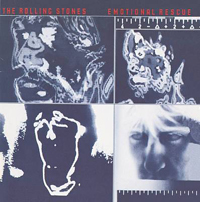
The Rolling Stones: Emotional Rescue

The Rolling Stones Emotional Rescue

In 1978, Some Girls proved that the Rolling Stones were still a major creative force and a rock and roll band to be reckoned with. In the age of punk, the Stones had proven themselves as fierce as any of the young upstarts who were dismissing them as dinosaurs. By ramping up the guitars, speeding up the tempos, and still being open to the current music scene, the Stones had planted a flag for all the remaining bands of the 1960s.

In 1980, they dug up the flag and buried it under a landfill.

Emotional Rescue is not the worst officially released Rolling Stones album, but it’s certainly near the bottom of the barrel. At least Their Satanic Majesties’ Request was an interesting failure and contained two classic Stones songs. By comparison, Emotional Rescue is a tired slog through the music scene of the day, populated by songs that were recorded but deemed not good enough for the previous album and a handful of new tracks. But even in 1980, the songs here sounded out of date. Disco was still king in 1980, but it was being absorbed by New Wave and post-punk and starting to manifest itself in some interesting ways. Some Girls showed that the Stones were paying close attention to disco and punk; Emotional Rescue indicates that they’d stopped listening to anything new in 1978. It is not the sound of a vital band; it is the sound of old war horses trying to emulate the sounds that the kids are listening to these days.

The opening track, “Dance, Pt. 1”, is as imaginative as its title. It’s a disco/funk track that is better than “Hot Stuff” but nowhere near as good as “Miss You”. It’s actually a pretty good groove, and Mick Jagger is convincing even as the rest of the band is coasting. “Get up/get out/Into something new” Jagger snarls. The nights he was spending at Studio 54 are clearly his muse here, but the lyrics are mostly nonsensical; he seems to have put almost no effort into writing them.

The Stones follow this with a rocker, opening the album with a disco/rock salvo that mirrors Some Girls. But “Summer Romance” is no “When The Whip Comes Down”. While “Romance” is one of the few genuine winners on the album, it’s also an archetypal post-Exile on Main Street rock track. It pales in comparison to the vastly superior rockers on Some Girls, but it’s a good album track here, and probably would have fit on Goats Head Soup or It’s Only Rock ‘n’ Roll. “Summer Romance” does, at least, have an excellent guitar solo, and Charlie Watts swings like a demon. There’s also an excellent bass line from Bill Wyman. In fact, Wyman is the unsung star of the album. For years his bass had been largely buried in the mix, but as the Stones paid homage to dance music, the rhythm section rose in importance and Wyman’s bass once again came forward. This album is actually a potent reminder of what a great bass player Bill Wyman was, and a sad reminder that the bass that was so prominent in the 1960s had become muted in the 1970s.

“Send It To Me” served notice that the Stones were checking off boxes on this album. “Dance” was the disco track, “Romance” the rocker, and “Send It To Me” is the obligatory reggae filler. It’s a lazy shuffle that Charlie Watts sounds half asleep on. The entire band plays it as if they simply don’t care. Jagger tries to put some life into it, but his delivery is once again undercut by half-baked lyrics about a mail-order bride. The Stones were never particularly convincing when it came to reggae, and this is readily apparent here. There’s no inspiration at all, just lazy playing.

The band returns to rock with “Let Me Go”, but the song simply sits there. Keith Richards and Ron Wood chug along nicely on guitar, but the song sounds like it’s going somewhere only when Jagger and Richards start harmonizing on the bridge. That moment passes in the blink of an eye and it’s back to the chug. There’s a decent guitar solo and once again Wyman plays like an old pro, but Watts now sounds like he’s completely asleep. The drums aren’t bad, especially in the breakdown about two and half minutes into the song, when Watts wakes up and reminds the world that he’s Charlie Watts and he doesn’t play bad drum parts, but nothing could save the song from its mediocrity. In the context of the album, “Let Me Go” sounds better than it actually is because it’s at the very least a rock number, and it’s the Stones playing the music they were born to play. It’s all the more disappointing because the song segues into “Indian Girl”, a too-long acoustic ballad that features some nice, tinkling piano parts and some genuinely lovely pedal steel from Ron Wood. But despite some interesting Mexican mariachi-style horns that add a nice touch “Indian Girl” is boring. The acoustic guitar is so laid back it might as well not even be there. Jagger talk-sings over the fade as the song disappears into nothingness. It’s too bad because on an album where the lyrics can best be described as weak, “Indian Girl” is a political rumination about the indigenous population of Central American countries at a time when that section of the world was being torn apart by conflict. It’s a serious subject and a heartfelt lyric, married to a tune that never happens.

The second side of the album kicks off with another rocker. “Where The Boys Go” was picked up by rock radio at the time because it was one of the few songs on the album where the Stones rocked unapologetically. But that doesn’t mean it’s a good song. There’s a fine guitar solo, but Jagger sings much of the song in a faux-Cockney accent that is, at best, distracting and, at worst, silly. There are also prominent female backing singers that add nothing but stridency to an already half-assed vocal. Yes, it rocks. Yes, Charlie Watts is now fully awake and pounding. But “Where The Boys Go” is tuneless and pointless. Like “Let Me Go” it sounds better in context but this is the weaker song.

The Stones had cut their teeth on blues music. Jagger famously said, in his first newspaper quote, “I hope they don’t think we’re a rock and roll outfit”. But while the blues always underpinned the Stones, the traditional form had largely been eschewed by the band. “Down In The Hole” was the first traditional 12-bar blues the Stones had done in many years. There’s a great harmonica and for the first time on this album the band sounds like they’re fully invested in the music. It’s not a great blues song by any stretch, but it was good enough that the Stones should have taken a cue from it and started doing more straight blues numbers. It’s a style the Stones always excelled at, and “Down In The Hole” provides a highlight on an album drowning in indifferent writing and playing.

The Stones were smart enough to put only one real disco song on Some Girls, and “Miss You” had a bridge that came out of the rock world. While you could dance to “Beast Of Burden” it was disguised enough to pass for a rock ballad on first listen. But the title track for this album is the single purest expression of Jagger’s love of disco that the Stones ever did. It bears almost no trace of rock. There are good things here: as required by the Gods of Disco, the rhythm section is spot-on (Wyman’s bass is outstanding) and the song is an earworm, making it somewhat listenable even when you’re not on the dance floor. There’s also a great saxophone in the fadeout. But there’s plenty of bad here, too. Jagger sings the entire song in a tortured falsetto, and does a proto-rap that is nothing short of excruciating; Richards and Wood are almost invisible; there’s no warmth at all and nary a trace of emotion in the performance. “Emotional Rescue” is a time piece. It’s forever locked into 1980 and it must be admitted that it evokes a time and a place for those of us who were around at that time. As was true of most disco, however, the songs that worked when you were dancing do nothing when you’re sitting at home or driving in your car. That goes double for this song because its style was based on heavily electronic Euro-disco, and not the more organic American dance music. “Emotional Rescue” was shocking enough as a Stones song that many fans started reaching for the torches and pitchforks, but it’s not as terrible as it seemed when it first was released. It’s also not good.

As if sensing that “Emotional Rescue” was a bridge too far, the Stones followed it with the one legit Stones classic on the album. “She’s So Cold” is the only track on this album that could have fit on Some Girls…probably because it was written and first recorded for that earlier album. Wyman again provides the support; his is the car the band rides in. Jagger’s vocal delivery is excellent and the lyrics contain the trademark misogyny and humor that marked so many of the band’s best songs. As they are throughout the album, the guitars are fairly muted but they are at least solid and Richards and Wood blend seamlessly.

Unfortunately, the Stones couldn’t sustain this level even for one more song. “All About You” has some wonderful harmonies on the chorus, but this is the first of many of Keith’s sleepy, album-closing ballads. Keith hasn’t written and sung a great ballad with the Stones since “You Got The Silver” on Let It Bleed, and “All About You” is never more than pleasant and boring.

Taken as a whole, Emotional Rescue is saved from being the Stones worst album by the fact that it sounds like the Stones at least had songs that they were performing (as opposed to the riff-based jams of Black And Blue). But there’s no question that the album is occasionally painful to listen to, and only once truly engages the listener. Satanic Majesties was a druggy experiment that went awry; Black and Blue was an audition turned into a contractual obligation album. Emotional Rescue was a different animal completely. Emotional Rescue was the Stones doing what the Stones are supposed to do…and failing.

Grade: D+

All These Years, Vol. 1: Tune In, by Mark Lewisohn

All These Years, Vol. 1: Tune In, by Mark Lewisohn

For most Americans the story of the Beatles begins fifty years ago today when a plane carrying the four longhairs from Liverpool landed at John F. Kennedy Airport, and kicks into gear two nights later when the band played on The Ed Sullivan Show to what was then the largest television audience of all time.

Of course, that is not where the story begins. The Beatles didn’t spring forth fully formed, like Athena popping out of Zeus’s head. In one incarnation or another they’d been playing and singing for almost six years by the time Sullivan introduced them. These six years are probably the least known but, in many ways, the most fascinating and important period in the band’s history. Now author Mark Lewisohn has finally released the first volume of his projected trilogy about the band, and the work more than lives up to the expectations.

Lewisohn has long been known to Beatles fans as the world’s leading expert on the subject, the author of the essential The Complete Beatles Recording Sessions that details almost every minute the band spent in the studio. He’s as close to an “official” expert the band has; with their permission he was given access to every note they’ve recorded (including all the unreleased stuff), he’s written liner notes and books, and he wrote the biographical prefaces to The Beatles Anthology (the officially sanctioned story of the band, in their own words). With Tune In, he’s outdone himself.

This is not simply a biography of The Beatles. This is the Moby Dick of rock and roll biographies. It is so richly detailed, so deep, and so complex, that it’s like seeing the Beatles for the first time in high-definition Technicolor after years of viewing them in grainy black and white. Lewisohn leaves no stone unturned here. True, it’s not really that important for even obsessive fans (guilty!) to know how much George Harrison paid for an amplifier in 1962, but those nitpicky details are deftly woven into a narrative arc that emphasizes the story over the minutiae. It’s a story told with cheek and humor, completely appropriate for the subject, and is bathed in loving detail. Lewisohn is clearly a huge fan, but he’s not worshipping at the altar here. Paul McCartney could be petty, narcissistic, and jealous. John Lennon was often cruel and cutting. Pete Best, it is clear, was a lousy drummer who couldn’t keep time if the lives of millions were at stake. None of the Beatles practiced monogamy, though both Lennon and McCartney demanded their girlfriends be subservient in almost all ways.

The early years of the band contain stories that all hardcore Beatle fans know:

  • When John was five he was forced to tearfully choose between his mother and father;
  • the head of Decca records refused to sign the Beatles, telling their manager Brian Epstein “Guitar groups are on the way out”;
  • George Martin heard the Beatles demo and liked it enough to bring them in, agreeing to sign them when he met them and was impressed by their humor and spirit;
  • when Pete Best was fired it was because the Beatles were jealous that their “mean, moody, and magnificent” drummer got all the girls;
  • bassist Stuart Sutcliffe died a sudden, shocking death;
  • after he was sacked, Pete Best told his best friend, Beatles roadie Neil Aspinall, to continue working for the band because “they’re going places”;
  • the Beatles never tried marijuana until they met Bob Dylan;
  • Lennon and McCartney spent the early years feverishly writing songs together.

The stories are so well-known, why do we need another Beatles biography? Well for starters, this is the first biography that states with complete authority that not a single one of these stories is true. Lewisohn has talked extensively not just with the people closest to the band, but their neighbors, schoolmates, employers, and everyone else with whom they had contact. His command of the facts and of the story is so overwhelming that the reader is left in awe of both his basic knowledge and the years of research he put into the book. When the facts are unclear, Lewisohn acknowledges it. When he cannot speak authoritatively, he presents all known sides of the story. Still, the number of myths he dispels is astounding.

Lewisohn wisely avoids foreshadowing for the most part. There are a handful of references to what will come later, but Tune In is set in the time it covers. This gives the book a sense of immediacy that too many biographies lack. The story builds gradually, sprawling over 800 pages (not including the end notes!), and covers only the time period ending on January 1, 1963. At book’s end, the Beatles are still over a year away from landing at Kennedy Airport. At book’s end, the airport was still called Idlewild because Kennedy himself was nearly a year away from Oswald’s bullets. Ed Sullivan, Shea Stadium, Sgt. Pepper, the Maharishi, Apple Records…these are stories for future books. Tune In ends with “Love Me Do”.

But this is the story of The Beatles. It’s all there. The guys that charmed the hardened and cynical New York press and won over the hearts of America are present and accounted for. The irreverence, humor, and restless creativity that later made Revolver are here in their early stages. Too many Beatles books think the story begins where this book ends; the early years are dismissed as a time when an amateurish act went to Hamburg and learned how to be a good band.

Essentially, that summary is true. The Beatles were a band with limited skills and a small repertoire who went to Hamburg, Germany to be the house band at the Indra Club, the sleaziest bar in town, before making their way up the musical ladder to the Kaiserkeller, the second sleaziest bar in town. Hamburg was such a high pressure situation that it turned the rough coal of the band into a brilliant diamond. It was in Hamburg that their repertoire expanded enormously because they refused to repeat any songs on the same night, and they had to play for four and half hours a night, six hours on the weekend. They learned songs on the fly, essentially rehearsing in front of crowds of drunken and often violent locals and sailors. In Hamburg they learned to put on a show, pressured by the Indra’s manager who would bellow “Mach schau! Mach schau!” (“make a show”). The show they put on, had it been seen in 1977, would have been called “punk rock”. Stomping, jumping, screaming, joking with and at the audience…the young band developed a visceral, exciting act to go with the music. They went to Hamburg as Liverpool’s also-rans. Nobody thought of them as being anything special. The best band in Liverpool was widely acknowledged as Rory Storm and the Hurricanes, featuring drummer Ringo Starr. When they came back from Hamburg, they were the best, tightest, band in Liverpool, probably the best band in England, and possibly the best rock ‘n’ roll band in the world. As such, they became stars in their hometown, attracting a rabid, fanatical following.

They would return to Hamburg four more times, the last two times being brief contractual obligations around the time of “Love Me Do”. Each time they appeared in a higher class of low-class bars. By the time they came back from Hamburg for the third time, they had played the equivalent of almost four and a half hours every night for eight months. That’s just Hamburg, and doesn’t include their countless sets in Liverpool’s Cavern Club. When you consider that type of pace, sustainable only by the young (and full of amphetamines), it’s nearly impossible to imagine a band becoming more tempered. Even when Stuart Sutcliffe quit the band in order to stay with the woman he loved, they carried on as if nothing had happened by forcing McCartney to (reluctantly) play bass. But Lewisohn also takes great pains to point out how unusual the Beatles were. It wasn’t simply that they were the best band in Liverpool, something that almost everyone in the city acknowledged in 1961. They were different. At a time when nearly every band in England was modeled after Cliff Richard and the Shadows (a singer and backing group), the Beatles all sang (even Pete Best would sing once or twice a night), and they sang harmonies, something no other band in Liverpool was doing. They were very funny, bringing their boundless love of The Goons and John’s Lewis Carroll-esque wordplay into their act. They were more than a rock ‘n’ roll band; they were the first rock group, comprised of inseparable friends (and Pete Best on drums). Lennon was clearly the leader at this time, but McCartney and Harrison were near equals. There was no star; they were all stars.

The entire history of the early years of the Beatles is laid out here and, despite the millions of words previously written about the band, there are a wealth of revelations. John, Paul, and George played as a trio named Japage 3? Brian Epstein was not their first manager? George Martin was forced into producing the Beatles as punishment for having an affair with his secretary? A recording contract was offered only because EMI wanted the publishing rights to “Like Dreamers Do”? Beatles roadie and right-hand-man Neil Aspinall, a teenager himself, was having an affair with Pete Best’s mother…and is the father of Best’s half-brother? Aside from a few very early attempts when they were still known as The Quarrymen, John and Paul didn’t start writing in earnest until after they got a recording contract? Brian Epstein became the manager of so many Liverpool acts not because he liked them, but because it enabled him to hold a near monopoly on the Liverpool music scene (and thus promote the Beatles even more heavily)? The Beatles introduced the fledgling Detroit music scene to England, by being the first band to do a Motown song on the BBC?

This is the complete story of the early years. Many myths are destroyed; many are confirmed. The true story is better than the myth. The drugs and drink are here; the rampaging, insatiable sexual appetites of young men away from home and living in squalor on Hamburg’s naughtiest street are here; the German art crowd of “Exis” is here, teaching the young band through their example that there are no rules to art; Brian Epstein’s tawdry, dangerous taste for rough trade sex is here; the violent streets of post-war Liverpool are here; most of all, the music is here. Large sections are devoted to who the young band was listening to, who they liked, and who they didn’t like. Barrels of ink are spilled detailing their love for Elvis, Buddy Holly, Gene Vincent, Little Richard, Eddie Cochran, and Carl Perkins among many others. It brings them alive in a way that is not just “the Beatles as pop music icons” but, rather, young men in love with rock ‘n’ roll. They were music obsessives, scouring the record shop at NEMS (managed by the young Brian Epstein), for the latest and greatest singles from America. They were The Beatles as the world knows them and loves them, at a time before anyone outside of Liverpool and Hamburg had heard of them.

The book is not without flaws, but most of them are frustrating and not serious. Lewisohn often describes interesting photographs, but doesn’t include them with the photos in the book. Sometimes the level of detail is all too much. There are several dog whistles to Beatles fanatics (even including some Rutles references) that would sail over the heads of non-fanatics. The next volume is not due out for another five years, and the finale five years after that…and that is the most frustrating thing of all. Regardless of these picayune flaws, All These Years, Volume 1: Tune In is the definitive biography of the savage young Beatles, and Mark Lewisohn is their Boswell. It is difficult to imagine anyone else even bothering to tell the story after this. Any future books about the band will more likely be narrowly focused to an event, an album, or even a song. There is simply no further need for another biography. Tune In sits along Peter Guralnick’s two-volume biography of Elvis Presley at the pinnacle of books about rock and roll music.

In The Basement Bars: Grant-Lee Phillips, The Turning Point, And Looking For What’s Real In An Age Of Artifice

With a few notable exceptions, I gave up on going to concerts at the Enormodome back in the early 1990s. Sitting directly in front of the stage at a tiny local venue called The Turning Point, blues legend Buddy Guy handed me his glass of brandy and asked me if I could hold it while he tuned up. Suddenly the idea of sitting in Row Y Bother at Giants Stadium, watching a concert on gigantic televisions, no longer really appealed to me.

That memory came back to me the other night when I was talking with singer/songwriter/troubadour Grant-Lee Phillips after a stellar, loose set at that very same Turning Point. He took the stage looking a little discombobulated after not enough sleep the night before and immediately started joking with audience before launching into four straight unreleased songs, all of which were excellent. From there the rest of the show was a mix of songs spanning his days as the leader of alt-rock cult legends Grant Lee Buffalo through his latest, lovely, acoustic album Walking In The Green Corn. Throughout the night he joked with the crowd, invited a truly embarrassed waitress onto the stage to sing “Happy Birthday” to her, took requests, and played one extraordinarily good song after another with passion and humor. After the show he greeted everyone personally, sold a bunch of CDs, launched into an impromptu Tom Jones impersonation, shook hands, and thanked everyone for their support and for coming that night.

I don’t know whether he was disappointed with the size of the crowd, or the venue. The Turning Point is a very small place in the basement of a restaurant, and it was only two-thirds full. Phillips has trod some of the biggest stages in the world, when Grant-Lee Buffalo was opening for R.E.M. and the Smashing Pumpkins during the heyday of the alternative rock explosion. But though the crowd was small, it was warmly appreciative. They were all clearly fans, which Phillips noted from the stage after hearing the breadth of requests being shouted, thanking the crowd for being there with him throughout his career.

I often wonder why an artist such as Phillips, who has received raves from critics and his fellow artists, who has released one strong album after another, is playing The Turning Point while Lady Gaga and Justin Bieber are playing to tens of thousands of people per night and having their faces and music splashed all over television and Entertainment Tonight. I don’t know whether Phillips cares about any of that. He certainly shouldn’t. He’s played the giant stages. He’s collaborated with legendary rockers like Michael Stipe and Robyn Hitchcock, among many others. He’s been voted “Male Vocalist of the Year” by the critics at Rolling Stone magazine. He has no reason (except maybe financial) to worry about how many people he’s playing to now. He’s been there, done that, and probably owns the T-shirt. He should feel very secure in the art he’s been creating for over 20 years; it’s extraordinarily (and consistently) good. He’s never released a bad album, and for me Grant Lee Buffalo’s Mighty Joe Moon ranks near the top of the best of the 1990s alternative rock scene. Though I’ve quibbled with the running order and hushed tones of some of his solo albums, I’d be hard pressed to think of a bad song he’s released.

You need to go back to the Beatles to find a time when the best artists were also the most successful in terms of sales, concerts, and radio. Since then, while there have certainly been many great and successful artists, much of the most interesting music has bubbled under the surface. It’s being played in the basement bars like The Turning Point and on the few remaining independent radio stations. The underground has always been there. It’s where you find Arthur Lee hobnobbing with the Velvet Underground, where the MC5 and New York Dolls engage with Richard Thompson and The Minutemen, and where Big Star and The Replacements blend seamlessly. It’s where real people are making real music for real reasons. It’s where a man with the songs, a guitar, and a voice can move the souls of an audience through the sheer power of music in ways that even great artists are incapable of doing when the audience is too large and too remote. That’s the message of Grant-Lee Phillips’s performance at The Turning Point. It’s a venue that holds, at most, about a hundred people, but legends have stood on that tiny wooden stage. Some of these legends had achieved enormous levels of fame and, presumably, money. The Kinks’ Dave Davies gave one of the best shows I’ve ever seen there. Blues masters like Buddy Guy, Albert Collins, Johnny Winter, Mick Taylor, and John Mayall have played there. Richard Thompson, Lonnie Mack, Leslie West, Robbie Krieger, Roger McGuinn, Levon Helm, Eric Burdon, Rick Danko, Dr. John, Ronnie Spector and many others have played there. It’s also been the home base for local bands like Joe D’Urso and Stone Caravan and Finn and The Sharks.

Whether it’s former superstars whose days of playing Madison Square Garden or Woodstock are behind them, or artists who have never and, likely, will never achieve those levels of stardom, it is in basement bars like The Turning Point where you can still find the real thing at a time when the culture is preoccupied with what cuts of beef Lady Gaga is wearing tonight or what deity Kanye West is comparing himself to.

In some ways, it’s too bad that a songwriter and singer the caliber of Grant-Lee Phillips doesn’t reach huge audiences. His music is excellent, his lyrics are as good or better than far more popular wordsmiths (Bruce Springsteen comes to mind), he’s a very good guitarist, and he’s got the voice of a wicked angel. He should be reaching a mass audience. If my opinion means anything to anybody out there, go now, do not stop, and buy Mighty Joe Moon. It will open doors, and you will hear what Mumford and Sons, Of Mountains and Men, and The Lumineers wish they sounded like. From the righteous fury of “Lone Star Song” through the plaintive beauty of “Rock Of Ages” you’ll hear the lineage of The Band and Harry Smith’s Anthology of American Folk Music put through an alt-rock ringer. And when it has sunk in, go buy everything else. You won’t be disappointed.

It isn’t fame, fortune, or induction into the Rock and Roll Hall of Fame that matter. It’s not about how many paparazzi are chasing you down the street. What matters is the music and how it connects to your heart, how it moves your soul, how it lifts you up. It’s getting harder to find the good and the true in this age of artifice, when we’re bombarded with the cult of celebrity, as if fame is the equivalent of accomplishment. But it is there. It’s in the basement bars of America like the Turning Point, and Grant-Lee Phillips is a shining example of a talent that burns brightly even when few are around to hear it. Long may he play.

The Ten Greatest Christmas Rock Songs: #1. Christmas Must Be Tonight

Sure the entire list is subjective and, of all the artists who appear here The Band would be my favorite, but my personal prejudices don’t distract from the fact that this is a stunning song. The song was buried halfway into the pretty lousy Band swansong Islands, a contractual obligation album thrown together after The Last Waltz, but it’s got all of the hallmarks of The Band at their best. Garth Hudson’s swirling keyboard underpins a rootsy modern folk song about the birth of Christ written from the perspective of an awe-struck shepherd abiding his flock by night. Rick Danko, with help from Levon Helm and Richard Manuel, brings a high level of pathos and yearning to the vocals. “Fear not, come rejoice/It’s the end of the beginning/praise the new born King” sings Danko in his vulnerable high tenor, and it’s clear that Robbie Robertson has written not merely a great Christmas rock song, but a great Christmas carol. This is the last great song by The Band, and one of the most beautiful Christmas songs ever recorded.