The Rolling Stones: Sticky Fingers

Sticky Fingers

With Let It Bleed, the Rolling Stones carved the epitaph on the tombstone of the 1960s. The decade that began with the hopes and dreams ushered in by the Kennedy Administration ended in a tangle of riots, assassinations, war, drugs, and murder. The decade had started with John F. Kennedy’s election and stirring inauguration where he stated, “Let the word go forth from this time and place, to friend and foe alike, that the torch has been passed to a new generation of Americans—born in this century, tempered by war, disciplined by a hard and bitter peace, proud of our ancient heritage—and unwilling to witness or permit the slow undoing of those human rights to which this Nation has always been committed, and to which we are committed today at home and around the world.”

Oh well, you can’t always get what you want.

In 1971 the Stones released their first studio album of the new decade and, just as Let It Bleed had provided the epitaph of the prior decade, Sticky Fingers was the signpost for the new decade. The peace, love, and flowers ethos of popular music in the 1960s turned into the murky, drug addicted sounds of the new rock. It’s fair to say that the celebration of drugs and decadence in popular music started in the 1960s, but it became a much darker tale in the 1970s, and Sticky Fingers points the way.

Keith Richards has claimed that it’s not a particularly heavy drug album and that many of the songs had been written over the three previous years, but all of that is beside the point. Sticky Fingers is replete with drug references from the coy double entendre of the opening track’s title (“Brown Sugar” is both a sexual reference and the name of a type of heroin) to the “head full of snow” (i.e., cocaine) in the closing “Moonlight Mile.”

Pigeonholing the album as merely a drug- and sex-fueled collection of songs fails to do it justice. Sticky Fingers also happens to be one of the greatest albums in the history of rock music. The band may have been deep into their addictions at this time, but they were still at the peak of their creative abilities.

The two chords that open “Brown Sugar” are as easily identifiable for rock fans as the entire riff of “Satisfaction,” and the main riff of the song is one of the best the Stones ever did. “Brown Sugar” provides a perfect synthesis of everything that makes the Rolling Stones a great band. The main guitar riff from Keith Richards is one of the best in the history of rock music, and the lyric is one of Mick Jagger’s greatest creations, a heady stew of drugs, sex, and decadence unparalleled in popular music. On paper, the idea that “Brown Sugar” would be a hit single (and it was a number one single) is ludicrous. With lyrics referring to slavery, sadomasochism, interracial oral sex, it would seem unlikely that the song would ever be acceptable to radio. The fact that most of the lyrics are largely indecipherable certainly helped. The only clearly recognizable lyric is the chorus line of “Brown Sugar, how come you taste so good?” with that insistently catchy “Yeah! Yeah! Yeah! Whooo!” sealing the deal and making the song a perfect fit for arena shows. The Stones pulled off a really neat trick with this song, taking a subject that was completely unfit for radio and marrying it to music that simply screamed, “hit single.” With that riff, overlayed by Mick Taylor’s great lead and the incredible Bobby Keys sax solo, it was a song radio simply could not ignore. I suppose it was a good thing that the Stones didn’t include a lyric sheet with the album.

"Sway" follows the pattern of opening Stones albums with a 1-2 punch that leaves the listener knocked sideways. Unlike "No Expectations" from Beggars Banquet and "Love In Vain" from Let It Bleed, “Sway” leaves the acoustic guitar in the closet and pummels the listener with a tortured heavy ballad. Once again the Stones are reinventing the blues. “Sway” is slow, but everything about the song indicates that it started life as a ballad before it received an injection of steroids. Jagger slurs the words, making the song even more indecipherable than “Brown Sugar,” but the mood is dark. I don’t know whether the song was written about, or for, Brian Jones, but the lyrics can fit. As a troubled soul, that “demon life” certainly had Jones “in its sway,” and there is a verse that clearly indicates the passing of a friend: “Ain’t flinging tears out on the dusty ground/For my friends out on the burial ground/Can’t stand the feeling getting so brought down.”

Through the bad, Jagger is optimistic that love will find a way. “There must be ways to find out/Love is the way they say is really strutting out” he sings before wailing a nearly incoherent scream on the words "Hey, hey, hey, now!" Love seems to triumph in the end, as Jagger sings of waking up next to “someone that broke me up with a corner of her smile” but the demon life in the chorus returns as Nicky Hopkins on angelic piano and Mick Taylor on devilish guitar duel to the death. Indeed, “Sway” is one of Mick Taylor’s finest recorded moments. The solo he plays beginning at about 1:35 into the song is a textbook example of brilliant slide playing, as tasteful and economical as the best of Duane Allman, while the closing solo he plays over the last minute of the song is nothing short of staggering, the first real instance of virtuosity appearing on a Stones studio recording. Taylor rarely gets enough credit for his work with the Stones, being the middleman between the legendary Brian Jones and Ron Wood. On “Sway,” a track on which Keith Richards provides only backing vocals and the rhythm guitar is ably but unspectacularly played by Mick Jagger, Taylor shows just what he was capable of doing, and he elevates the entire song. It is mostly the hard-core devotees who are familiar with “Sway,” but it is one of the greatest of all Stones songs and the reason for that is Mick Taylor.

In 1970, the Flying Burrito Brothers released a song called “Wild Horses” that carried the songwriting credit of Jagger/Richards. The song had been “loaned” to Gram Parsons as a thank you from Keith Richards. Parsons had shown Richards how to use alternate guitar tunings for greater effect. The Burritos never had a hit with “Wild Horses”, but it’s a piece of rock and roll trivia that their version was the first recorded and released version of what, in 1971, would instantly become a Stones classic. I actually prefer the Burritos version of the song, but that doesn’t mean that the Stones version isn’t solid gold. Here the acoustic guitar returns, and it’s some of the finest acoustic playing on any Stones song. Taylor and Richards weave together, with Richards playing the main riff and Taylor interjecting brief finger picking licks, and Jim Dickinson providing tinkling piano notes under the most plaintive, emotional vocal Jagger had ever recorded. Charlie Watts kicks in and while he doesn’t have much to do on the song, what he does is simply perfect. Bill Wyman provides a very elementary bass line, mainly individual notes hit for accent. The lyrics tell a heartbreaking tale of separation and loss: “I know I dreamed you/A sin and a lie/I have my freedom, but I don’t have much time/Faith has been broken/Tears must be cried/Let’s do some living/After we die.” But in the end the song is about reconciliation and redemption. The separation is over, and Jagger reassures his love that “Wild horses couldn’t drag me away.” Musically, the secret weapon of the song is the harmony vocal on the chorus. The horrendous attempts at harmony that gave a cheeky charm to Between The Buttons is now a magnificent blending of Jagger’s voice with Keith Richards’ raspier harmony. These harmonies imbue the chorus with an incredible depth of emotion.

Sticky Fingers is not a perfect album, although it’s really close. The reason the album falls short of perfection is the maddening “Can’t You Hear Me Knocking.” Propelled by a classic riff, a snapping drum line from Charlie Watts, a great vocal from Jagger, and a note-perfect (if lyrically repetitive) bridge, the song is 2:41 of the best material on the album. Unfortunately, the song is 7:15 long. Immediately following this incredible performance is four and a half minutes of noodling jamming. Rocky Dijon on congas, Jimmy Miller on percussion, and Bobby Keys on sax start the jam convincingly, but just as “Sway” showed the best of Mick Taylor, “Can’t You Hear Me Knocking” shows him at his worst, playing a Santana-lite Latin groove that wouldn’t be out-of-place in your local Mexican restaurant. It’s not that’s his playing is bad, it’s just that it’s not interesting. It’s a truly disappointing coda to an otherwise excellent song. I should mention that the jam has its advocates who love it and frankly, I wish I were one of them. To me, the jam takes up the full length of a song, and adds nothing to the album.

There are also those who would disavow the reading of Mississippi Fred McDowell’s "You Gotta Move," but I am not one of them. It’s a blast of primal delta blues, with a blending of slide guitar and vocal melody over a simple blues lyric. The effect of the song, with its rudimentary drumbeat and field holler vocals, is a chant. It is easy to imagine this being sung in the cotton fields. Coming after the cluttered ending of "Can’t You Hear Me Knocking," "You Gotta Move" clears the air with its simplicity and manages to say more in 2:34 than "Knocking" does in its extended running time.

Now that the air has been cleared by a Delta blues blast, side two of the record immediately raises the stakes. The real triumph on “Bitch” belongs to Bobby Keys and Jim Price on sax and trumpet, respectively. Sure the guitar riff from Keith and Taylor is wild, but it’s the horn riff that mirrors the guitar riff that provides the real hook in the song. Jagger’s salacious lyric is excellent, swinging between the boastful and the beaten. “Sometimes I’m sexy, move like a stud/Kicking the stall all night/Sometimes I’m so shy, got to be worked on/Don’t have no bark or bite,” he sings. But as tired and beaten down as he is, he can’t help but respond to the loving call of a woman who knows how to get his blood flowing and his heart “bumpin’ louder than a big bass drum.” But even here, in an ode to sex, the lifestyle choices of the Stones raise a brief appearance. “I’m feeling drunk, juiced up and sloppy/Ain’t touched a drink all night.” It’s one of the many references to intoxicating substances that pepper the album.

On "I Got The Blues" the Stones crafted what is one of their best original blues songs, nearly the equal of the brilliant "No Expectations." It’s a perfect combination of lyric and music. Jagger’s lyrics is touching and heartfelt, and you can hear the resignation in his voice as he acknowledges that the affair is over, but he still wants what’s best for her. "Every night you’ve been away/I’ve sat down and I have prayed/That you’re safe in the arms of a guy/Who will bring you alive/Won’t drag you down with abuse." And just as the vocals give way to the solo, it is not the guitar that takes the lead but rather Billy Preston’s beautiful organ solo.

“Sister Morphine” was co-written with Jagger’s ex-girlfriend Marianne Faithfull (some claim she’s really the sole writer) and it’s one of the most harrowing songs ever written or recorded. Jagger’s half-whispered lyrics, backed by a sparse acoustic guitar, paint a bleak picture of despair. With the second verse, Ry Cooder plays a needle-sharp slide and Bill Wyman has his shining moment on the album with his bass line. A simple drumbeat and a heavily distorted piano herald the third verse, when Jagger’s voice turns pleading. “Please, Sister Morphine, turn my nightmares into dreams/Can’t you see I’m fading fast/And that this shot will be my last.” Listen closely as Jagger sings that last word. He stretches out the vowel sound and mutates the soft “a” sound into a long “i” sound before concluding with a barely audible “f.” The effect, if you listen closely is to blur the line between the published lyric of “This shot will be my last” and the more frightening line “This shot will be my life.” As a portrayal of drug addiction, songs don’t really get scarier than “Sister Morphine.”

It wouldn’t be a Stones album from this era without the obligatory country pastiche, but Jagger and Richards came up with their best such song with “Dead Flowers.” It’s a smart-ass kiss off to a former love, driven by the honky-tonk piano of Ian Stewart, the acoustic rhythm guitar from Jagger, and the great solo from Taylor. Charlie Watts rides the hi-hat like his life depends on it, and Jagger sings in his best phony Southern drawl. The drugs are there, of course. “I’ll be in my basement room/With a needle and a spoon,” sings Jagger, but the lyrical hook of the song is the wickedly funny line, “You can send me dead flowers every morning…/And I won’t forget to put roses on your grave.”

After the Stones ended the 1969 tour, they began working on the songs that would make up Sticky Fingers. “Moonlight Mile” was recorded in May of 1970, nearly a year before Fingers was released, and appears to have been heavily inspired by or influenced by the 1969 tour. Rock music is full of songs about life on the road from the sublime (Jackson Browne’s “Running On Empty”) to the ridiculous (Bon Jovi’s “Wanted Dead Or Alive”). I can think of no song that better captures the isolation and loneliness of a life on the road better than “Moonlight Mile.” Is there a better image of the after-party bus ride to the next gig, staring at your own reflection in a nighttime window, than the opening verse?

When the wind blows and the rain feels cold
With a head full of snow
In the window there’s a face you know
Don’t the night pass slow?
Don’t the nights pass slow?

The road is a grueling place in the Stones. Fifteen or so years later Jon Bon Jovi would be bragging about seeing a million faces and rocking them all, but for Jagger the adoring crowd is “the sound of strangers” while the band is “sleeping under strange, strange skies” after another “mad mad day on the road.” Underscored by Paul Buckmaster’s beautiful string arrangement and Charlie’s thick drumming, the pace of the song is stately and powerful, punctuated by Jagger’s one howl, “Yeah, I’m comin’ home!” near the end. Mick Taylor also deserves an enormous amount of credit on this song. His beautiful electric and slide playing more than compensate for his sins on “Can’t You Hear Me Knocking.” Amazingly, Keith Richards does not appear on the song. This is the Jagger/Taylor show, and it provides both a beautiful coda for the album and one of the true highlights of the Taylor era. “Moonlight Mile” may actually be the best pure song the Stones recorded during Taylor’s tenure with the band.

Sticky Fingers is yet another high water mark for the Stones, and also a clear break in both sound and content from what the band had been the previous decade. The pop songs and occasionally obvious attempts to follow the Beatles were gone. The Beatles no longer existed and the Stones were free to do whatever they wanted. Sticky Fingers, with its accent on sex, drugs, and rock and roll was the template the band would follow, with some minor deviations, for the rest of their career.

Grade: A+
The Listening Post: May 2010

May flowers.

  • The PlimsoulsThe Plimsouls. Very strong début album from L.A.’s Plimsouls, heavy on the pop/garage-rock sound. From the great opener, “Lost Time” to the super closing trio of “I Want You Back,” “Mini Skirt Minnie,” and “Everyday Things,” this is the rare album that starts strong and gets stronger as it goes on. Only “Now” and “I Want What You Got” fall somewhat short of the high standards set by the rest of the album and, since the 11 songs on the album barely crack the 30-minute mark, those two songs slide by effortlessly. The sound is a little dated now, but the songwriting is strong and the performances solid.
    Grade: B+
  • Calling The WorldRooney. The self-titled début by Rooney was an instantly likable collection of power pop gems that suffered only from a tendency to have jokey lyrics that undermined the music. Calling The World, has better lyrics, but the music falls apart. All the elements are still there: catchy choruses, strong harmonies, good musicianship. But for some reason the strong parts are not enough to save the songs. When it all clicks into place, like on the title track, “I Should Have Been After You,” and “Don’t Come Around Again,” it reminds you of the best of the début album. But all too often the songs sink into an undifferentiated morass. There’s almost nothing on the album that truly stands out, grabs the listener by the throat, and commands attention. All of the Beatle-isms and nods to 60s pop are in place, but so are some more unfortunate influences. While “I Should Have Been After You” sounds like prime ELO, there’s simply no forgiving the awful Bon Jovi-style keyboards and generic 1985-era production of “Are You Afraid?” The Beatles are a great influence for any band…Cutting Crew and Mr. Mister not so much. The album closer “Help Me Find My Way” tries for an aching sincerity but sinks under a string arrangement that borders on easy listening. Rooney’s début is a fun, catchy album. The followup has a couple of moments that rise to that level, but overall is bland and faceless.
    Grade: C
  • Beginner’s MuckMuck And The Mires. Sure, this is completely derivative garage rock. There isn’t an original note anywhere on this album. That doesn’t mean that it isn’t a lot of fun. With 13 songs clocking in at less than 24 minutes, Beginner’s Muck doesn’t give you any time to analyze the significance of the songs, but it gives you just enough time to enjoy the feel of the album. This is party music with a heavy debt to 1960s garage rock, and some of it sounds like a great lost album from the Dave Clark Five…or maybe The Rutles. The real touchstone here, though, is The Wonders, the mythical one-hit wonder band from That Thing You Do! If you saw the movie with its insanely catchy theme song and wondered what the rest of the album might have sounded like, look no further. Thoroughly enjoyable.
    Grade: B+
  • 8-Way SantaTad. The truly ironic thing about the “grunge” explosion of the early 1990s was that none of the successful bands that emerged from the scene really had all that much to do with grunge music. Nirvana’s first album Bleach was their grunge record but they hit big with a great big, shiny rock album. The truly grungy bands toiled in obscurity, and one of those bands is Tad, named after lead singer Tad Doyle. 8-Way Santa is truly a grunge album, and a really good one. Thick Sabbath-like riffs played at half speed and growled lyrics, this is rock music that really sounds like it’s coming out of some primordial forest. Yes, the 39-second “Hedge Hog” is a waste of space, and “Candi” isn’t much better, but the rest of the album more than compensates. “Jack Pepsi” tells a wicked story of rednecks drinking and driving, and while much of the rest is cryptic to say the least, the songwriting is consistently good. On “Flame Tavern” and “3-D Witch Hunt” Tad manages to sound amazingly like Dinosaur Jr. circa Green Mind. There is a surprising amount of catchy melody in the murk, making 8-Way Santa a prime example of a type of music everyone’s heard of, but few people have actually heard.
    Grade: B

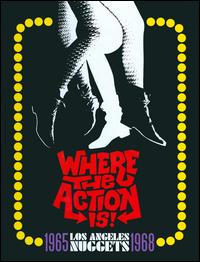
Where The Action Is: Los Angeles Nuggets, 1965–1968

Where The Action Is: Los Angeles Nuggets

This is the fifth release in the Nuggets series from Rhino Records, and the second to focus on a small geographic area (the first was San Francisco). Where The Action Is focuses on the sound of Los Angeles, but the box set also represents the sound of barrel scraping. It’s not all bad, by any means. Much of it is really excellent but for the first time in a Nuggets box (and I have yet to listen closely to the San Francisco box), there is also a distressingly large amount of mediocrity and way too much material that can only be classified as junk.

The box starts well with the Standells rave up “Riot On Sunset Strip,” strong tracks from The Byrds, Love, The Leaves and, especially, Buffalo Springfield and Captain Beefheart. Excellent songs from the West Coast Pop Art Experimental Band (“If You Want This Love Of Mine”) and an extraordinary version of “Take A Giant Step” by the Rising Sons are also highlights, while the Association turns in a solid performance of Dylan’s “One Too Many Mornings.” These songs, and others, make the first disc of Where The Action Is a pretty stellar compilation. The sound is Nuggets-y garage rock, the performances inspired, and the songwriting generally good.

Disc One also demonstrates one of the problems with the box. The inclusion of Buffalo Springfield’s “Go And Say Goodbye,” Love’s “You I’ll Be Following,” and The Doors’ “Take It As It Comes” serve to make much of what else appears sound second-rate. The biggest problem is that, beginning with Disc Two, much of what appears is second-rate.

Frank Zappa once said that the “freaks” of Los Angeles were much weirder and wilder than the more famous “freaks” of San Francisco. That may be true, since Los Angeles was home to people like Zappa, Beefheart, Jim Morrison, Arthur Lee, etc. But Los Angeles is also a city that is built on dreams of stardom. When the Mamas and Papas sang of “California Dreamin'” they were headed to Los Angeles, not the hippie mecca of Frisco. Because Los Angeles is so focused on stardom, the industry there is more likely to be geared towards artificiality, and much of Where The Action Is sounds like it was cooked up in a board room by movie moguls looking to get into the music business.

Here come the phonies: Sonny and Cher, The Humane Society, The Others, The Velvet Illusions, Limey And The Yanks, etc. Way too much of this box sounds like the theme songs to ridiculous 1960s teen exploitation movies. Close your eyes during the annoying “Hippie Elevator Operator” and you can see the go-go dancers as the movie credits splash onto on the screen. Jan and Dean’s “Fan Tan” sounds like a TV commercial for chewing gum…simply awful. The Garden Club’s “Little Girl Lost And Found” is a shameless Monkees rip off. That’s right…a Monkees rip off. Worst of all is Dino, Desi, and Billy’s “The Rebel Kind,” an ode to rebellion that is so lifeless and pale it makes “You Light Up My Life” sound like “My Generation.”

There’s enough good and great material on here for a solid 2-CD set, but spread over four discs the flaws really stand out, and it doesn’t help to have included great material from the truly great bands. Near the end of Disc Four, wedged between the near parody of psychedelia “The Truth Is Not Real” (Sagittarius) and Barry McGuire’s “Inner-Manipulations,” is “You Set The Scene.” This song, the closing number from Love’s epic Forever Changes album, is so much better than anything else in a four-disc radius that it mercilessly crushes the competition. The effect is not unlike listening to a sampling of Merseybeat numbers from Billy J. Kramer and Gerry and the Pacemakers, and dropping the Beatles’ “A Day In The Life” in the middle. It’s simply not fair. Like Bambi vs. Godzilla unfair.

And that’s the striking thing about the box. By including numbers from bands like Love, the Doors, Beefheart, Buffalo Springfield, the Byrds, and the Beach Boys, the flaws of the other bands become so much more evident. Those great bands were real bands and had both sound and an artistic vision. They may have been looking for stardom, but they were first, and foremost, creative people. Too much of the rest of the box is people who have the sound, but no vision. It says a lot when the Monkees come across as one of the more “real” bands, because while they may have been made-for-TV they didn’t sound like they were made for TV. Indeed, the Monkees are represented here by the early Moog Synthesizer experiment piece “Daily Nightly,” an extraordinary Mike Nesmith original song. Too much material on this box, especially on Discs Two and Three, sounds like what movie and TV producers believed the kids of the day would enjoy. Where The Action Is sounds like Los Angeles: 40% real talent, 60% plastic.

Grade: B-

The Beatles: Please Please Me

Please Please Me

It’s one of the most exhilarating openers in the history of rock and roll. Usually, count-ins are left on the cutting room floor since they serve no purpose for the listener and are not actually part of the song, but who would even want to imagine “I Saw Her Standing There” without Paul McCartney’s “One, two, three, faah“? Even after all these years, that simple count-in is enough to get the blood flowing. All of the excitement and sheer joy that were hallmarks of the early Beatles are present in those two seconds before the actual music even begins. The fact that it directly leads into one of the greatest of all early Beatle songs is just icing on the cake.

The Please Please Me album was intended as a moneymaker, benefitting from the moderate success of the first Beatles single, “Love Me Do” and the huge success of the #1 followup, “Please Please Me.” In 1963 albums were done strictly to cash in on the success of singles, which was the primary market for music (strangely, much like it is again today in the world of iTunes). Most rock “albums” were dreadful affairs…a hit song or two surrounded by filler that was chosen by a band’s producer or manager. Maybe there would be a few original songs thrown into the mix (especially if you were a particularly good songwriter like Brian Wilson, Buddy Holly, or Chuck Berry), but an enormous amount of the material for these early rock albums were either covers of earlier hits or new material produced by professional songwriters. There are exceptions, of course. Elvis Presley’s first RCA album was simply killer, and Presley was good enough to bring something special to even the most mundane songs that were forced on him, but that was still the exception to the rule.

A quick cash-in was certainly EMI’s intention when they agreed to let the Beatles release a full-length LP. But the Beatles were different, and their producer, George Martin, was different, too. The Beatles were perfectionists and incredibly headstrong. There would be no covers of “Old Shep” or “Blue Moon” for them. It’s not that they disliked those songs, it’s simply that they felt those songs weren’t right for them.

One of the end results of this band personality was that the Beatles refused to do anything that they felt was second rate. There would be no quick cash-in LPs…each song must be as good as the single. They wanted their fans to have 14 songs of outstanding quality, rather than two great singles (four songs) and 10 pieces of filler. In this sense, the Beatles helped to invent the rock album. (In 1963 in America, Bob Dylan was making a similar argument which led to the flawless The Freewheelin’ Bob Dylan, but he was still operating in a folk milieu.)

Please Please Me is not a great album when you compare it to what the Beatles would do later. When you compare it to what was being passed off as rock music in 1963, it was a lightning bolt straight to the heart of the Brill Building.

John Lennon and Paul McCartney had been writing plenty of songs, but the first album still contains many covers. The full blossoming of Lennon and McCartney’s brilliance was still to come. What this album provides the listener is the invaluable service of hearing what a typical set at The Cavern Club must have sounded like. Recorded in approximately 10 hours, Please Please Me is the Beatles racing through the best of their live show: roaring originals and smartly chosen covers of songs the band chose, not some record company or studio head.

After the opening cannon shot of “I Saw Her Standing There,” almost anything else would pale in comparison. “Misery” is a Lennon/McCartney original, and it’s a standard rock and roll number, circa 1963. The rhymes are simple, almost childish: “me/see/be/misery.” But even on this number the chorus soars when Lennon starts singing the ascending line “I’ll remember all the little things we’ve done,” enunciating each syllable as if the world depended on it, followed by a descending piano lick and the ascending “She’ll remember and she’ll miss her only one” and then the despondent tag of “lonely one.” Sure it’s an early song, and owes a great debt to Buddy Holly, but the voices lift the song over the somewhat flat music and transform it into a promise.

The songs the Beatles chose to cover were invariably well-chosen. One gets the feeling that they chose their covers not because they liked the songs, but because they felt they could bring something to the songs that hadn’t been heard before. Arthur Alexander’s “Anna (Go To Him)” has always been one of the great Beatle covers. Lennon’s voice is all pathos and the instrumentation is sublime. But here again, on the chorus when Lennon’s voice starts breaking against the rocks and McCartney and George Harrison start their wordless, Jordonaires-style backing vocals, the song becomes more than what the songwriter himself achieved.

From Carole King and Gerry Goffin comes “Chains” which features a harmony vocal on the chorus before George takes over for the verses. It’s a good number, but nothing special. But even here, the sound is extremely unusual for rock and roll because it sounds like an integrated group. This continues with “Boys,” a girl group number by The Cookies. Aside from the odd idea of a boy (Ringo Starr) singing about “boys/what a bundle of joy!” this is the fifth song on the record and the fourth lead singer. This idea of the “band” as a “group” is highlighted by Ringo’s exhortation “Alright, George!” before Harrison plays the guitar solo. What often goes unnoticed is that at this early stage, it can be credibly argued that Ringo’s homely singing voice is actually better suited for rock and roll raveups like “Boys” than George Harrison’s. Harrison later developed into a superb singer, but at this point his voice is all Liverpudlian teenage warbling. He seems unsure of himself, where Ringo is ready to just let fly.

They return to Lennon/McCartney originals with the “Please Please Me” single, starting with the B-side, “Ask Me Why.” It’s not a particularly good song, a bossa nova-style number with a solid, if unspectacular, hook. There’s a very real feel to the song in the vocals. Listen to Lennon’s voice crack when he tries to hit the high note on the “my happiness still makes me cry” line at 0:30. Throughout the song Lennon’s voice is, to be charitable, rough.

“Please Please Me” picks up the pace with one of the early examples of a great McCartney bass line pumping through the song, underlining Lennon’s blues-inspired harmonica, and the harmony vocals that raise the song above the ordinary. The lyrics are a cleverly disguised plea for oral sex, taking a subject that was certainly taboo on the radio and bringing it to #1 on the pop charts.

By the time the first Beatle single, “Love Me Do,” kicks off side two, it already sounds primitive. The lyrics are simplistic, on a par with any moon/June/spoon song, but the song contains a great harmonica solo and a captivating vocal tradeoff between Lennon on the verses and McCartney on the title of the song. There’s really nothing special about the song and if the Beatles had not gone on to be the Beatles, it’s likely that the song would have drifted into obscurity.

“P.S. I Love You” is McCartney’s tribute to Buddy Holly (“I love you/Peggy Sue”). It’s another slight song, but features really nice harmony vocals from Lennon and a very nice chorus. “Baby, It’s You” is a solid cover of a Burt Bacharach song. Clearly Bacharach was writing songs at a much higher level than Lennon and McCartney at this time. From a structural perspective, it’s one of the best songs on the album, and features a great Lennon vocal and one of those sublime George Harrison solos that mimics the melody.

Harrison takes another unconvincing lead vocal on “Do You Want To Know A Secret?” Lennon’s and McCartney’s “Doo dah doo” backing outshines the lead, and the song sounds pretty dated, but it’s still a fun listen with the band providing a sympathetic backing to Harrison’s scouse-infused vocals.

Strangely, “A Taste Of Honey” was one of my favorite Beatle songs when I was 10 or 11 years old. I’m not sure why I gravitated to this track, but the melody is superb and the vocals (McCartney on lead, Lennon on backing and harmony) are never less than excellent. The song had been kicking around England for a couple of years at that point, first as an instrumental and then with vocals, so when the Beatles recorded their version it was already on the charts.

“There’s A Place” is the final original track and it’s fascinating. The music is very straightforward and not all that interesting despite another solid bass line from McCartney, but the lyric is very unusual. Predating Brian Wilson’s “In My Room” by a few years, and predating the whole “transcendental meditation” craze by several years, here was Lennon singing about retreating into his own head: “There’s a place/Where I can go/When I feel low/When I feel blue/And it’s my mind.” That wouldn’t be all that out of place on “Tomorrow Never Knows,” but it shows up here in 1963, tacked in between a pop standard and a cover of a popular dance tune.

It is this dance tune that provides one of the great highlights of the early Beatles. The movie Ferris Bueller’s Day Off made this song into a hit again in the mid-1980s, and the Beatles Anthology film includes about a hundred live versions of this song so, for me at least, it’s a little overdone. But there’s no mistaking the raw power behind “Twist and Shout.” Coming at the end of the album, sung in one full take by a shirtless, raw-throated Lennon at the end of a grueling 10-hour recording session, “Twist and Shout” is less an invitation to dance than it is a blast of pre-punk aggro rock. The ascending backing vocals from McCartney and Harrison blend with Lennon’s howl, punctuated by great drum fills from Ringo, to create two and a half minutes of rock aggression, ending the album with the same tone with which it begins. Those final seconds, where the music comes crashing down and someone (Lennon? McCartney?) manages one last defiant “Yeah!”, nail the lid on the album, and also close the door on 1950s and early 1960s-style rock and roll music. Even here, though, it is worth comparing McCartney’s formalized raveup “I Saw Her Standing There” with Lennon’s primal transformation of an Isley Brothers song. While both songwriters would later prove more than capable of working in the other’s wheelhouse, the division between the more formal McCartney and the more anarchic Lennon was already in place.

Please Please Me is the sound of the Beatles working with their influences, supremely confident in their abilities as a band, but still somewhat unsure as songwriters. From this point on, the growth exhibited by the band would be unparalleled in modern music.

Grade: B+

The Rolling Stones: Get Yer Ya-Ya’s Out!

Get Yer Ya-Ya's Out

In 1969, the Rolling Stones went where the Beatles feared to tred: back to the concert stage. The Stones hadn’t toured in three years (a lifetime back then), so the shows were greeted as the return of conquering heroes. The fact that the Stones were also riding on the enormous wave of both Beggars Banquet and Let It Bleed helped considerably. They had just released their two best albums to that point, and the technology and their audience had matured to the point where they could actually be heard in the concert halls.

The 1969 tour is considered by many Stones fans to be one of the best they ever did (the 1972 tour usually gets the #1 ranking), but the entire tour was completely overshadowed by the final show, at a little place we like to call Altamont, where a fan named Meredith Hunter pulled a gun in front of the stage and was subsequently knifed and beaten to death by the Hell’s Angels as the Stones looked on. The murder at Altamont, enshrined forever in the magnificent movie Gimme Shelter, cast a pall over the Stones that lasted for years.

What gets lost in the tale is just how good the rest of the tour was. This era was the peak for the band both as a recording unit and a live band. The extra musicians, blow-up phalluses, giant inflatable women, football jerseys, etc. were still years away and on the stage was a young band with a lot to prove.

The Stones had released an earlier live album called Got Live If You Want It, but that was a poorly recorded travesty where the band was largely drowned out by the screaming of teenyboppers. The album for the 1969 tour, Get Yer Ya-Ya’s Out! The Rolling Stones In Concert was an entirely different beast.

It is on the very first track where the Stones used a delay effect of over-lapping introductions to announce themselves by the title that would stick: The Greatest Rock and Roll Band In The World. From there the band launches into an incendiary take on “Jumping Jack Flash” that hits all the right notes for a live rock album: it’s looser than the studio version and the guitars especially have even more muscle.

“Carol,” one of two Chuck Berry covers, is a nice reminder that the Stones of 1969 were not that far removed from the Stones of 1965. That loose vibe, pressing up against but never crossing the border of sloppy, is fully evident as Keith rips into a great solo that would make Berry proud. “Little Queenie,” the second Berry cover unearths a little-known gem and provides perhaps the definitive take on the song. Both of the Berry songs are helped enormously by the boogie-woogie piano of the “sixth Stone,” Ian Stewart. His piano runs on both songs rival those of Berry’s great sideman, Johnny Johnson and give Keith a solid foundation for his guitar solos to achieve orbit.

From Banquet comes the salacious “Stray Cat Blues,” slowed down and raunched up even more than the malevolent studio version. The 15-year-old jailbait of the studio version is now a downright twisted 13-year-old. One of the things that sets this version apart from the studio version is Mick Taylor, who steps up throughout the album as the only true virtuoso to ever play in the band. Taylor’s genius is a magnificent counterpoint to the rawness and earthiness of the rest of the band. In many ways such a combination of prodigy and guttersnipes shouldn’t work, but it does. This is the first Stones album on which Taylor plays on every song, and he is the unsung hero throughout, along with the indispensable Charlie Watts.

The slide guitar Taylor plays on “Love In Vain” counters Keith’s delicate picking and lifts the songs above the more gentle version on Let It Bleed. Where Robert Johnson’s blues get a fantastic, acoustic reading on the studio album, it is this live, electric version that reaches deep into the heart of the Delta.

“Sympathy For The Devil” gets a radical overhaul, from the slow samba that graced Beggars Banquet to a sped up, raw blues with a dueling Richards/Taylor solo that nearly blinds the listener with brilliance. Bill Wyman also nearly steals the show here with his busy, sinister bass rumbling throughout the song. While it lacks the classic status of the studio version, this live version is hotter than a flamethrower. And it wouldn’t be complete without the plaintive cry from a girl in the audience requesting “‘Paint It Black’…’Paint It Black’…’Paint It Black’, you devils!” just before the chugging guitar introduces “Sympathy”…a live album moment so iconic that the Stones sampled it on their 1990 live disc Flashpoint as a joke.

Also sped up and raunched up is the already over-the-top “Live With Me.” One of the highlights of Let It Bleed, the live version is one of the highlights here. Mick Taylor simply owns the song, and Watts shines brilliantly throughout. It’s ramshackle and rough, but that’s what makes the song so compelling.

In contrast to most of the songs, “Honky Tonk Women” gets slowed down and put in touch with its blues roots. This is the version that really sounds like it belongs in a small, Southern honky-tonk, played on a stage hidden behind chicken wire. The studio version of the song is classic Stones, but this version sounds like it’s straight from the swamp.

The album closes with an extended, fully electric version of “Street Fighting Man” that Taylor dominates. It’s downright filthy compared to the studio version, and once again the Stones slow the song down a notch in order to increase the power behind the music. Where the studio version was all treble, with the acoustic guitars pushed into the red and flourishes of sitar providing an odd touch, this version is just plain mean…bottom-heavy, with Taylor’s lightning bomber runs soaring over Keith’s scorched earth rhythm.

Of all the songs on the album, it is the final track of side one that provides the centerpiece of the album, as well as creating a character for Jagger to inhabit with the same intensity that his London rival Roger Daltrey was inhabiting Tommy on stages at the same time. “Midnight Rambler” was a good, but anemic, track on Let It Bleed. On Ya-Ya’s it is all blood and blues, a truly harrowing performance that lets Jagger play the part of a sociopathic murderer with great conviction. Live, the song becomes so much more than it was on Let It Bleed that it became the standard version of the song for Stones fans. Forever after, when the Stones played “Rambler” it was the Ya-Ya’s version they trotted out. From the extended harmonica solos to the wicked guitar bump-and-grind of the slowed, thunderous middle section, this version helped solidify the aura of “evil” that had surrounded the Stones since the baleful video they made to promote the “Jumping Jack Flash” single.

The dirty little secret of live albums is that most of them aren’t very good. Most of them are just live versions of the band’s greatest hits, played with a great deal of professionalism and not a whole lot of passion. It is passion that makes a live album worth hearing, and there is plenty of it on Get Yer Ya-Ya’s Out! As live albums go, it is much more than a souvenir from the 1969 tour, it is an essential part of the Stones discography and one of the greatest live albums ever released, opening the door between the Stones of the 1960s and the band they would become in the 1970s.

Grade: A+