Watch You Bleed: The Saga Of Guns ‘N’ Roses, by Stephen Davis

First it was Slash’s autobiography, cleverly titled Slash. Now it’s Stephen Davis’s latest entry into the rock bio sweepstakes, Watch You Bleed: The Saga of Guns N’ Roses. And I’m even listening to Chinese Democracy right now. I haven’t given this much attention to Guns N’ Roses since 1991, when I was driving around in my 1987 Toyota Celica with my “best of” the Use Your Illusion discs blaring out at top volume.

As rock biographies go, Watch You Bleed has enough debauchery to satisfy even the most jaded rock fans. Axl’s nuts, Slash, Izzy, and Steven are junkies, Duff’s a drunk, Dizzy’s wondering what on earth he’s doing on stage with these guys. Youth and good genes are the only reasons any of these guys are still alive. Their intake of both legal and illegal substances is legendary. I mean, come on, Duff’s pancreas ruptured causing third degree burns to his guts…that’s some serious indulgence. And Slash died a couple of times (he got better).

Watch You Bleed does a very good job of describing the Los Angeles music scene from which the Gunners emerged. But though they came from the same scene as bands like Poison, Guns were never really a part of that scene. They lived a life of total squalor, selling drugs to get the money to buy more drugs, using women to get them places to sleep and food to eat. The picture of the guys in this band that emerges is that none of these guys were the kind of people you wanted to associate with if you had even the slightest sense of normalcy in your life. These were genuinely bad guys, and the music they did reflected it: gritty, angry, determined, violent, and real. “Talk dirty to me,” sang Poison as they pranced around the stage, looking like girls playing dress up, mugging for the camera. “You’re in the jungle, baby/You’re gonna die,” countered Axl, face contorted in a very unphotogenic grimace of pure rage and adrenaline.

That first Guns album, the timeless Appetite For Destruction, remains their testament. They were a street gang at the time they recorded it. Largely homeless, broke, strung out, and carrying a massive chip on their collective shoulder, the resulting music is a roller coaster ride of whiplash riffs and Axl’s vicious, sometimes unearthly, vocals. At a time when the boys of Los Angeles were dressing like the girls of the Sunset Strip mall and doing anything they could to get on MTV and the radio, Guns filled an album with songs many of which couldn’t be played on either format because of FCC regulations. The album sold over 15 million copies based on a lot of airplay for the safest songs: the lovely “Sweet Child o’ Mine” and the anarchic “Paradise City” I have no doubt that there were more than a few people who purchased the album for “Sweet Child” and were…um…shocked by the casual misogyny and brutality of “It’s So Easy.”

But damn, that album rocked. Followed by the hodgepodge of Gn’R Lies, half bogus live tracks, and half stunningly good acoustic songs, this was clearly a band bigger than the stupid scene they came from. I can still remember hearing “Patience” for the first time and being so surprised and happy that the first verse wasn’t followed by the usual hard rock bombast of the “power ballads” that were all over the radio. No, “Patience” stayed an acoustic ballad, and it was awesome.

Stephen Davis does a very good job of tracing these years of forming the band, getting the record contract, and heading out on tour as an opening act for bands like Aerosmith. I was very surprised to learn that Guns didn’t do a major tour as a headliner until the Use Your Illusion tour, despite being arguably the biggest band on the planet in 1988 and 1989. Despite all the depravity going on behind the scenes, the early Guns were a juggernaut. By the time of the Illusion albums and tour, the excess had taken a severe toll and Axl, who was surprisingly non-toxic (well, less toxic) in his habits but completely poisonous in his attitude, was going off the rails in a cataclysmic collision of therapy, arrogance, paranoia, and megalomania.

Davis gives all credit to Appetite and Lies, despite spending a lot of time on decrying the lyrical content of Axl’s “One In A Million” (from Lies). Davis never misses an opportunity to wag a politically correct finger at Axl for his decidedly non-PC views and turns what was a small controversy into a seemingly major debacle.

Unfortunately Davis also slams the Illusion albums mercilessly. I’m the first to admit that there is a whole lot of filler spread out on those two discs, and there are some songs that should have never seen the light of day (“Get In The Ring,” “My World,” and their atrocious cover of “Knockin’ On Heaven’s Door”). But the highlights of the Illusion albums are standout tracks. From the opening salvo of “Right Next Door To Hell” to the closing fever dream of “Coma” the first of the Illusion discs has more good songs and is a more consistent disc. The second, with “Civil War,” "Yesterdays," “Estranged,” “Breakdown” among others has some of the best songs, but also the most filler. Between the two discs, you can make one solid album that rivals Appetite For Destruction.

The book came out before the release of Chinese Democracy, and ends with the tormented story of that album, asking the musical question “Will it ever come out?” Well it has and, as Bart Simpson might say, “Meh.”

Where Davis fails miserably in this book, and in his others, are the errors of fact. The book is full of little things that are just flat out wrong. Paul Stanley is the bass player of Kiss? The Replacements were "the best new band of 1990"? That’ll be news to all those people who had been listening to them since 1981. There are dozens of examples, and I usually find many of these whenever I read one of his books. I get the impression that Davis is most interested in telling a savage tale in his books, and that he is more motivated by his love of the sales that sensational stories engender than he is by any love of the music these people create. Look at the subjects for his books: Led Zeppelin, Aerosmith, Jim Morrison, the Rolling Stones, Guns…the most drug-addled, groupie-shagging reprobates on the planet get the Davis treatment, and his books linger lovingly over every stained sheet and discarded needle. Music is always secondary to a good overdose story. It caught my eye in Watch You Bleed that Guns is frequently compared to other bands: Aerosmith, Led Zeppelin, the Stones, the Doors…hmmm, all subjects of previous Davis bios. While his research about the band itself is thorough, I get the impression that his knowledge of the broader history of rock music is fairly limited.

It’s a good story, told well, but I have a feeling the author is in it for the money, and that’s not very rock ‘n’ roll.
Slash, by Slash and Anthony Bozza

As a writer, Slash makes for an awesome guitar player. It’s clear from the style of the book that Slash never actually set pen to paper, but told his "co-writer" Anthony Bozza his life story. Said life story was then written in such a way as to make it seem like you were sitting in a living room listening to Slash give his spiel.

Slash is a thoroughly entertaining rock autobiography, full of tales of debauchery: decadent, promiscuous sex, drug abuse, alcoholism, band in-fighting, great rock and roll music. It’s all there, in excess.

The Guns ‘n’ Roses/Velvet Revolver guitarist comes off as a generally nice guy, the kind of guy with whom you’d probably enjoy sitting down and talking about music. He also comes off as a thoroughly reprehensible human being, the kind of guy you would kill if he tried to date your sister.

The book handles some things better than the average rock bio. For example, Slash discusses his musical influences freely. He talks about his great love of Aerosmith, and recounts times when he and various members of Guns ‘n’ Roses would sit around listening to records. Personally, I find this stuff interesting. Too many rock biographies make it seem that the star in question emerged from the earth fully formed. Any successful musician has spent more hours than you can even imagine listening to other people’s music, but this is one of the few rock bios where this passive act of listening to music is described with great fondness. At one point, shortly after hearing Aerosmith’s Rocks for the first time, Slash hooked up with a girl he had been eyeing all night long, but when they got back to her place, he ignored her in order to listen to her copy of Rocks over and over again. She finally kicked him out.

The heart of the book is Slash’s struggles with drugs and drink. He spent most of the last twenty-odd years in a completely altered state. His heroin use was sporadic in the sense that he would be deeply addicted for lengthy periods, and then quit for equally lengthy periods, but his love of alcohol was never very far away. At the end of the book, he proudly speaks of his recovery, but the reader is left to wonder just how long that recovery will last.

In his riveting and harrowing autobiography, Long Time Gone, David Crosby paints the most terrifying picture of drug addiction I’ve ever read. Anyone ever tempted to try cocaine should be forced to read Long Time Gone first. Crosby, too, had made a recovery and it was believable. His regrets over the lost years and broken relationships were apparent on every page. In Slash, the tales of madness and drugs are told in a tone that approaches nostalgia. "Heroin sure is a terrible thing," Slash seems to be saying, "but it sure is fun." Alcohol abuse, too, largely gets a pass from any sort of judgment. You can almost sense that Slash is clean and sober, but feels that he can go back to his former ways at any moment.

Of course, a major plot point for the book is the second leading man. If Slash is the main star of the book, it is Axl Rose who neatly steals the scenes in which he appears. Slash is an addict and a born troublemaker, but Axl is a sociopath. Slash does a good job of portraying Axl in a relatively fair light. Axl’s talent and drive are never questioned, and the early years of the band are portrayed as a friendlier, more respectful, grouping. It is only after fame starts to rear its ugly head that the Axl we all know and loathe starts to come into his own. Concerts delayed for hours, riots started, band members fired, fans abused…now that’s Guns ‘n’ f’in’ Roses!

Fans of real, gritty, dirty rock music owe a great deal of debt to Slash. As a guitar player, he almost single-handedly killed off that Eddie Van Halen hammer-on school of guitar wanking that every blow-dried pretty boy with pouty lips, bedroom eyes, and a closet full of hair spray was riding to the top of the MTV playlists. In a particularly telling anecdote, Slash recounts the first time he heard Eddie Van Halen play. Like every other guitar slinger on the planet, he was dutifully and justifiably blown away. However, he continues, while all the other guitar players in L.A. started practicing their hammer-ons, Slash was listening to the band Van Halen, and trying to pick out the subtleties in Eddie’s playing…the stuff that all the pretty boys missed. Slash loved Van Halen’s playing, but considered himself more from the Chuck Berry school. It shows. Slash can certainly go on a little too long in some of his solos, but generally speaking he is one of the most tasteful heavy rock guitar players to ever play the instrument.  Nobody, except for Eddie Van Halen and some of the leftover wankers from that era of heavy metal (helloooooo Yngwie!), plays in that style anymore, and that’s in no small part due to the fact that Guns ‘n’ Roses became so huge with a guitar player that didn’t play in that style. So thanks for that, Slash.

Slash gives you a very good look at the inner workings of one of the biggest bands of the last 25 years, but in the end it’s not necessarily the most reliable look. By his own admission, Slash was out of his skull for almost all of the incidents described in the book. He apparently kept a diary of sorts in day planners that he used as sources for the book, but who knows how reliable those are? Alcohol and drugs not only destroy your memory of things that happened twenty years ago, they also taint your perception of things that are happening in the here and now. A perfect example is Slash’s story of how Axl refused to go onstage one night until all the band members signed away their rights to the name Guns ‘n’ Roses. Slash recounts that they didn’t know whether or not Axl would go onstage, so they signed the contract. Is the story true? Sorry, but it doesn’t pass the sniff test. Axl rightly points out that such a contract would have been thrown out of court since it was signed under duress. Score one for the sociopath…he may be bonkers, but he’s more believable on this point.

At some point in the not-too-distant future, I plan on reading the Stephen Davis Guns ‘n’ Roses bio, Watch You Bleed. Davis has his own issues, not the least of which is a taste for the sensational, but it will hopefully provide a more reliable presentation of what really happened in the G ‘n’ R camp.

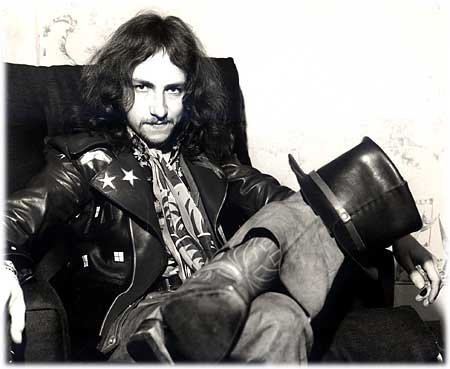
Mitch Mitchell, RIP

A couple of weeks ago, a friend of mine and I went to see The Who play at the Izod Center (formerly Continental Arena, formerly Brendan Byrne Arena). It was almost 26 years to the day since we had last seen The Who at the same venue on their farewell tour.

In 1982, Keith Moon was dead and Kenney Jones was gamely filling in on the drums. Jones was a fine drummer, but no Keith. This time around, John Entwistle was also gone, replaced by Pino Palladino, also a fine bass player (no Entwistle, but who is?).

The fact that it was “Half The Who” was on our minds as we sat in the parking lot, drinking a cold beer (or two…or three). We started talking about how many of the old bands were nearly gone now. Levi Stubbs of the Four Tops had died not too long beforehand, leaving only one remaining original member of that great vocal group alive. I asked the question, “Are any of the old bands gone?” We couldn’t come up with any. The Ramones have one surviving member, the Beatles and Who have two, Badfinger has one, the Mamas and Papas have one. Stunningly, the Stones have lost only one original member, and it isn’t Keith Richards. Sooner or later, we reckoned, one of these bands would be entirely gone.

Unfortunately it happened sooner, rather than later. Last week the news came through that the sole survivor of The Jimi Hendrix Experience, drummer Mitch Mitchell, had been found dead in his hotel room, after playing on a tour called Experience Hendrix with guys like Johnny Lang and Kenny Wayne Shepard filling in for Jimi.

Jimi, of course, was the first to go, in 1970 at the age of 27. Bassist Noel Redding made it to 2003 before dying. On November 12, 2008 it was Mitchell’s turn. In the grand scheme of events, I’m well aware how unimportant a rock drummer is but for music geeks, like myself, this was like watching a part of history die. The days when these musical colossi roamed the Earth used to seem so recent. Now it suddenly seems like just another bygone era, somewhere between the Victrola and the iPod. It’s one thing when a towering solo superstar dies. Death can come at any time and claim an Elvis, an Otis, a Buddy. This was an entire band, though. They once stood on top of the world as a collective unit and now they are nothing but memory.

In this spirit, allow me to express a word or two of appreciation for Mitchell. His name is not as well known as Keith Moon or John Bonham, but Mitchell was nearly as fiery a drummer. A jazz freak, he brought a distinctly Elvin Jones-ish feel to rock drumming. Prior to guys like Moon and Mitchell, rock drummers kept the beat and threw in a few fills here and there. Moon exploded the concept by playing lead drums, arms pinwheeling, drumsticks twirling, his kit laced with explosives. Keith was a show unto himself, and he placed the drummer at the front, equal in every way to the guitarist and the singer.

Mitchell (who auditioned for The Who but lost out to Moon) took a more traditional role. There was no way to share the stage equally with Jimi Hendrix, and Mitchell knew it. While he contented himself to remain a supporting player, he brought that jazz style to Jimi’s Martian blues and psychedelic excursions. Rolling around the toms, Mitchell sounded like a rumbling deep inside the earth. While Jimi kissed the sky, Mitchell shook the ground. You may have been so busy reaching for the clouds with Jimi that you didn’t notice what else was happening, but a large portion of the sensory overload that was the Experience came from the back.

Mitchell was technically a better drummer than Moon, though not as influential or as much fun to watch, but he served the same purpose in the Experience that Moon served in the Who. If you watch old footage of The Who you’ll notice something strange. During guitar solos, instead of stepping forward and taking the spotlight like a good lead guitarist, Pete Townshend would frequently step back until he was next to Moon. He’d put his head down, sometimes even put his foot on the drum riser…and Moon would spur Townshend on, and Townshend would inspire Keith to new heights, like two parasites feeding off each other.

Mitch Mitchell did the same thing for his lead guitarist. Jimi Hendrix never shunned the spotlight but, like Pete and Keith, Hendrix would lock in with Mitchell and the two of them would become an unstoppable force, a blinding blizzard of technical proficiency and deep soul. Mitchell was the perfect drummer for Hendrix, which explains why Hendrix went back to Mitchell after the Band of Gypsys experiment. As Hendrix played the role of alchemist, turning noise and distortion into cosmic beauty, Mitchell kept it all rooted with those endless rolls across the kit, as relentless and as powerful as the ocean. Mitchell’s skill made Hendrix better; Hendrix’s genius spurred Mitchell on to ever greater heights. Together they spiraled up into the stratosphere, like a rocket kept on course subtly and capably by Noel Redding’s bass, I frequently wondered what Stevie Ray Vaughan would have sounded like if he had a Mitch Mitchell behind him rather than the lead weight of Chris Layton. It would have been amazing. Compare Hendrix’s version of Earl King’s “Come On” with Stevie’s version of the same song to hear the difference a drummer can make to a guitar player.

So there it is. The first (as far as I can tell) of the great Sixties bands to become extinct. The next ten to twenty years will see many more. Mitch Mitchell, dead at 62. RIP.

Update: As if you needed another reason to appreciate that The Raconteurs are the coolest band on the planet right now, they have replaced their usual website home page with a great picture of Mitch Mitchell, which I have ruthlessly appropriated below. Gotta love this band…they know their history.

Mitch Mitchell

An Appreciation of Badfinger

On Saturday night, over a few cheap domestic ales, I watched a little bit of a video of a presentation given at Pearl River High School by Joey Molland, former guitarist for Badfinger. The original presenter was supposed to be Pete Best, the original drummer for the Beatles, but he cancelled, allegedly due to post-traumatic stress brought on by reading Ringo Starr’s bank balance.

I’m sure that Pete has some great stories to tell. He was the Beatles drummer through the insane debauchery of Hamburg, after all.

But he’s also a footnote in rock and roll history, more prominent than Stuart Sutcliffe perhaps, but probably not as meaningful. At least Stuart could be said to have influenced John Lennon, and he did introduce the Beatles to Klaus Voorman and Astrid Kirchherr. So you could make the case that, without Stu, there are no photos of the Beatles in their early days, no moptop haircuts, and no psychedelic montage cover for Revolver. Without Pete Best, the Beatles would not have had a rehearsal place.

But I digress.

The real story here is Joey Molland. I haven’t watched the entire video yet, but I sat through about ten or fifteen minutes of it. In a word, “painful.” In two words, “painful” and “depressing.”

The kids in the audience clearly never heard of this really old dude who’s, like, old enough to be their great-great-great grandfather or, like, something. At one point Joey asks the audience who the biggest rock star in the world is and the answer comes back (to a chorus of boos, admittedly), “Hannah Montana.” Molland’s mentions of the Rolling Stones, Dylan, the Beatles, and David Bowie are greeted with the resounding sound of crickets and, if you listen closely, off in the distance, an owl hooting.

But watching this did send me scrambling back to my Badfinger albums. The term “star-crossed” may have been coined for Romeo and Juliet, but Shakespeare never cooked up a tragedy like the story of this band. Even the Elizabethan crowd would never have believed it. I won’t dwell on it here…the back room deals, the mismanagement, the poor choices, the suicides. If there were forks in the road of their career, they took the wrong way every single time. In a music that has seen more than its share of sad stories, the story of Badfinger may well be the most heartbreaking.

But why is that? Is it because they were cheated of royalties? Nah…that’s happened to a lot of bands. Is it because the story ends in death? Lots of rock stories end in death.

The real reason is that Badfinger went through Hell and Joey Molland emerged on the other side as the lone survivor only to find himself in obscurity, standing awkwardly before an audience that has never heard Straight Up, and likely never will.

The real reason that Badfinger’s obscurity is such a tragedy is because all of these things happened, one after the other, to a band that could well have been to the Seventies what the Beatles were to the Sixties. They were that good. But 28 years after the death of John Lennon and seven years after the death of George Harrison, the Beatles are still the most successful band in the world, legends for all time, and deservedly so. But 33 years after the lonesome death of guitarist and songwriter Pete Ham (suicide by hanging) and 25 years after the lonesome death of bassist and songwriter Tom Evans (suicide by hanging), and three years after the death by natural causes of drummer and songwriter Mike Gibbins, Badfinger is the great forgotten band.

It should not be this way. They were an uncommonly talented band. Much like the Beatles, the songwriting and singing duties were split by the band. This has the effect of breaking up their albums and giving them a depth of sound that most bands with only one singer can not match. They were not a cult band, scoring several Top 40 hits and a few No. 1 hits. They were popular, and they were good…not usually a recipe for obscurity.

And the hits themselves? Are there better pop/rock songs than “No Matter What,” “Day After Day,” or “Baby Blue?” These are songs that stand alongside all but the very best of the Beatles singles. Add “Without You” to the mix, a song that was not a hit for Badfinger, but made millions of dollars for other singers like Harry Nilsson and Mariah Carey, and suddenly Pete Ham and Tom Evans are up in the stratoshpere with the very best rock songwriters. Take away Nilsson’s histrionic vocal and schmaltzy arrangement, and Mariah Carey’s over-the-top vocal gymnastics and listen to the original version and you will find a song as near to perfection as any that has been written. And the albums are full of songs of that caliber! Joey Molland played George to Tom and Pete’s John and Paul, but the best of Molland’s songs are easily equal to or better than all but the very best of Harrison’s. “Sometimes,” “Constitution,” “Suitcase,” “Friends Are Hard To Find,” “Sweet Tuesday Morning,” “I’d Die Babe”, “Got To Get Out Of Here”…songs that most songwriters would kill to have written, penned by the number three songwriter in the band. In baseball terms, this is like having your number 9 hitter batting .350 with 40 homeruns. Even Mike Gibbins, the drummer, wrote quality songs. “It Had To Be” and “Loving You” are miles ahead of “Octopus’s Garden” and “Don’t Pass Me By.” (Sorry, Ringo, but you know I’m right.)

To my mind, No Dice and Straight Up are two of the all time classic rock albums. They are stunning in their cohesion and their seamless quality. They simply don’t make albums like this anymore. And while it is true that Badfinger’s other albums couldn’t quite match that peak, the fact remains that both Ass and Wish You Were Here come awfully close, and the best songs from Magic Christian Music are on the same level. Even their final album, Head First, recorded without Joey Molland and unreleased until 2000, is a rough gem.

I can only imagine how Joey Molland felt standing before that alien audience. But he should take some solace in this…not everyone has heard of Badfinger, but the right people have heard of Badfinger. They formed bands like Cheap Trick, The Smithereens, Wilco, Fountains of Wayne, R.E.M., The Replacements, and Nirvana. I am absolutely certain that Brendan Benson has a wing in his house dedicated to Badfinger…I can hear it in his solo albums and his contributions to The Raconteurs. The one-off band Swag, made up of members of Wilco, the Mavericks, Sixpence None the Richer, and Cheap Trick, released an album called Catch-All in 2001 that sounds like a love letter to Badfinger.

The audience at Pearl River High School may never have heard of Badfinger, but if there was one kid in that crowd who was intrigued enough by Molland’s stories to go buy The Very Best of Badfinger, then the word will spread a tiny bit further as he plays the album for his friends. One hearing of “Day After Day” or “No Matter What” will ensure converts.

Badfinger may never make it to the Rock and Roll Hall of Fame (though I might be able to make the case that they belong), but they will live forever in the hearts of those who love the music so much that they are willing to dig deeper, past the Top 40, and into the graveyard of forgotten music. I was one of those kids, and there are others like me, even now. Joey Molland’s presentation may not have had any impact on the hundreds of kids in the school who listen to Young Jeezy or Beyonce on their iPods, but it may well have lit a spark in the imagination of the two bored losers sitting in the back of the room wearing Nirvana shirts, smirking their way through the presentation while secretly thinking, “Hey, that was a pretty good song…sounds kinda like ‘About A Girl.'” And here’s a newsflash for the middle school kids buying the Jonas Brothers in record numbers: the brothers have a clear Badfinger influence, whether they know it as such or not. If you feel flush over the Jonas Brothers, you’ll probably faint when you hear Badfinger.

Musically, Badfinger was before my time, but my love for this type of music compelled me to seek the best purveyors of the sound. This meant digging around in musical attics, basements, and garages where, far from the incandescent and enduring light of the Beatles and Rolling Stones, bands like the Velvet Underground and Big Star rub shoulders with The Replacements and Badfinger. These are the shadowlands of rock and roll, where Del Amitri and Grant Lee Buffalo prop up the bar with The Saints and The Minutemen, where Uncle Tupelo and Richard Thompson compare notes with The Feelies and Meat Puppets, and where King Iggy sits on Johnny Thunders’ shoulders, smearing himself with peanut butter, making jokes at the expense of Bon Jovi.  In those nooks and crannies of the music world,  they are making music for the ages…whether anyone hears it or not.

Thanks to Cosmic Med  for the Joey Molland video, and a pox upon him for not getting me an autograph.

UPDATE: Having now watched, over a few more cheap domestic beers, the entire Joey Molland presentation, I’m prepared to say that Joey did a good job. He was clearly nervous, and his singing voice is shot, but he managed to win over at least some of those young whippersnappers in the audience. There were several requests for Beatles songs, and some of the audience even joined in on an impromptu version of “Hey Jude.” It sounded like a few of the kids even had some dim awareness of Badfinger’s “Come and Get It.” Maybe there’s hope after all.