The Beatles: Help!

Of all the Beatles’s classic albums, it is probably Help! that gets the short end of the stick. This is due to a couple of different factors: 1) it was quickly overshadowed by Rubber Soul, 2) the movie was not as good as A Hard Day’s Night, 3) the American version of the album was cluttered with movie theme music and left off many of the best songs.

It wasn’t until the CD era, in 1987, when Help! was released in America the way the Beatles intended, and the result is a revelation. Help! is the first full-throated embrace of Bob Dylan and, to a lesser extent, the Byrds. This is the clear warm up to Rubber Soul. It bids a final goodbye to the happy little rockers the Beatles had been and definitively steps towards what the Beatles would become.


U.S. EditionU.K. Edition
1. James Bond Theme (Instrumental)
2. Help!
3. The Night Before
4. From Me To You Fantasy (Instrumental)
5. You’ve Got To Hide Your Love Away
6. I Need You
7. In The Tyrol (Instrumental)
8. Another Girl
9. Another Hard Day’s Night (Instrumental)
10. Ticket To Ride
11. The Bitter End/You Can’t Do That (Instrumental)
12. You’re Going To Lose That Girl
13. The Chase (Instrumental)
1. Help!
2. The Night Before
3. You’ve Got To Hide Your Love Away
4. I Need You
5. Another Girl
6. You’re Going To Lose That Girl
7. Ticket To Ride
8. Act Naturally*
9. It’s Only Love**
10. You Like Me Too Much***
11. Tell Me What You See***
12. I’ve Just Seen A Face**
13. Yesterday*
14. Dizzy Miss Lizzy***
*Released in America on the LP Yesterday…And Today
**Released in America on the LP Rubber Soul
***Released in America on the LP Beatles VI

I will confess a weakness for one aspect of the US edition over the UK edition. I grew up listening to the brief snippet of the James Bond theme leading into “Help!” and that part of the listening experience is hardwired into my DNA. Otherwise, there’s simply no contest here and it is clear why Help! wasn’t recognized in America as being the great album it is.

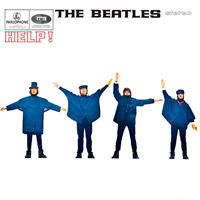
Incidentally, the two versions of the album had remarkably different packaging. The UK edition was packaged as an album, the US edition as a soundtrack complete with lots of photos from the movie and no small amount of marketing hype about the film. Also, the order in which the Beatles are standing on the front cover is different for some bizarre reason.

The first seven songs are the new Beatles songs from the film, and are as good or better than almost anything the Beatles had done to this point. The title track, written as a ballad by John Lennon, is given an air of desperation by the sped up arrangement. Deceptively toe-tapping good-time music underpins a lyric that is every bit as harrowing as any of Lennon’s later primal scream epics on John Lennon/Plastic Ono Band. Trapped by the confines of Beatlemania, Lennon turned his pen inward and wrote a lyric dripping with pathos. Lennon had done this before with songs like “I’m A Loser” from Beatles For Sale, but he had blurred his tortured emotions in the guise of a love song. With “Help!” it was all out in the open, a cry in the wilderness of Beatlemania.

It’s easy to forget that Lennon was only 24 years old at this time and one of the four most famous people in the world, and the demands of band mates and fans must have been nearly unbearable for the fiercely independent songwriter. “Help!” is the first of John’s truly mature songs and one of the finest arrangements the Beatles had produced. Listen to the backing vocals, actually preceding the lead vocal, and the way they are sung. Lennon sings the lead quickly, full of vigor. The lead vocal does not sound like a man on the edge of a nervous breakdown. But the backing vocals are sung more slowly, in fragments of lyrics. It’s almost as if the backing vocals represent the sadness and insecurity Lennon felt, while the lead vocals are the full howl of pain that finally burst forth. I don’t know how much of this is intentional, but listening to the vocals on “Help!” is like being privy to both the private interior monologue and the desperate public cry of a man whose soul is roiling with emotional torment. The effect, especially when coupled with the ringing Byrds-like guitars, set a new standard for Beatle songs.

Anything after that opening is bound to be a let down in some ways. But it’s only in comparison to the title track that the other songs suffer. “The Night Before” and “Another Girl” are standard issue Paul McCartney songs: lyrics about love (lost and found, respectively), great melodies, etc. They become great Beatle tracks because of the arrangements. From Lennon’s organ to McCartney’s bass stepping gingerly throughout the song, the stinging lead guitar (also by Paul), and the call-and-response vocals, “The Night Before” is triumphant. Similarly, “Another Girl”, the happiest-sounding kiss off to a girl ever recorded, is nothing really special until the absolutely irresistable hook rises out of the chorus.

George’s contribution to the soundtrack portion of the album is his best song thus far. “I Need You” (by George Harrison—that’s a joke fans of the film will get) rides a simple two chord guitar riff manipulated by a volume pedal and the best use of a cowbell prior to “(Don’t Fear) The Reaper”. Lyrically it’s nothing special, but it’s the first time George was able to craft a melody that could stand along those produced by Lennon and McCartney. For the first time, a George-penned track didn’t sound like a throwaway or an afterthought. It sounded like the work of a rapidly maturing songwriter.

The rest of the film songs belong to Lennon. They’re not as nakedly emotional as the title track (though the gorgeous “You’ve Got To Hide Your Love Away” comes very, very close), but the words mostly reflect Lennon’s state of mind during this time, what he called his “fat Elvis” period.

“You’re Going To Lose That Girl”, with Ringo’s stunning bongo work, is the darker flip side of “She Loves You.” While the earlier track and its ebullient “Yeah yeah yeah” hook are a reassurance of a woman’s love, “You’re Going To Lose That Girl” warns that if the loved one does not act quickly, the lover will be stolen…by the same guy who was shouting “Yeah yeah yeah”, no less. The “yeah yeahs” are here replaced by a more sinister-sounding “Yes yes.” The one instance where the word “Yeah” pops up is as a snarl after the line “I’ll make a point of taking her away from you.” It’s a deceptively dark song that, like “Help!” is married to a joyful racket.

The title of “You’ve Got To Hide Your Love Away” could refer to the fact that Lennon was under strict orders to keep his marriage to Cynthia a secret, lest it should break the hearts of teen girls across the globe, but the lyric is a very straightforward lament for lost love. What matters here, is the spare acoustic instrumentation and the “feeling two-foot small” lyric. Although the lyric was just a flubbed line, Lennon left it in because he preferred it to the actual “two feet tall”. Both the instrumentation and the surrealism of that lyric (and the “gather round all you clowns” line) are direct imitations of Bob Dylan. The Beatle music in this song comes at the end, in the form of a flute solo played by British composer John Scott. Again, it shows the Beatles thinking outside of the traditional rock box.

Throughout the album, Dylan’s influence is very strong. This is the most acoustic album the Beatles had done. Acoustic guitars are prominent in the rhythm tracks, even as Dylan (influenced by the Beatles) was plugging in for the first time. As such, this is also the most different Beatles album yet. Dylan’s influence had reared its head earlier on songs like “I’m A Loser”, but there the Beatles appeared to be copying the Bard of Greenwich Village. Here, for the first time, it sounds like the Beatles have fully absorbed the sound and run it through the filter of their own budding genius.

“Ticket To Ride”, described (incorrectly) by Lennon as “the first heavy metal record”, is the last of the film songs. The chiming guitar riff does sound like the Who as played by the Byrds, and Ringo plays the hell out of the drums. (You think Ringo’s not a great drummer? You’re an idiot. Shut up and listen to this.) Paul’s bass is straightforwardly simple, probably because this was the first song where Paul handled not just a solo but lead guitar, leaving George and John to handle the rhythm. Heavy metal it isn’t, but it’s one of the heaviest songs the Beatles ever did.

The non-film songs that make up side two of the record are a little more problematic. “Act Naturally”, a country hit for Buck Owens, was given to Ringo to sing as a nod to his surprisingly good performance in the Hard Day’s Night movie. As with most of the songs given to Ringo, it’s fun and fairly lightweight. As four young men from Liverpool, the Beatles were far from country music. They play the notes well enough, but it never sounds like anything more than a lark.

Lennon’s “It’s Only Love” returns to acoustic rhythms with a loose lead. The lyrics are nothing special, but the vocal sells it, especially John’s falsetto swoop at the end. This song ended up as the first song on side two of the American version of Rubber Soul, and it fit better on that album. Here, sandwiched between the faux country of “Act Naturally” and the unremarkable George-penned “You Like Me Too Much”, the song sounds out-of-place.

The same fate falls on Paul’s considerably better “I’ve Just Seen A Face”. The propulsive, yet folky, song was the first song on the American Rubber Soul and set the tone for that album. Here, in its original (and, I suppose, proper) place, it’s between the nothingburger “Tell Me What You See” and the masterpiece “Yesterday.” The placement of this song on Help! makes one of McCartney’s best songs lose the impact it had on American audiences when it kicked open the door to Rubber Soul.

Tribute must be paid to “Yesterday.” Thousands of cover versions (it’s one of the most widely recorded songs in history, with versions by everyone from Sinatra to Liberace) may have dimmed its light, and the George Martin-arranged string quartet is a little mawkish, but that’s hindsight. At the time, “Yesterday” was a radical departure for the Beatles (Paul is the only Beatle on the record, which is why they did not approve it as a single, though Capitol Records overruled them in America and released it). As Lennon was starting to break out of the confines of Beatle music lyrically, McCartney was now doing so musically. It was a Beatles record because they said it was a Beatles record. It was a rock song because they said it was a rock song. In truth, it was neither. It was a Paul McCartney solo effort, and musically it harkened back to the standards that Sinatra used to sing, and that the Beatles grew up hearing. It’s far closer to “Til There Was You” than “Ticket To Ride.”

Still, it’s brilliant. It’s a new standard in 1965, and recognized as such immediately. There was no need for “Yesterday” to stand up to the rigors of time. It was clear the first moment the needle hit the groove that McCartney was writing for the ages on this one. People who loved rock and roll accepted it as a great ballad. People who hated rock and roll fully embraced it. The kids loved it and so did Mom and Dad, ensuring that the Beatles could appeal across generational boundaries. More than any one song, “Yesterday” buried the image of the Beatles as the Mop Tops. This was a serious song, with a serious arrangement. To really appreciate the greatness of the song, the version on Anthology 2, before the string section had been added, makes the song sound fresh again. This version presents the song as McCartney wrote it, with just his guitar and vocals. For this listener, this alternate take is the best version of the song.

“Yesterday” was so masterful and so different that including a souped-up cover of “Dizzy Miss Lizzy” sounds wildly out-of-place. It’s a great version—probably the definitive version of this song—but it’s obviously a place-filler for a band that needed to release an album but didn’t have quite enough songs ready to go. Following all the acoustic introspection that preceded it, the effect of the slashing guitars and wailing vocal from John is, to say the least, jarring. It’s a great performance. It also is what it is: a by-the-numbers cover of a song by a writer who, at his best, was nowhere near the level of Lennon and McCartney. Help! deserved a better ending than a song that would have sounded redundant on With The Beatles.

Help! pointed in the direction the Beatles were going. The best was still ahead.

Grade: A

The Beatles: Beatles For Sale

Beatles For SaleIn the Beatles discography this, their fourth album, presents some problems. On its own, Beatles For Sale is a fine album with several excellent songs on it. However, coming after the triumph of the Hard Day’s Night album, there’s no question that this sounds like the Beatles running a little low on petrol.

Exhausted by their schedule of touring and recording, unable to get a moment’s peace, being pushed for more, more, more by their manager Brian Epstein and a music industry that was ravenous for new Beatle music, it’s no surprise that Beatles For Sale fails to live up to the expectations set by its predecessor. The pace at which the Beatles were living was so fast they were grateful for so much as a single day off. If A Hard Day’s Night represents the peak of the cultural revolution of Beatlemania (and I think it does), then Beatles For Sale is the inevitable hangover from that particular party. After nearly a full year of seeing their hotel bed sheets cut into one-inch squares and sold, Beatle wigs, Beatle buttons, Beatle guitars, television appearances, concert tours, a movie…it’s no wonder the album was called For Sale, and the faces looking out from the cover were downbeat and gloomy.

Once again, For Sale did not exist as an LP in America. Capitol Records wanted their Mop Tops to look happy, so they again cannibalized the LP and various singles to create two new albums, and plastered their four smiling faces in various silly poses on the cover. For sale, indeed.

Beatles For Sale
No Reply*
I’m A Loser*
Baby’s In Black*
Rock And Roll Music*
I’ll Follow The Sun*
Mr. Moonlight*
Kansas City/Hey Hey Hey Hey**
Eight Days A Week**
Words Of Love**
Honey Don’t*
Every Little Thing**
I Don’t Want To Spoil The Party**
What You’re Doing**
* Released in America on the LP Beatles ’65
** Released in America on the LP Beatles VI

The music on this slab of vinyl also tells a darker story. You can see it just in the titles of the originals: “I’m A Loser,” “No Reply,” “Baby’s In Black,” “I Don’t Want To Spoil The Party.”

All of this is why some of the album sounds forced. By this time the Beatles had released one full album of all-original material, and had met Bob Dylan, one of only a few performers who was recording exclusively original songs. But due to the constant grind of Beatlemania, the Beatles were short of original songs. To fill the gap, they went back to cover versions of rock ‘n’ roll classics: Chuck Berry’s “Rock And Roll Music,” Little Richard’s “Kansas City,” Buddy Holly’s “Words Of Love,” Carl Perkins’s “Honey Don’t.”

The cover songs are uniformly good. The Beatles played this music with an enormous amount of spirit. Lennon’s take on “Rock and Roll Music” may not be as good as similar Chuck Berry covers by the Rolling Stones, but he buries George Harrison’s version of “Roll Over Beethoven” from With The Beatles. Ringo makes “Honey Don’t” his own, adding all the charm and insouciance at his command. Paul McCartney puts his all into “Kansas City.”

The problem with these songs are not the songs themselves or the performances. The problem is that the Beatles had already progressed well beyond this type of material. With some exceptions, the Beatles always sounded much more comfortable doing their own music than they did doing covers. By late 1964, these originals were sounding less like the covers than ever.

There’s simply no comparison between a rehash of a Carl Perkins song and the acoustic introspection of a song like “I’m A Loser.” The latter, with its strummed acoustic guitars and wailing harmonica clearly reflect the influence of Dylan while the lyrics are a vivid demonstration of the toll that Beatlemania was taking on Lennon. “I’m A Loser” carries the same theme as “Help!” would the following year.

“Baby’s In Black” swings, once again held together by acoustic guitar and little stabs of electric lead. But here the lyrics are a far cry from “I Want To Hold Your Hand” or “She Loves You.” The lyrics recount the singer’s frustration at being unable to woo his intended because her lover has died, but for a song whose tagline is “Baby’s in black and I’m feeling blue” the music is irrepressible. Rarely in the Beatles career has a lyric and music been so mismatched, although the combination works like a charm.

“No Reply,” which kicks off the album in grand fashion, also tells a tale of lying and cheating against a mostly acoustic backdrop. Taken together, these three songs are a triptych that clearly illustrate where the songwriting team of Lennon and McCartney were…and it wasn’t covers of ’50s rock ‘n’ roll classics.

Beatles For Sale is a schizophrenic album, capturing the Beatles at a fascinating time in their history as they were starting to shed the “happy little rockers” image and starting to explore more diverse instrumentation, more introspective lyrical themes, and different types of music. The covers are all very good, and remind the listener of how the Beatles began their career. The originals were, for the most part, remarkably different and served as a signpost to where the Beatles were going.

“Eight Days A Week” is probably the most “typical” Beatles song on the album, a glorious combination of harmonies, melodies, and jangling electric guitars. It is also the only original song on the album that could have easily fit on the Hard Day’s Night album. All of the other originals come from a completely different place, either lyrically or musically. “I’ll Follow the Sun” was written in the 1950s, pre-Hamburg, and is a surprisingly mature McCartney ballad,

All of this makes Beatles For Sale an ordinary album from an extraordinary group. The album has the feel of being filler material, though it’s far superior to the usual stuff that passes as filler. This is the only Beatles album that does not feel like an artistic statement but rather comes across as a holding pattern. There’s just enough of the old rockers to keep the kids happy, just enough of the new sound to intrigue the more astute listeners and whet their appetite for the next step.

Beatles For Sale is an important album for this reason: it is the last album released by the lovable Mop Tops. Tired and frustrated by the grind, they recorded several songs that they could have done in their sleep and several songs that were pointing the ways towards the gob-smacking masterpieces of Help! and Rubber Soul.

Grade: B+

The Beatles: A Hard Day’s Night

A Hard Day's Night

Having conquered the musical world with their singles, albums, tours, and cheeky grins, the Beatles turned their attention to the world of film. Their manager, Brian Epstein, had signed them to star in and provide the soundtrack for a new movie. The upstart Beatles, not willing to put their names and reputations behind anything they didn’t in some way control, chose Richard Lester as the director because they admired his short, surrealistic comedy films. The Beatles had seen the “rock and roll movies” that had been released and did not want to be associated with the kind of junk exploitation films that Elvis Presley was making.

Yet the Beatles were exploited when it came time to do the soundtrack. In America, the soundtrack album was released by United Artists and contained eight Beatles originals and a handful of instrumental tracks that were used as the soundtrack to the movie. Unfortunately, this meant that America was deprived of the best album of the early years of the Beatles.


U.S. EditionU.K. Edition
A Hard Day’s Night
Tell Me Why
I’ll Cry Instead
I Should Have Known Better (Instrumental)
I’m Happy Just To Dance With You
And I Love Her (Instrumental)
I Should Have Known Better
If I Fell
And I Love Her
Ringo’s Theme (This Boy) (Instrumental)
Can’t Buy Me Love
A Hard Day’s Night (Instrumental)
A Hard Day’s Night
I Should Have Known Better
If I Fell
I’m Happy Just To Dance With You
And I Love Her
Tell Me Why
Can’t Buy Me Love
Any Time At All*
I’ll Cry Instead
Things We Said Today*
When I Get Home*
You Can’t Do That**
I’ll Be Back***
*Released in America on the LP Something New
**Released in America on the LP The Beatles’ Second Album
***Released in America on the LP Beatles ’65

There’s no denying that even on the U.S. edition those original songs are top-notch, but the inclusion of what is, essentially, four doses of Grade Z Muzak is enough to kill any album. The U.K. edition of the album is nearly flawless, an all-original collection of thirteen sterling Lennon/McCartney songs. Ringo loses his turn at the spotlight, and George is given the lightweight but enjoyable “I’m Happy Just To Dance With You.” Otherwise, this album belongs to John and, to a lesser degree, Paul. It is the first Beatles masterpiece.

The single strange chord that starts the album kicks down the door in dramatic fashion and launches a song that nearly perfectly distills everything that was good about the early Beatles. It’s joyful, bouncy, full of exuberant harmonies, swapped lead vocals (Lennon on the verses, McCartney on the chorus), a crisp, exciting and very brief guitar solo, and Ringo hitting the percussion for all that he’s worth. There’s simply no way to listen to “A Hard Day’s Night” without feeling better. Even the ending, with the sudden introduction of a chiming guitar lick heard nowhere else in the song, shocks the listener. The Beatles had great songs before, but this was different, a huge evolutionary leap in songwriting and performing.

“I Should Have Known Better” once again features the harmonica that was so prevalent on the early Beatles singles like “Love Me Do,” “Please Please Me,” and “From Me To You,” but here it was underpinned by a driving acoustic guitar with terse electric chords and lead lines weaving throughout, and Lennon’s masterful vocal riding the wave.

One of the things that makes Beatle albums so eminently listenable is that they contain a mix of slow, fast, and mid-tempo songs. “If I Fell” is one of the best of the early Beatles ballads, a song that is nearly breathtaking in it’s beauty. It’s also a sign of the rapid maturation of Lennon the songwriter. The man who just wanted to hold your hand a few months earlier now decries that naiveté, discovering that “love is more than just holding hands.” The vocal harmony of Lennon and McCartney is nothing less than astounding.

George Harrison gets his turn at the microphone on “I’m Happy Just To Dance With You.” It’s far and away Harrison’s best vocal performance to this point. He sounds confident and less like a Scouse teenager. The song, written by Lennon and McCartney, is a bit of a throwaway, but by this point even their throwaways were better than almost anything else being released. And whatever sins “Dance” has are more than forgiven by the Greek feel of McCartney’s gorgeous “And I Love Her,” a ballad for the ages.

“Tell Me Why” is another by-the-numbers rocker that is saved and raised to a level of greatness by Lennon’s lead vocal and the harmony vocals. A song that six months earlier probably would have been recorded very differently is now a textbook example of how to write a rocking pop song. The little guitar trills, the middle eight, the quick dash of falsetto vocal…all of these are elements the Beatles likely would not have used only a few months earlier, but their progress as songwriters was so swift that these songs almost sound as if they came from a different band than the one that recorded Please Please Me.

“Can’t Buy Me Love” steals from “She Loves You” the then-revolutionary trick of starting the song with the chorus and turns the trick into art. Has there ever been a song that reached out of the speakers and so hooked the listener with the opening line? Even “She Loves You” starts with Ringo’s brief drum roll, but “Can’t Buy Me Love” immediately immerses the listener in McCartney’s go-for-broke vocal. What often goes unnoticed is that it is the bass and drums that drive the song. True, there’s a hyperkinetic guitar solo and a steady acoustic-based rhythm, but the bass largely fills in for the lead guitar.

The second side of the LP has nothing as good as “A Hard Day’s Night,” “If I Fell,” “And I Love Her” or “Can’t Buy Me Love,” but it remains a classic album side nevertheless. Lennon solidifies his hold on the album as the lead vocal on five of the remaining six songs. This is a heavier slice of Beatle music than side one, containing no real ballads. This makes A Hard Day’s Night the hardest rocking album of the early period. In fact, while the Beatles would go on to record harder songs, this album may be the most consistently hard rocking of their career.

A Hard Day’s Night is Lennon’s triumph. It’s the album he had the largest impact on until the White Album in 1968. The whipping pace of side two, led by the one-two punch of “Any Time At All” and “I’ll Cry Instead,” the propulsive acoustic guitar workout “Things We Said Today” (one of McCartney’s best early tunes, featuring one of the best middle eights in Beatle history), and the closing triptych of “When I Get Home,” “You Can’t Do That” and “I’ll Be Back,” leaves the listener exhausted and breathless from the sheer exuberance of the Lads. While side two has no Beatles classics (from a popularity perspective, not a songwriting/performance perspective), it completes an album that surpassed With The Beatles to become the single best example of a rock and roll album to that point.

Grade: A+

The Beatles: With The Beatles

With the BeatlesIf Please Please Me was a lightning bolt straight to the heart of the Brill Building, With the Beatles and especially its American counterpart was an atomic bomb. A flawed classic, this is really where the unmatched recorded legacy of the Beatles begins. Their first album was very good. Their second was considerably better. It may be fair to say that when it was released (November 22, 1963—the day President Kennedy was assassinated), With the Beatles was the single best example of a rock and roll LP. With the possible exception of the first Elvis Presley long-player, I can’t think of another album from this era that matches this one. For almost any other band, it would be a high-water mark. For the Beatles, it was just the beginning.

Please Please Me was not released in America until 1987 when it came out on CD, and With the Beatles was not released until January 1964 under a different title (Meet The Beatles) and with different songs. Early in their career, the Beatles had a policy of not including singles on albums because they believed it was ripping off the fans. In England, extended play singles (four or five songs) were also a popular commodity that was unknown in the States. Because of this, the Beatles’ most popular songs were not included on their albums. This flew in the face of the American system, so Capitol Records took songs from With the Beatles and replaced them with the popular singles. The songs that were removed were tucked away until there were enough to release a “new” album.

It was a ham-handed system that the Beatles hated because they put so much thought and effort into their LPs, but it did have the effect of giving a home to all those Beatles singles and EPs that might otherwise have not been released in America. So while With the Beatles begins with the thrilling “It Won’t Be Long,” Meet the Beatles begins with the classic “I Want To Hold Your Hand.”

With the Beatles Meet the Beatles
It Won’t Be Long
All I’ve Got To Do
All My Loving
Don’t Bother Me
Little Child
Till There Was You
Please Mr. Postman*
Roll Over Beethoven*
Hold Me Tight
You’ve Really Got A Hold On Me*
I Wanna Be Your Man
Devil In Her Heart*

Not A Second Time
Money (That’s What I Want)*

I Want To Hold Your Hand
I Saw Her Standing There
This Boy
It Won’t Be Long
All I’ve Got To Do
All My Loving
Don’t Bother Me
Little Child
Till There Was You
Hold Me Tight
I Wanna Be Your Man
Not A Second Time
*Released in America on the LP The Beatles’ Second Album

In either incarnation, this album is excellent. In the final analysis, the American version is superior. Though it has two fewer songs, it replaces five cover songs of varying quality with three mind-blowingly brilliant originals. But for the purpose of this review, I’ll stick with the albums as the Beatles intended and as they are now available on CD.

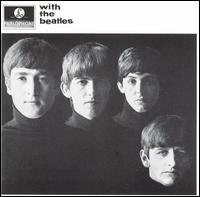
The album cover was enough to let you know that this was different. Compare the stark black and white cover of With the Beatles, with it’s all lowercase type and disembodied, serious faces staring at the listener from behind those ridiculously long bangs, to any pop/rock album cover of the time and you can see the difference immediately. The music on the album may not have risen all the way to the highest levels of art, but there was no denying that Robert Freeman’s cover photo was both unique and artistic, similar in many ways to the photographs taken by Astrid Kirchherr during the Beatles’ time in Hamburg. It was also instantly iconic. Cover art was one of the other ways the Beatles revolutionized the music industry, taking the job out of the hands of hack photographers and putting it into the hands of artists. Not all the Beatles album covers would make this bold a statement, but a line had clearly been drawn.

“It Won’t Be Long,” which kicks off the album, is the prototype for power pop. The propulsive bass underpinning a simple but strong guitar line, Ringo’s steady drumming and economical fills, the call and response yeahs, the beautiful melody and backing vocals of the brief bridge…it’s all there. The entire school of power pop, from early Who and Badfinger to the Raspberries and Cheap Trick, learned their trade from this song. The breathless pace of John Lennon’s vocals adds a touch of desperation to the song that elevates it above the standard “can’t wait to get home to see you” lyrics. I don’t know whether there’s ever been a better rock and roll singer than John Lennon during the early days of the Beatles. Paul McCartney may have had the better voice in technical terms but Lennon’s vocals, especially during these first few years, is so rich with emotion they defy belief. “When I Get Home” sounds like John’s life is depending on it.

Just when he’s turned up the voltage and belted out a hard and fast rocker, Lennon follows with the mid-tempo ballad “All I’ve Got To Do,” one of the most under appreciated of all Beatle songs. From the lightly strummed guitar that opens the song and provides the introduction for John’s plaintive vocals to the soaring chorus, “All I’ve Got To Do” is one of the most sublime ballads the Beatles ever constructed. As both songwriting and performance it is simply miles beyond anything from their first album.

And yet, it’s just a taste. Paul McCartney steps to the microphone with one of his greatest songs, “All My Loving,” with the furiously strummed triplets by John Lennon and a melody that most pop/rock songwriters would sell their children to write. Indeed, there’s more pure melody in these two minutes and twelve seconds than in the entire collected works of some famous bands. Even the quick guitar solo has a tune of its own. Curiously, this is the third consecutive song that opens with a brief blast of vocals with no instrumentation (aside from the single strum of “All I’ve Got To Do”). If nothing else, it shows the Beatles knew where their strengths lay.

“Don’t Bother Me” is the first song written solely by George Harrison and it’s a winner. It’s certainly not up to the level of the three songs the precede it on the album, and Harrison’s vocals are still heavy on the Liverpool youth side, but the melody is strong, Ringo plays some great fills, Lennon shakes a wicked tambourine, Paul keeps steady time banging claves (wood blocks), and George contributes a tasty guitar solo. It’s not brilliant, but it’s very good.

McCartney assumes piano duties on “Little Child,” doing a neat approximation of boogie-woogie. The song itself is a basic, by-the-numbers rocker, but takes off during the instrumental bridge when the tempo speeds up and Lennon takes off on harmonica. This is one song where Lennon sounds unconvincing, like he knows the material is somewhat sub par. It’s the kind of song he would later dismiss as “phony,” but the double-tracked vocals and the catchiness of the chorus make it an enjoyable, brief, rave up.

It’s at this point on the record where the flaws really stand out. After five consecutive original songs, there are three cover songs. The first, “Till There Was You” is a “please-the-Mums-and-Dads” show tune from The Music Man, sung in his sweetest tenor by Paul. It’s a nice song, and Paul sings it well over an acoustic backing, but it also displays the appalling sentimentality that would dog McCartney through his entire career. “Please Mister Postman” is considerably better. The Marvelettes cover song features a great Lennon vocal, while Paul and George supply the breathy “Ooohs” throughout the verses. The Beatles brought their own sensibilities to the Motown and girl group songs that they covered. Always a melodically inclined band, they naturally responded to the hooks and melodies those songs provided. But as scruffy little rock-n-rollers they added rough edges that the Motown and Phil Spector productions often lacked.

The Beatles were less convincing covering blues rockers, and “Please Mister Postman” is followed by their take of Chuck Berry’s “Roll Over Beethoven.” There’s nothing wrong with the cover, but it lacks the fire and inspiration that the Rolling Stones brought to their Berry covers. The Beatles were never a bluesy band, and were more at home with Buddy Holly and Little Richard than they were with Chuck Berry. “Roll Over Beethoven” has some great fills from Ringo, and a solid George Harrison vocal, along with a great hand clap track, but it’s a completely by-the-numbers cover. There are worse ways to kill 2:50 but that doesn’t mean there aren’t better ways, too.

“Hold Me Tight” is a return to original material, and the increased inspiration becomes immediately apparent. It’s not a great song, but it’s got all the ingredients of a great song. The vocal from Paul is a little wobbly, but the persistent hand claps and the ebullient backing vocals make for an improvement over the three tracks the precede it, although it pales in comparison to what follows.

The Beatles return to Motown for their take on Smokey Robinson’s epic “You’ve Really Got A Hold On Me,” and it’s one of their best cover songs. If anything, Lennon pulls off the astounding feat of surpassing Smokey’s original vocal, ably assisted by a prominent backing vocal from George. It is that grit that the Beatles bring that adds so much to this song. Lennon’s double-tracked vocals are simply staggering and the musical accompaniment, underpinned by producer George Martin’s piano, is perfect.

The band ethos of the Beatles—the idea that this was a group, not just a gathering of musicians—was cemented by the fact that every member would take his turn up front and “I Wanna Be Your Man” is Ringo’s turn. The song had been given to The Rolling Stones who turned it into an incendiary piece of garage rock with a Brian Jones slide guitar solo that scorched the landscape. In the hands of the Beatles, the song is a throwaway, but a good one. Ringo’s performance is hammy but fun, and the simple lyric sounds like it was written in about five minutes. Still, this one song provided the Stones with their first hit and directly inspired Bob Dylan’s “I Wanna Be Your Lover.” John Lennon provides the rhythm on organ while Ringo plays the hell out of the drums and George plays a stinging guitar solo. All filler songs should be this much fun.

One of the surprising things about the album is that George Harrison is as prominent a player as Paul McCartney. Macca sings lead on only three songs, and George does as well. “Devil In Her Heart” is a cover of a girl group song and an excellent one. It’s got George’s best vocal to this point and a solid percussion track from Ringo, and the backing vocals add great depth to the lead.

The original “Not A Second Time” is another gem. It’s also more evidence that as songwriters the Beatles were simply outpacing the competition. Only Smokey’s “You’ve Really Got A Hold On Me” is in a league with the originals the Beatles were turning out. It is “Not A Second Time” that inspired the London newspaper classical music reviewer to compare the Beatles to Schubert and discuss the “Aeolian cadences” in their work. I’m not quite sure I’d go that far and I don’t know what “Aeolian cadences” means but I do know that the inventive melodicism of the song is breathtaking. Once again, it’s George Martin’s piano that provides the musical heft to the song, including a solo that mimics the melody, a Beatle trademark. Lennon’s voice is superb, thrust even more to prominence by the absence of backing vocals from his bandmates.

The piano of “Not A Second Time” is the perfect introduction to the album closer. A cover of Barrett Strong’s Motown song, “Money (That’s What I Want)” begins with George Martin’s piano before the other instruments rumble in like a mudslide and Lennon snarls, “The best things in life are free…” On an album full of great vocal performances, “Money” is a standout, one of the best vocals of Lennon’s career, at least the equal of Please Please Me‘s “Twist and Shout.” His ending ravings where he’s ripping his throat out singing, “Yeah! I wanna be free!” while Paul and George chant “That’s…what I want…” is rock and roll nirvana.

There’s really no question that removing “Please Mister Postman,” “You’ve Really Got A Hold On Me,” “Devil In Her Heart,” “Roll Over Beethoven” and “Money” and replacing them with “I Want To Hold Your Hand,” “I Saw Her Standing There,” and “This Boy” makes Meet the Beatles a better album than With The Beatles. As great as “Hold” and “Money” are, they are dwarfed by the original singles the Beatles had released. With the Beatles is a flawed gem; Meet the Beatles is a masterpiece. I’d be willing to bet that if the original UK edition of the album been released in America Beatlemania might not have caught on in the States. This would be the last time an American version of the album was better than the UK version.

Grade: B+