The Rolling Stones: Exile On Main St. (Deluxe Edition)

When news broke in late 2009 that Exile On Main St. would be rereleased in a deluxe package as a 2-CD set with ten previously unreleased bonus tracks, there was a great deal of anticipation among hardcore Stones fans. Possibly the best album of their career would now have ten additional songs that had been left on the cutting room floor. Then the news came out that many of the tracks were left unfinished. Some had no lyrics, some were missing crucial elements (like lead guitar). The decision the Stones made to go in and write new lyrics, add new vocals, and new overdubs was greeted with a great deal of skepticism.

Turns out, there was no need for skepticism.

I’m not going to parse what’s “authentic” and what’s not on the bonus tracks. As a whole, they’re excellent whether the vocal was done in 1972 or 2009. To my ears, they all sound like they’ve been mastered using modern technology, and Jagger’s vocals on the unheard material sounds suspiciously like it’s a more recent vintage…but they’re still the best vocals he’s laid down in ages. From a sonic perspective, the unreleased songs sound brighter and cleaner than Exile‘s famous murkiness, but that’s not really a drawback.

“Pass The Wine (Sophia Loren)” has a killer harmonica solo and the soul sister backing vocals that highlighted many of the Exile tracks, but in some ways it sounds to me more like a Goat’s Head Soup outtake overdubbed to sound like Exile. All the same, while it’s not of the same quality as songs like “Tumbling Dice” or “Loving Cup,” it blends in nicely with those songs, carrying a similar groove and vibe.

The second track, and single release, is “Plundered My Soul,” which features newly overdubbed guitar from Mick Taylor, who was invited back to put his special touch on the song. It was a wise choice. Taylor was the best guitarist the Stones ever had, and his distinctive blues picking is a pleasure to hear after so many years of the Keith Richards/Ronnie Wood rhythmic “art of weaving.” The vocal sounds suspiciously recent, but it’s excellent. It’s a fantastic track that gets better with each listen and the best single the Stones have released since God knows when. Maybe since “Tumbling Dice.” It’s the kind of song that’s easy to imagine blasting out of a portable transistor radio in a 1970s summer and if there were any justice in the world it would be a lot more successful than the latest single by the chart toppers of 2010.

“I’m Not Signifying” slows it down with a great boogie piano worthy of Johnnie Johnson. Jagger’s vocal is slurred and thick, and Charlie Watts rides the beat like a demon. The drums on these tracks are apparently the only instrument that didn’t need any touch up…they were perfect as is. Just more proof that Charlie Watts is a human drum machine. This track is the one that sounds most like a finished song from 1972, and it’s easy to picture it on the album in place of a similar song like “Hip Shake” or “Casino Boogie.” It’s probably why the song was left off the album, because there were other, better, songs of the same style.

Jagger did record brand new vocals and lyrics for “Following The River,” a gospel-infused piano ballad in the style of “Shine A Light.” Recent vocal or not, this is a gem with a sweet and simple backing vocal that sounds like a church choir, and a rousing chorus. If it’s not Nicky Hopkins on the piano it should be. If it is, isn’t it about time someone inducted him into the Rock and Roll Hall of Fame as a sideman? The guy was brilliant.

“Dancing In The Light” is another diamond in this rough patch. The elegant country-style guitar picking suggests Mick Taylor and Jagger’s vocal sounds young and strong. Once again, there’s great piano (truly the underrated star of Exile) and the vibe of the song is that of a band that is loose-limbed and having the time of their lives.

A lightly picked guitar that sounds like it’s trying to play the sitar part of “Paint It Black” kicks off “So Divine (Aladdin Story).” It’s another song that sounds like it was mostly figured out in 1972, and features one of the catchiest choruses the Stones have ever done. The ghostly vibes that underpin the melody add a depth to the sound and elevate the song into the realm of the other great tracks from the album.

The next three tracks are alternate versions of Exile tracks. “Loving Cup” is a very different version, slowed down to a crawl. It’s a great curiosity, but inferior to the version used on the album. In his Rolling Stone review of the album, the normally pretty sensible David Fricke wrote:

The highlight of the bonuses is a striking variation on the closer, “Soul Survivor,” sung by Richards instead of Jagger in an enraged bray, as if the guitarist just got up from a vicious beating. I would gladly pay extra to hear a tape of the two debating which version to use.

Frankly this just proves that Fricke was either wasted when he wrote the review or he’s listening to something that I’m not. The Keith Richards vocal on “Soul Survivor” is simply an extemporaneous guide vocal with made up lyrics that are slurred or mumbled deep in the mix. This is not the highlight, David. This is just a rough run through of the song with junk words that were made up on the spot (“I may be a fool/You have my tool…My big blind eye/My swollen nose/Every time she walks by”). Absolutely nothing special here, and I’m sure the “debate over which version to use” lasted approximately one second.

“Good Time Women” dates back to 1969 but is included here because it’s an early version of “Tumbling Dice.” The song’s not there yet, so there’s no surprise it wasn’t used on either Let It Bleed or Sticky Fingers. Most of the lyrics are entirely different and the song sounds like a rehearsal and not a finished track (probably for a pretty good reason). There’s a similarity in the melody to the Exile track, but the track necessarily suffers in comparison to the classic Stones song. It’s very good, and probably better if you’ve never heard “Tumbling Dice,” but it also comes under that heading of “interesting curiosity.”

The last track is a throwaway, a brief instrumental that sounds like nothing more than a loose jam. The song is so unfinished it doesn’t have a real title other than “Title 5.” Still, it’s a good little jam and not a bad way to end the disc of bonus tracks.

As ten songs left over from Exile, the second disc is an excellent addition. As ten Stones songs you’re probably not familiar with, it’s the best album they’ve released in years.

Grade: A

The review of the album Exile On Main St. is here.

The Rolling Stones: Exile On Main St.

Exile On Main StreetAfter the triumph of the career- and era-defining Sticky Fingers, there was only one way to go. Simply put, you don’t put out a better album than Sticky Fingers. Unless, of course, you’re the Rolling Stones at their peak, in which case you put out a double album that transcends pretty much every album you’ve ever made and almost every rock album made by anyone else, as well. Exile On Main St. is that album.

There’s an enormous amount of mythology wrapped up in the making of Exile. The bare bones of the myth is that the Stones left England to escape onerous taxation, and they set up shop in a mansion in France. Drunk, high, and decadent, they recorded Exile in the basement of the mansion. That’s partially true. They did leave England for tax reasons, and much of Exile was recorded in the basement of Keith Richards’ villa at Nellcôte. There was also an enormous amount of drugs and decadence going around. But the Stones were not sharing a house, and an enormous amount of the final record was recorded, overdubbed, mixed, and mastered in the decidedly less glamorous world of Los Angeles.

With Exile, the mythology of the making of the album is inextricably linked to the final product. The myth of the Stones endlessly working out these songs as a tight five-piece unit in the basement of a French villa, swigging whiskey straight from the bottle, is so evocative because that’s exactly how the album sounds like it should have been recorded. Los Angeles or not, there’s a lot of “basement” vibe on the album. It’s murky, sludgy, dark, and dank. As a recording, it leaves a lot to be desired. As a rock album, it’s one of the best ever made, a collection that isn’t flawless but whose greatness towers above almost every other album of the rock era. There are some artists that have put out albums as good or better, but those albums are few and far between and the artists are the titans of the music business: The Beatles, The Who, Bob Dylan. And even their best only shares the rarefied air of Exile On Main St.

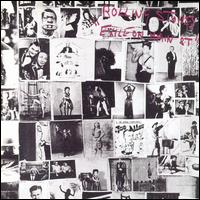
In order to get to the music, one must first get past the artwork that adorns the sleeve. Outside, a collection of photographs of freaks, geeks, and sideshow attractions with the name of the band and the album titled scrawled in what looks like lipstick adorn the front cover while similar photos of the band are on the back. Inside, pictures of the band and scrawled slogans that would turn up, sometimes modified, as lyrics: “I gave you diamonds. You gave me disease.” “Got to scrape the shit right off your shoes.” Mick Jagger stands coyly in front of a movie poster for an X-rated film, a poster that contains a small and very explicit photograph if you look closely enough. The inner sleeves of the album contain more photos, many of them duplicated like a negative of a film roll (the still photos were taken from a film shot by the photographer). The song titles are scrawled with partial information about who plays what instruments. The original version of the album contained 12 inscrutable postcards. All photos in black and white or with a slight color tint. The Stones clearly had gone all out on the packaging, and the cover and sleeves were a perfect manifestation of the music: there is so much going on in the cover it’s hard to know where to look (although almost everyone seems fascinated with the one photo of the man with three oranges in his mouth).

The cover was dark and strange, and the music offered no comfort. Over the course of 18 songs, the Stones take the listener on a tour of the dark underbelly of American music, from Delta blues (a ripping cover of Robert Johnson’s “Stop Breaking Down”) to a Southern Gothic gospel (“Shine A Light,” “Just Wanna See His Face”) to true country music (“Sweet Virginia,” “Torn and Frayed”) to barn-busting rock (“Rip This Joint,” “Rocks Off,” “Happy”). Exile, in essence, is a roots album. Unlike, say, Stephen Stills’s similar Manassas album that explored the different types of American music over its four sides, everything on Exile comes out sounding like the work of a band that had so completely absorbed their influences that they have become second nature. “Sweet Virginia” is both 100% American country music and 100% English bad-boy blues rock. It’s a pretty neat trick when you get right down to it, one that few bands have ever replicated and one which the Stones themselves were never able to do again.

There are several hard-charging rock and roll songs on the album. Side one boasts “Rocks Off,” the fearsome ode to the sex and drugs lifestyle being lived on the French Riviera, as well as the souped-up Little Richard blast of “Rip This Joint,” the fastest song in the band’s repertoire to this day. Side three begins with the greatest Keith Richards-led moment in the band’s career, the driving “Happy,” which Richards sings as if his heart was going to explode. In the long, storied life of Keith Richards, “Happy” remains his defining moment: three minutes of sheer exuberance, conceited boasting, and wistful loneliness. The verses of braggadocio and jaded living (“Always took candy from strangers…Never wanna be like papa/Workin’ for the boss…Never got a lift out of Lear jets…”) end in the desperate chorus of “I need a love to keep me happy/Baby, won’t you keep me happy?” This is Keith’s moment to shine on Exile, and shine brightly he does.

Then there is one of Exile‘s most overlooked tracks, “Turd On The Run.” The song will never be played on the radio because of the title alone and it is one of the Stones songs that’s known only to purists and hardcore fans. Musically, it’s essentially a rewrite of “Rip This Joint,” but the lyrics are some of the nastiest that ever came from Jagger’s pen. A tale of obsession and lost love that turns into a wicked revenge story, the lyrics are Jagger at his most sinister. The sex-crazed predator of underage girls from “Stray Cat Blues” and the demonic narrator of “Sympathy For The Devil” merge together as Jagger recounts the time and energy and love he “lost,” becoming increasingly bitter (“Diamond rings, vaseline/You give me disease”) before concluding with a bold threat (“Tie your hands/Tie your feet/Throw you to the sharks/Make you sweat/Make you scream/Make you wish you’d never been.”)

But Exile would probably not have the grand reputation it enjoys today if it were nothing but hard-driving rock tunes. Side two, boasting “Sweet Virginia,” “Torn and Frayed,” “Sweet Black Angel,” and the epic “Loving Cup” is dripping with country elements, from the drunken sing along of “Virginia” to the magisterial pedal steel of “Frayed,” to the acoustic jam of “Angel.” “Loving Cup” is a perfect synthesis of rock ballad, grand piano, and country drinking song. “Gimme little drink! From your loving cup,” drawls Jagger, but the jokey nature of the chorus is undermined by the beauty of the verses and, especially, the bridge where Jagger claims to be “humbled with you tonight/Just sitting by the fire…what a beautiful buzz.” The verses are sweetness and romanticism; the chorus, a good time drinking tune. On paper, it shouldn’t work. On record, it works beautifully. “Loving Cup” is one of the greatest of all Stones songs, mired in the obscurity of being an album track on a densely packed record that most fans of the band in this day and age have probably never heard.

The blues gets its due on Exile, of course. “Stop Breaking Down” has a loose, jammy feel of a well-rehearsed band breaking out a song they all know and love. There’s also a cover of Slim Harpo’s “Hip Shake,” retitled “Shake Your Hips” and an ode to the overheated, stuffy basement at Nellcôte entitled “Ventilator Blues,” the only song in the Stones canon that carries an official co-writing credit for guitar ace Mick Taylor. There’s really nothing all that special about these latter two songs, nor is “Casino Boogie,” the other blues-oriented song from side one, anything to write home about. None of these songs are bad, but they also don’t stand up outside of the context of this messy, sprawling album.

The same is true, in spades, of “I Just Wanna See His Face.” It’s an odd quasi-instrumental jam with extemporaneous lyrics from Jagger about Jesus. Overdubbed backing vocals from Clydie King, Vanetta Fields, Jerry Kirkland add a hint of gospel music, but the song sounds like it belongs on Harry Smith’s Anthology of American Folk Music. As a song, it’s really nothing, yet to my ears it’s crucial to the fabric of Exile. Without it, Exile would be lessened in much the same way that the White Album would suffer if it were to lose throwaways like “Wild Honey Pie” and “Why Don’t We Do It In The Road”. More serious attempts at a gospel vibe are made in “Let It Loose” and “Shine A Light” which both rank in the top-tier of Stones recordings. The songs rock with a steady assurance and a confidence that borders on obscene, but the instrumentation and vocals, particularly the backing vocals, are lifted straight from the churches of the American South.

The remaining tracks also represent the cream of the crop from the Stones. “All Down The Line” and “Soul Survivor” are blistering rockers that bookend side four of the record. “All Down The Line” still gets performed today by the band, despite the fact that it was never a hit and the Stones are nothing if not a traveling greatest hits show when they tour. “Soul Survivor” has a riff so good that it was stolen by Slash for his work on Michael Jackson’s hit single, “Black Or White.” It was also stolen by the Stones themselves, when they reused it in 1983 for “It Must Be Hell.”

Which leaves “Tumbling Dice.” Many critics claim that this is the best song the Stones have ever done. Along with “Happy” it’s the only song from Exile that has managed to achieve “classic” status. It was a Top 10 single in the States, peaking at #7, but it has managed to seep into the consciousness of Stones fans everywhere. It’s a slow, languid groove featuring some incredible guitar from Keith Richards, a seamless merge of Charlie Watts and Jim Miller on drums, and a slow, almost lazy vocal from Jagger that nonetheless manages to perfectly match up with the lyrics. “Tumbling Dice” is the sound of the Rolling Stones and the American blues becoming one and the same.

Exile on Main St. is the Grand Finale of the Rolling Stones. They would release many more albums, some of which were very good, but they would never again climb to these heights. It’s probably not even possible to do. As such, much of their later work suffers for the sole reason that it is compared to Exile, which is unfair. For this reason, Exile stands at the peak of 1970s rock music, yet is also an albatross over the career of the band that made it. It’s no surprise that Mick Jagger is ambivalent about the quality of the album, complaining that it doesn’t sound good and that the mix is terrible. It’s a natural reaction to being told that everything you’ve done for the past 38 years doesn’t match up to what you did back then. But the fact is simply this: Mick Jagger’s denunciations of the album and his confusion about its popularity are just plain wrong.

Grade: A+

Exile has recently been re-released in a deluxe edition with ten extra tracks. These are reviewed separately.

The Rolling Stones: Sticky Fingers

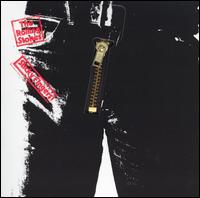
Sticky Fingers

With Let It Bleed, the Rolling Stones carved the epitaph on the tombstone of the 1960s. The decade that began with the hopes and dreams ushered in by the Kennedy Administration ended in a tangle of riots, assassinations, war, drugs, and murder. The decade had started with John F. Kennedy’s election and stirring inauguration where he stated, “Let the word go forth from this time and place, to friend and foe alike, that the torch has been passed to a new generation of Americans—born in this century, tempered by war, disciplined by a hard and bitter peace, proud of our ancient heritage—and unwilling to witness or permit the slow undoing of those human rights to which this Nation has always been committed, and to which we are committed today at home and around the world.”

Oh well, you can’t always get what you want.

In 1971 the Stones released their first studio album of the new decade and, just as Let It Bleed had provided the epitaph of the prior decade, Sticky Fingers was the signpost for the new decade. The peace, love, and flowers ethos of popular music in the 1960s turned into the murky, drug addicted sounds of the new rock. It’s fair to say that the celebration of drugs and decadence in popular music started in the 1960s, but it became a much darker tale in the 1970s, and Sticky Fingers points the way.

Keith Richards has claimed that it’s not a particularly heavy drug album and that many of the songs had been written over the three previous years, but all of that is beside the point. Sticky Fingers is replete with drug references from the coy double entendre of the opening track’s title (“Brown Sugar” is both a sexual reference and the name of a type of heroin) to the “head full of snow” (i.e., cocaine) in the closing “Moonlight Mile.”

Pigeonholing the album as merely a drug- and sex-fueled collection of songs fails to do it justice. Sticky Fingers also happens to be one of the greatest albums in the history of rock music. The band may have been deep into their addictions at this time, but they were still at the peak of their creative abilities.

The two chords that open “Brown Sugar” are as easily identifiable for rock fans as the entire riff of “Satisfaction,” and the main riff of the song is one of the best the Stones ever did. “Brown Sugar” provides a perfect synthesis of everything that makes the Rolling Stones a great band. The main guitar riff from Keith Richards is one of the best in the history of rock music, and the lyric is one of Mick Jagger’s greatest creations, a heady stew of drugs, sex, and decadence unparalleled in popular music. On paper, the idea that “Brown Sugar” would be a hit single (and it was a number one single) is ludicrous. With lyrics referring to slavery, sadomasochism, interracial oral sex, it would seem unlikely that the song would ever be acceptable to radio. The fact that most of the lyrics are largely indecipherable certainly helped. The only clearly recognizable lyric is the chorus line of “Brown Sugar, how come you taste so good?” with that insistently catchy “Yeah! Yeah! Yeah! Whooo!” sealing the deal and making the song a perfect fit for arena shows. The Stones pulled off a really neat trick with this song, taking a subject that was completely unfit for radio and marrying it to music that simply screamed, “hit single.” With that riff, overlayed by Mick Taylor’s great lead and the incredible Bobby Keys sax solo, it was a song radio simply could not ignore. I suppose it was a good thing that the Stones didn’t include a lyric sheet with the album.

"Sway" follows the pattern of opening Stones albums with a 1-2 punch that leaves the listener knocked sideways. Unlike "No Expectations" from Beggars Banquet and "Love In Vain" from Let It Bleed, “Sway” leaves the acoustic guitar in the closet and pummels the listener with a tortured heavy ballad. Once again the Stones are reinventing the blues. “Sway” is slow, but everything about the song indicates that it started life as a ballad before it received an injection of steroids. Jagger slurs the words, making the song even more indecipherable than “Brown Sugar,” but the mood is dark. I don’t know whether the song was written about, or for, Brian Jones, but the lyrics can fit. As a troubled soul, that “demon life” certainly had Jones “in its sway,” and there is a verse that clearly indicates the passing of a friend: “Ain’t flinging tears out on the dusty ground/For my friends out on the burial ground/Can’t stand the feeling getting so brought down.”

Through the bad, Jagger is optimistic that love will find a way. “There must be ways to find out/Love is the way they say is really strutting out” he sings before wailing a nearly incoherent scream on the words "Hey, hey, hey, now!" Love seems to triumph in the end, as Jagger sings of waking up next to “someone that broke me up with a corner of her smile” but the demon life in the chorus returns as Nicky Hopkins on angelic piano and Mick Taylor on devilish guitar duel to the death. Indeed, “Sway” is one of Mick Taylor’s finest recorded moments. The solo he plays beginning at about 1:35 into the song is a textbook example of brilliant slide playing, as tasteful and economical as the best of Duane Allman, while the closing solo he plays over the last minute of the song is nothing short of staggering, the first real instance of virtuosity appearing on a Stones studio recording. Taylor rarely gets enough credit for his work with the Stones, being the middleman between the legendary Brian Jones and Ron Wood. On “Sway,” a track on which Keith Richards provides only backing vocals and the rhythm guitar is ably but unspectacularly played by Mick Jagger, Taylor shows just what he was capable of doing, and he elevates the entire song. It is mostly the hard-core devotees who are familiar with “Sway,” but it is one of the greatest of all Stones songs and the reason for that is Mick Taylor.

In 1970, the Flying Burrito Brothers released a song called “Wild Horses” that carried the songwriting credit of Jagger/Richards. The song had been “loaned” to Gram Parsons as a thank you from Keith Richards. Parsons had shown Richards how to use alternate guitar tunings for greater effect. The Burritos never had a hit with “Wild Horses”, but it’s a piece of rock and roll trivia that their version was the first recorded and released version of what, in 1971, would instantly become a Stones classic. I actually prefer the Burritos version of the song, but that doesn’t mean that the Stones version isn’t solid gold. Here the acoustic guitar returns, and it’s some of the finest acoustic playing on any Stones song. Taylor and Richards weave together, with Richards playing the main riff and Taylor interjecting brief finger picking licks, and Jim Dickinson providing tinkling piano notes under the most plaintive, emotional vocal Jagger had ever recorded. Charlie Watts kicks in and while he doesn’t have much to do on the song, what he does is simply perfect. Bill Wyman provides a very elementary bass line, mainly individual notes hit for accent. The lyrics tell a heartbreaking tale of separation and loss: “I know I dreamed you/A sin and a lie/I have my freedom, but I don’t have much time/Faith has been broken/Tears must be cried/Let’s do some living/After we die.” But in the end the song is about reconciliation and redemption. The separation is over, and Jagger reassures his love that “Wild horses couldn’t drag me away.” Musically, the secret weapon of the song is the harmony vocal on the chorus. The horrendous attempts at harmony that gave a cheeky charm to Between The Buttons is now a magnificent blending of Jagger’s voice with Keith Richards’ raspier harmony. These harmonies imbue the chorus with an incredible depth of emotion.

Sticky Fingers is not a perfect album, although it’s really close. The reason the album falls short of perfection is the maddening “Can’t You Hear Me Knocking.” Propelled by a classic riff, a snapping drum line from Charlie Watts, a great vocal from Jagger, and a note-perfect (if lyrically repetitive) bridge, the song is 2:41 of the best material on the album. Unfortunately, the song is 7:15 long. Immediately following this incredible performance is four and a half minutes of noodling jamming. Rocky Dijon on congas, Jimmy Miller on percussion, and Bobby Keys on sax start the jam convincingly, but just as “Sway” showed the best of Mick Taylor, “Can’t You Hear Me Knocking” shows him at his worst, playing a Santana-lite Latin groove that wouldn’t be out-of-place in your local Mexican restaurant. It’s not that’s his playing is bad, it’s just that it’s not interesting. It’s a truly disappointing coda to an otherwise excellent song. I should mention that the jam has its advocates who love it and frankly, I wish I were one of them. To me, the jam takes up the full length of a song, and adds nothing to the album.

There are also those who would disavow the reading of Mississippi Fred McDowell’s "You Gotta Move," but I am not one of them. It’s a blast of primal delta blues, with a blending of slide guitar and vocal melody over a simple blues lyric. The effect of the song, with its rudimentary drumbeat and field holler vocals, is a chant. It is easy to imagine this being sung in the cotton fields. Coming after the cluttered ending of "Can’t You Hear Me Knocking," "You Gotta Move" clears the air with its simplicity and manages to say more in 2:34 than "Knocking" does in its extended running time.

Now that the air has been cleared by a Delta blues blast, side two of the record immediately raises the stakes. The real triumph on “Bitch” belongs to Bobby Keys and Jim Price on sax and trumpet, respectively. Sure the guitar riff from Keith and Taylor is wild, but it’s the horn riff that mirrors the guitar riff that provides the real hook in the song. Jagger’s salacious lyric is excellent, swinging between the boastful and the beaten. “Sometimes I’m sexy, move like a stud/Kicking the stall all night/Sometimes I’m so shy, got to be worked on/Don’t have no bark or bite,” he sings. But as tired and beaten down as he is, he can’t help but respond to the loving call of a woman who knows how to get his blood flowing and his heart “bumpin’ louder than a big bass drum.” But even here, in an ode to sex, the lifestyle choices of the Stones raise a brief appearance. “I’m feeling drunk, juiced up and sloppy/Ain’t touched a drink all night.” It’s one of the many references to intoxicating substances that pepper the album.

On "I Got The Blues" the Stones crafted what is one of their best original blues songs, nearly the equal of the brilliant "No Expectations." It’s a perfect combination of lyric and music. Jagger’s lyrics is touching and heartfelt, and you can hear the resignation in his voice as he acknowledges that the affair is over, but he still wants what’s best for her. "Every night you’ve been away/I’ve sat down and I have prayed/That you’re safe in the arms of a guy/Who will bring you alive/Won’t drag you down with abuse." And just as the vocals give way to the solo, it is not the guitar that takes the lead but rather Billy Preston’s beautiful organ solo.

“Sister Morphine” was co-written with Jagger’s ex-girlfriend Marianne Faithfull (some claim she’s really the sole writer) and it’s one of the most harrowing songs ever written or recorded. Jagger’s half-whispered lyrics, backed by a sparse acoustic guitar, paint a bleak picture of despair. With the second verse, Ry Cooder plays a needle-sharp slide and Bill Wyman has his shining moment on the album with his bass line. A simple drumbeat and a heavily distorted piano herald the third verse, when Jagger’s voice turns pleading. “Please, Sister Morphine, turn my nightmares into dreams/Can’t you see I’m fading fast/And that this shot will be my last.” Listen closely as Jagger sings that last word. He stretches out the vowel sound and mutates the soft “a” sound into a long “i” sound before concluding with a barely audible “f.” The effect, if you listen closely is to blur the line between the published lyric of “This shot will be my last” and the more frightening line “This shot will be my life.” As a portrayal of drug addiction, songs don’t really get scarier than “Sister Morphine.”

It wouldn’t be a Stones album from this era without the obligatory country pastiche, but Jagger and Richards came up with their best such song with “Dead Flowers.” It’s a smart-ass kiss off to a former love, driven by the honky-tonk piano of Ian Stewart, the acoustic rhythm guitar from Jagger, and the great solo from Taylor. Charlie Watts rides the hi-hat like his life depends on it, and Jagger sings in his best phony Southern drawl. The drugs are there, of course. “I’ll be in my basement room/With a needle and a spoon,” sings Jagger, but the lyrical hook of the song is the wickedly funny line, “You can send me dead flowers every morning…/And I won’t forget to put roses on your grave.”

After the Stones ended the 1969 tour, they began working on the songs that would make up Sticky Fingers. “Moonlight Mile” was recorded in May of 1970, nearly a year before Fingers was released, and appears to have been heavily inspired by or influenced by the 1969 tour. Rock music is full of songs about life on the road from the sublime (Jackson Browne’s “Running On Empty”) to the ridiculous (Bon Jovi’s “Wanted Dead Or Alive”). I can think of no song that better captures the isolation and loneliness of a life on the road better than “Moonlight Mile.” Is there a better image of the after-party bus ride to the next gig, staring at your own reflection in a nighttime window, than the opening verse?

When the wind blows and the rain feels cold
With a head full of snow
In the window there’s a face you know
Don’t the night pass slow?
Don’t the nights pass slow?

The road is a grueling place in the Stones. Fifteen or so years later Jon Bon Jovi would be bragging about seeing a million faces and rocking them all, but for Jagger the adoring crowd is “the sound of strangers” while the band is “sleeping under strange, strange skies” after another “mad mad day on the road.” Underscored by Paul Buckmaster’s beautiful string arrangement and Charlie’s thick drumming, the pace of the song is stately and powerful, punctuated by Jagger’s one howl, “Yeah, I’m comin’ home!” near the end. Mick Taylor also deserves an enormous amount of credit on this song. His beautiful electric and slide playing more than compensate for his sins on “Can’t You Hear Me Knocking.” Amazingly, Keith Richards does not appear on the song. This is the Jagger/Taylor show, and it provides both a beautiful coda for the album and one of the true highlights of the Taylor era. “Moonlight Mile” may actually be the best pure song the Stones recorded during Taylor’s tenure with the band.

Sticky Fingers is yet another high water mark for the Stones, and also a clear break in both sound and content from what the band had been the previous decade. The pop songs and occasionally obvious attempts to follow the Beatles were gone. The Beatles no longer existed and the Stones were free to do whatever they wanted. Sticky Fingers, with its accent on sex, drugs, and rock and roll was the template the band would follow, with some minor deviations, for the rest of their career.

Grade: A+
The Rolling Stones: Get Yer Ya-Ya’s Out!

Get Yer Ya-Ya's Out

In 1969, the Rolling Stones went where the Beatles feared to tred: back to the concert stage. The Stones hadn’t toured in three years (a lifetime back then), so the shows were greeted as the return of conquering heroes. The fact that the Stones were also riding on the enormous wave of both Beggars Banquet and Let It Bleed helped considerably. They had just released their two best albums to that point, and the technology and their audience had matured to the point where they could actually be heard in the concert halls.

The 1969 tour is considered by many Stones fans to be one of the best they ever did (the 1972 tour usually gets the #1 ranking), but the entire tour was completely overshadowed by the final show, at a little place we like to call Altamont, where a fan named Meredith Hunter pulled a gun in front of the stage and was subsequently knifed and beaten to death by the Hell’s Angels as the Stones looked on. The murder at Altamont, enshrined forever in the magnificent movie Gimme Shelter, cast a pall over the Stones that lasted for years.

What gets lost in the tale is just how good the rest of the tour was. This era was the peak for the band both as a recording unit and a live band. The extra musicians, blow-up phalluses, giant inflatable women, football jerseys, etc. were still years away and on the stage was a young band with a lot to prove.

The Stones had released an earlier live album called Got Live If You Want It, but that was a poorly recorded travesty where the band was largely drowned out by the screaming of teenyboppers. The album for the 1969 tour, Get Yer Ya-Ya’s Out! The Rolling Stones In Concert was an entirely different beast.

It is on the very first track where the Stones used a delay effect of over-lapping introductions to announce themselves by the title that would stick: The Greatest Rock and Roll Band In The World. From there the band launches into an incendiary take on “Jumping Jack Flash” that hits all the right notes for a live rock album: it’s looser than the studio version and the guitars especially have even more muscle.

“Carol,” one of two Chuck Berry covers, is a nice reminder that the Stones of 1969 were not that far removed from the Stones of 1965. That loose vibe, pressing up against but never crossing the border of sloppy, is fully evident as Keith rips into a great solo that would make Berry proud. “Little Queenie,” the second Berry cover unearths a little-known gem and provides perhaps the definitive take on the song. Both of the Berry songs are helped enormously by the boogie-woogie piano of the “sixth Stone,” Ian Stewart. His piano runs on both songs rival those of Berry’s great sideman, Johnny Johnson and give Keith a solid foundation for his guitar solos to achieve orbit.

From Banquet comes the salacious “Stray Cat Blues,” slowed down and raunched up even more than the malevolent studio version. The 15-year-old jailbait of the studio version is now a downright twisted 13-year-old. One of the things that sets this version apart from the studio version is Mick Taylor, who steps up throughout the album as the only true virtuoso to ever play in the band. Taylor’s genius is a magnificent counterpoint to the rawness and earthiness of the rest of the band. In many ways such a combination of prodigy and guttersnipes shouldn’t work, but it does. This is the first Stones album on which Taylor plays on every song, and he is the unsung hero throughout, along with the indispensable Charlie Watts.

The slide guitar Taylor plays on “Love In Vain” counters Keith’s delicate picking and lifts the songs above the more gentle version on Let It Bleed. Where Robert Johnson’s blues get a fantastic, acoustic reading on the studio album, it is this live, electric version that reaches deep into the heart of the Delta.

“Sympathy For The Devil” gets a radical overhaul, from the slow samba that graced Beggars Banquet to a sped up, raw blues with a dueling Richards/Taylor solo that nearly blinds the listener with brilliance. Bill Wyman also nearly steals the show here with his busy, sinister bass rumbling throughout the song. While it lacks the classic status of the studio version, this live version is hotter than a flamethrower. And it wouldn’t be complete without the plaintive cry from a girl in the audience requesting “‘Paint It Black’…’Paint It Black’…’Paint It Black’, you devils!” just before the chugging guitar introduces “Sympathy”…a live album moment so iconic that the Stones sampled it on their 1990 live disc Flashpoint as a joke.

Also sped up and raunched up is the already over-the-top “Live With Me.” One of the highlights of Let It Bleed, the live version is one of the highlights here. Mick Taylor simply owns the song, and Watts shines brilliantly throughout. It’s ramshackle and rough, but that’s what makes the song so compelling.

In contrast to most of the songs, “Honky Tonk Women” gets slowed down and put in touch with its blues roots. This is the version that really sounds like it belongs in a small, Southern honky-tonk, played on a stage hidden behind chicken wire. The studio version of the song is classic Stones, but this version sounds like it’s straight from the swamp.

The album closes with an extended, fully electric version of “Street Fighting Man” that Taylor dominates. It’s downright filthy compared to the studio version, and once again the Stones slow the song down a notch in order to increase the power behind the music. Where the studio version was all treble, with the acoustic guitars pushed into the red and flourishes of sitar providing an odd touch, this version is just plain mean…bottom-heavy, with Taylor’s lightning bomber runs soaring over Keith’s scorched earth rhythm.

Of all the songs on the album, it is the final track of side one that provides the centerpiece of the album, as well as creating a character for Jagger to inhabit with the same intensity that his London rival Roger Daltrey was inhabiting Tommy on stages at the same time. “Midnight Rambler” was a good, but anemic, track on Let It Bleed. On Ya-Ya’s it is all blood and blues, a truly harrowing performance that lets Jagger play the part of a sociopathic murderer with great conviction. Live, the song becomes so much more than it was on Let It Bleed that it became the standard version of the song for Stones fans. Forever after, when the Stones played “Rambler” it was the Ya-Ya’s version they trotted out. From the extended harmonica solos to the wicked guitar bump-and-grind of the slowed, thunderous middle section, this version helped solidify the aura of “evil” that had surrounded the Stones since the baleful video they made to promote the “Jumping Jack Flash” single.

The dirty little secret of live albums is that most of them aren’t very good. Most of them are just live versions of the band’s greatest hits, played with a great deal of professionalism and not a whole lot of passion. It is passion that makes a live album worth hearing, and there is plenty of it on Get Yer Ya-Ya’s Out! As live albums go, it is much more than a souvenir from the 1969 tour, it is an essential part of the Stones discography and one of the greatest live albums ever released, opening the door between the Stones of the 1960s and the band they would become in the 1970s.

Grade: A+

The Rolling Stones: Let It Bleed

Let It BleedThe magnificent triumph that was Beggars Banquet had redefined the Stones as a serious rock band, as distinguished from their earlier incarnations when they were unsure whether they were rock, blues, soul, or psychedelic. The followup album, 1969’s Let It Bleed, extrapolated the themes from “Sympathy For The Devil,” “Street Fighting Man” and “Stray Cat Blues” and further clarified the band’s identity. Sinister, druggy, decadent, licentious…these are now well-established views of the Stones, but at that time it was a revelation.

At a time when the Beatles were exhorting everyone to come together, and the Youngbloods were advising us all to smile on our brother, the Stones emerged with a more realistic and darkly visionary look at the Sixties. The Stones had briefly bought into the psychedelic movement with all of its silly hippie nostrums, but it never suited them. Let It Bleed was the antithesis of the hippie movement. “Everybody get together/Try to love one another/Right now,” sang Jesse Colin Young in one of 1969’s biggest hits. The Stones countered with “Rape and murder/It’s just a shot away.”

If music can truly be described as sinister, it is the music that opens the leadoff track, “Gimme Shelter”: the lightly picked guitar, the scratched percussion, and those oh-so-haunting “ooohs” that sound like beautiful demons enticing you into their lair. “A storm is threatening,” sings Jagger in one of the best vocals of his career. “War is just a shot away,” and over the course of four and a half minutes the listener experiences nothing less than the soundtrack to the apocalypse. From the fire sweeping down the streets like a red coal carpet, to the image of a mad bull that has lost its way, to the life-threatening floods, “Gimme Shelter” paints a picture that is downright terrifying. Add in the chorus and Merry Clayton’s brilliant vocal about rape and murder, and the effect is both beautiful and brutal. All is not lost, though, as Jagger reminds us that “love is just a kiss away.” The music matches the lyrics, grinding and vicious. Other leadoff tracks on other albums may be as good, but the opening salvo on Let It Bleed has never been surpassed.

Perhaps trying to mimic the pace of Beggars Banquet, “Gimme Shelter” is followed by the acoustic/slide blues of Robert Johnson’s “Love In Vain.” With fantastic mandolin from Ry Cooder, the song is one of the best Stones blues covers, with Charlie Watts laying down a solid slow shuffle beat.

“Country Honk” follows and it’s a misstep. The third song is a country pastiche, again following the pace of Beggars Banquet. Where “Dear Doctor” worked on every level, the countrified version of the earlier single “Honky Tonk Women” doesn’t quite succeed. It’s not a total failure, and it’s certainly listenable, but it’s an embarrassment compared to the magnificent single which was inexplicably left off the album. Supposedly influenced by Gram Parsons, who had befriended Keith Richards, “Country Honk” lies lazily on the turntable. The lyrics were tweaked slightly, and the music is entirely different from the single: a light acoustic strumming and a down home country fiddle from Byron Berline give the main punch of the song, which is otherwise notable for one reason only: it is the first appearance of Mick Taylor on record with the Stones. Brian Jones, by this time, was dead though he turns up (barely) on two songs from Let It Bleed, and his replacement had not yet been fully cast when the album was recorded.

Side one continues with a fierce bass line played by Keith Richards. “Live With Me” is the “Stray Cat Blues” of Let It Bleed. Blessed with riches and success beyond their wildest dreams, Jagger proves that he’s still the decadent guttersnipe he always claimed to be. The song is an invitation to a woman who Jagger seems both to want to employ as a nanny for a “score of harebrained children” and also take to his bed. “You’d look good pram pushing/Down the high street,” Jagger sings. “Don’t you wanna live with me?” Jagger’s home needs “a woman’s touch” and comes across as an X-rated version of Upstairs, Downstairs. The cook is “a whore” who is apparently making it with the butler in the pantry and stripping to the delight of the footman. The Lord of the Manor, meanwhile, has “filthy habits” and a friend who shoots rats and feeds the carcasses to the geese on his property. It’s quite an invitation. In many ways, this is part two of “Sympathy For The Devil.” It’s the same character, different scenario.

Musically, “Live With Me” is a tough rocker, with Keith’s bass leading the way through the verses with stabs of guitar from Keith and Taylor and piano from Nicky Hopkins and a rock steady beat from Charlie who rarely deviates except to punctuate with brief fills in the chorus. This song is also notable for being the first time the Stones recorded with Bobby Keys, who plays the great saxophone solo.

The title track, “Let It Bleed” closes out the first side. It’s considered a classic Stones song, and rightly so. The lyrical themes of drugs and decadence are solidly in place, with Jagger slurring his tale of junkie friendship. Or perhaps it’s more subtle than that: Jagger is not singing to or about another person, he is singing about drugs, and how they begin as a friendship, and end badly. The drug dealer says “You can lean on me” and appears in the form of a beautiful woman. “My breasts will always be open/Baby, you can rest your weary head right on me/And there will always be a space in my parking lot/When you need a little coke and sympathy.” But the drugs have a dark side: “You knifed me in that dirty filthy basement/With that jaded, faded, junkie nurse/Oh, what pleasant company!” The lyric changes from the friendly “we all need someone we can lean on” to the considerably darker “we all need someone we can feed on.”

Keith plays a tasteful slide guitar throughout, and Ian Stewart plays great boogie-woogie piano while once again it is the acoustic guitar that provides the steady rhythm. “Let It Bleed” may go on a little long, and it lacks the visceral punch the lyrics deserve, but it’s still an extraordinary song of drugs and dissolution.

From drugs to murder, side two opens with “Midnight Rambler,” inspired by the tale of the alleged serial killer Albert DeSalvo, aka The Boston Strangler. In the song, the killer is nearly a supernatural presence, more akin to Candyman than the Boston Strangler. Jagger’s harmonica provides the musical hook, and while Keith’s main guitar riff and slide guitar are top flight, the song doesn’t really work in this setting. “Midnight Rambler” is considered one of the great Stones songs, a true classic, but for most listeners the definitive take is the live version from Get Yer Ya-Ya’s Out! The studio version is too long and not particularly interesting. Charlie rides his usual steady beat, but the song never really achieves liftoff, unlike the transcendent live version that was released the following year.

What follows is one of the best Keith Richards performances on record. “You Got The Silver” is one of the three best Keith vocals ever recorded (for what it’s worth, the others are “Happy” and “Before They Make Me Run”). It is the first time he sings lead on an entire track, and his vocal simply shreds Jagger’s heavily bootlegged version. “You Got The Silver” is a modern country blues, the likes of which the Stones started crafting on Beggars Banquet. The great slide and country-fueled rhythm acoustic meet with Nicky Hopkins’ stately piano and Charlie’s simple, sparse, and elegant drums to make one of the Stones’ finest ballads, with Keith’s weathered vocals providing the icing on the cake.

Bill Wyman leads off “Monkey Man” on the vibes, before the rest of the band comes crashing in, with Keith’s raunchy guitar taking the pole position and using the same sinister tone he used on “Gimme Shelter.” The lyric is a bit of nonsense, more druggy decadent myth-making from Jagger, but the music is astonishing. Charlie rolls around the drums, and Nicky Hopkins once again proves himself the best session keyboardist of his time, his duet with Wyman’s vibes underpinning a Keith slide riff that starts tentatively and then suddenly shoots into orbit.

The album concludes as it began, with a seminal statement on the times. Released very late in 1969, “You Can’t Always Get What You Want” should be written on the tombstone of the Sixties. Opening with the London Bach Choir singing the first verse a capella before giving way to Keith’s strummed acoustic guitar and a lyrical French horn solo from rock’s own Forrest Gump, Al Kooper. When Jagger enters, backed only by the acoustic guitar, he seems to be standing before the crowd unclothed until he is lightly joined by Rocky Dijon’s percussion. Al Kooper’s descending piano runs herald the entrance of the band when, like a kick to the solar plexus, producer Jimmy Miller comes roaring in on the drums (Watts couldn’t get the piece, so Miller jumped in the drummer’s chair). Suddenly it’s all there: Keith’s stinging lead guitar lines sliding in and around the other musicians, with Kooper doubling on piano and organ, and Bill Wyman providing a rollicking bass line. Jagger surveys the Sixties and finds them wanting. In turn he looks at love, politics, and drugs and reaches the same conclusion about all of them: the Sixties dream was just a dream. Much more realistic than many of his musical peers, Jagger and Richards reach the conclusion that it’s not necessarily a bad thing not to get what you want, because you’ll get what you need.

Of the five album run that started with Beggars Banquet (four studio, one live), Let It Bleed is the weakest link. That says much more about the merits of the albums that surround it, however, and very little about any discernible lack of quality here. Let It Bleed is a flawed masterpiece, providing the jaded riposte to the way the Beatles ended the decade with “The love you take/Is equal to the love you make.” Flaws and all, it is essential listening.

Grade: A