 In the world of streaming music it’s virtually impossible for a band to break through into the public consciousness. Artists nowadays hope that their songs will be licensed to a commercial, or a video game, or a movie. Satellite radio exists, of course, but with so many stations to choose from, bands easily get lost in the shuffle. Today, albums are no longer the coin of the realm. The single has returned. Albums are still being made but that almost seems like a tradition more than an expression of artistry. The sad truth is that unless you’re selling (and streaming) in Taylor Swift-like numbers, a band today can’t make much (if any) money based on record sales. Money must be earned on the road, playing large and small clubs and theaters to a hopefully packed house.
In my mind this sets up an unfortunate conflict between the entertainers (the guys jumping around on stage singing their hearts out) and the artists (the guys sitting in a small room agonizing over which chord should come next in the song they’re writing). There’s just no money in artistry these days.
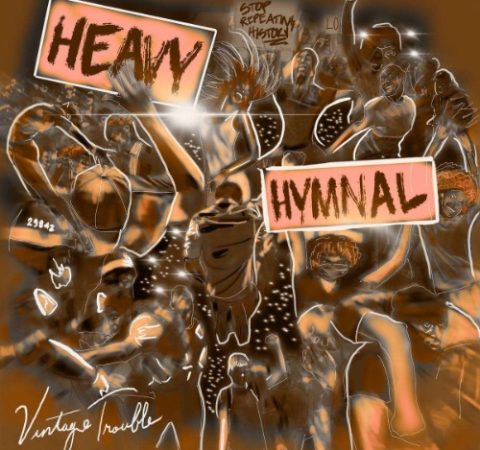
So it is that Vintage Trouble, a band that released their first record way back in 2011, took twelve full years by the time they got to their third album. For context, that’s as long as the Beatles entire career from their skiffle days until their breakup. Sadly, it also appears to be the last Vintage Trouble album, as the band announced that they are “on hiatus” in early 2024. While “on hiatus” can mean many things, their website has essentially shut down with only a message that they are pursuing individual and family endeavors. “We’ll miss you for sure. May we all continue as friends and supporters of one another” sounds a lot more conclusive than “See you soon!”
It’s a shame that this band was forced by the times to spend so much more effort on the road than in the studio. They released only three proper albums (a fourth, Juke Joint Gems, was collected from old recordings and released only digitally), so in the wake of their dissolution we have only a few records to fall back on. Equally sad, their final album, Heavy Hymnal, may be their best, pointing to a bright future that is no more.
More than their previous albums, The Bomb Shelter Sessions and 1 Hopeful Road, this is an album that feels like they’ve got something to say. From the machine gun rapid fire rapping of opener “Who I Am” to the Marvin Gaye-inspired closer “Repeating History” the album is by turns defiant and melancholy, sometimes within the same song. But regardless of the lyrical themes, every song has an infectious groove guaranteed to get you moving. Like all the best soul albums, Heavy Hymnal flows like a party from the boisterous opening salvo of “Who I Am” and “You Already Know” (which features two molten metal guitar solos from Nalle Colt) to the reflective closing of “Shinin'” and “Repeating History” with its mournful guitar solo that evokes Eddie Hazel’s legendary turn on Funkadelic’s “Maggot Brain”.
There are torch songs for slow dancers, like “Not The One,” and the beautiful “The Love That Once Lingered” but the accent here, more than on their previous albums, is on get-your-hands-in-the-air bangers. Elsewhere, the band channels Prince channeling Stevie Wonder (“Baby, What You Do”), explores dance rhythms (“Feeling On”), and even merges a slinky funk groove with power pop (“Shinin'”).
Vintage Trouble was a band with talent to burn. They approached their music fearlessly and in their time delivered three of the best soul/funk albums ever recorded. Their albums stand as testament to a love for music of many different genres. While at their core they were a soul band, they also touched on rap, rhythm and blues, dance music, and rock and roll. In this era of girl pop, streaming, and iTunes, they deserved better.
Grade: A
 When X first came on the scene in 1980 they were hardscrabble punk poets who had the good fortune to be noticed by former Doors keyboardist Ray Manzarek, who was always a sucker for a band that wore their Doors influences on their sleeve. Those first four X albums (Los Angeles, Wild Gift, Under The Big Black Sun, and More Fun in the New World), all produced by Manzarek, still stand at the top of the Los Angeles punk scene from the late 1970s and 1980s. They were less aggressive than Black Flag, more tuneful than the Circle Jerks, less obnoxious than Fear, and, unlike the Germs, had written actual songs with melodies and choruses. Their combination of poetic lyrics, a punk rock rhythm section, and a Chuck Berry-loving rockabilly guitar player were unlike anything else on the scene. Their vocal harmonies were borrowed from Jefferson Airplane, their lyrical content from Jim Morrison. Though they came from the hardcore punk rock underground, that had more to do with their location than their actual sound. They were punk in attitude, but a rock and roll band in practice.
 A simple drum beat opens the festivities here, accompanied by various grunts from the singer who’s warming up in the wings, before the incredibly loud, magisterial organ comes in. Spooky Tooth has arrived and, with them, the beginnings of the Progressive Rock movement that would flower in the following years.
