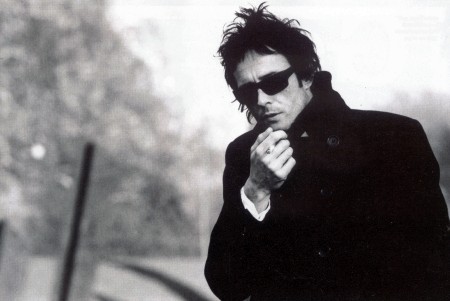
“The Stars Look Very Different Today…” David Bowie, RIP

Last month I was on a huge David Bowie kick. I created a playlist for the car that I listened to every day for a few weeks and watched both the Showtime documentary Five Years and Bowie’s guest appearance on The Dick Cavett Show on Hulu. The Bowie binge was precipitated by the news of his new album and the surreal, vaguely disturbing video that accompanied the title song, “Blackstar”. I didn’t know that Bowie was dying. Nobody outside of his immediate circle did.

There’s nothing in the “Blackstar” video that would indicate a man on his last legs. Bowie looked old, but he was 69. His voice sounded strong and clear, even if it wasn’t the commanding instrument that went toe-to-toe with Freddie Mercury in “Under Pressure”. The music was high on atmospherics, and low on guitar crunch, but that had been Bowie’s sound since the late 1970s when he traded in Los Angeles and London for Berlin. The song was good, if a bit long, but it carried one Bowie trademark: it didn’t sound like anything else. Even at the age of 69, David Bowie was challenging himself and his audience. His final video, for the song “Lazarus”, shows Bowie in a hospital bed, blindfolded. At the end he steps into a wardrobe and closes the oak door on himself, disappearing into a symbolic coffin. He even made his death into an artistic statement.

David Bowie, turning his death into art.

David Bowie, turning his death into art.

Bowie had his critics, including Rolling Stone Keith Richards, who claimed that Bowie’s entire career was just a pose, an artificial construct. The criticism is valid to a point, but misses the larger picture. Bowie did work within the confines of artifice, but that doesn’t mean the music was artificial. Are Warhol’s paintings of a Campbell’s Soup artistically false because they portray something found in most people’s kitchen pantries? Does Jack White’s plastic guitar and red/white/black color scheme mean that the blues he plays is less legitimate than John Lee Hooker’s? Bowie’s costumes, the poses, the “Is he or isn’t he gay?” controversies, the elaborate theatricality of his stage show, were all designed to offer a framework for the listener and concertgoer to be immersed in the art. This was more than just music; it was theater, it was pantomime, it was acting. It even touched on literature; on his Serious Moonlight tour he performed the song “Cracked Actor” while singing into the face of a skull he held in his hand, a reference to Shakespeare’s Hamlet and Yorick. Bowie’s art covered a far wider spectrum than that of his peers, though the music was always the most important part: “Space Oddity”, The Man Who Sold The World, Hunky Dory, The Rise and Fall of Ziggy Stardust and the Spiders From Mars, Station to Station, Low, Scary Monsters…these are all essential rock and roll recordings, deserving of a home in any rock fan’s record collection.

Too many of the encomiums that have been written since his death try to portray Bowie as some sort of social activist, a champion of gay rights, but this is a dreadful misreading of his art. Yes, he played with gender roles and was the first rock star to openly announce that he was gay but even that was part of his art. Later in his career Bowie said that he had always been “a closet heterosexual” and seemed reticent to discuss the extravagant pansexuality that had garnered him so much attention (much of it negative, but there’s no such thing as bad press) in his early 70’s heyday. The tributes to him that focus on his gender-bending androgyny do the artist a grave disservice; they focus on the façade and not on the music that was the heart of his artistic expression. I’m sure Bowie was pleased to know that he was an inspiration to a lot of kids who felt alienated and different, whether it was because they were gay or simply because they were different, but it was not the purpose of his various personas. The purpose was to provide a showcase for the music, an ever-changing persona that allowed him to explore whatever musical inspirations were guiding him. In the early 70s he essentially created glam rock by adopting the persona of an alien that had come down to show a dying Earth how to have a good time in its final days. When he fell in love with Philly soul he became a soul man, putting on a suit and crooning in his smoothest voice. When he went to Berlin and became entranced with Kraftwerk he cut his already short hair even shorter and adopted the ice-cold look of Euro disco. When he embraced the New Romantic movement in the early 1980s he appeared like a long-lost member of Spandau Ballet.

Bowie was not a chameleon, disguising himself by blending into his surroundings. He was a shape-shifter, using his body, his bands, and his stage as a canvas to illustrate the music in his head. With all of his various personas Bowie gave the audience the chance to actually see what music looked like. Throughout his career, Bowie became his music. In this sense Bowie is unique among musicians. All true musicians are artists. David Bowie was art.

The Listening Post: November 2015

Revisiting some old friends.

  • Sonic HighwaysFoo Fighters. Let’s face it, it’s pretty much impossible not to like Dave Grohl. He’s so unconcerned with being cool, he approaches his music with a huge smile and boyish enthusiasm, as if even now he can’t believe that this is how he lives his life, and he has always come across as one of rock ‘n’ roll’s nicest characters. He’s a good singer, a solid if unspectacular guitarist, and a drummer the likes of whom we haven’t seen since John Bonham sat behind the kit for Led Zeppelin. Also, he’s a punk rock kid who’s got Paul McCartney on his phone contact list. So it’s resolved: Dave Grohl is awesome. Then there’s his band. Foo Fighters have always been a band with plenty of chops. As amazing a drummer as Grohl is, his equal (and in some ways superior) is Taylor Hawkins. Guitarist Chris Shifflett is a top-notch lead guitar player, and bassist Nate Mendel provides a great bottom end. However, there’s little in Foo Fighters that can be called original or even particularly interesting. Many of their songs are solid, and their highlights (of which there are many) are among the best examples of rock music in the post-alternative era. But this all makes Sonic Highways that much more disappointing. The album is the “soundtrack” to an eight part documentary that Grohl did for HBO last year. The Foos traveled across the country and hit the biggest of the nation’s musical meccas to explore the evolution of the sound from each of those cities. They talked about blues, power pop, and punk in Chicago, Dixieland jazz in New Orleans, alternative rock in Seattle, etc. In each city, Grohl conducted interviews with musicians and producers, and then wrote the lyrics for these songs based on those interviews. It’s a great concept, but a failed execution. Grohl hit each of these cities like the fan that he is, but didn’t absorb any of the atmosphere. The music on Sonic Highways sounds like every other Foo Fighters album, despite the presence of guest stars like Gary Clark Jr., Rick Nielsen, and Joe Walsh. Of all the guests, only Walsh really makes his presence felt, dropping into “Outside” an elegant, atmospheric guitar solo that could have been lifted straight from James Gang Rides Again. Otherwise, the guests, even the Preservation Hall Jazz Band, get sucked into the band’s sound.

    Which wouldn’t be so bad if the sound was good. But on Sonic Highways Grohl has fully embraced his Enormodome tendencies. There isn’t a single song on the album that doesn’t seem like it was written specifically to be played in front of 80,000 punters at Wembley Stadium. The music is completely faceless, generic arena rock, barely distinguishable from Journey or Nickelback. Grohl still has a lot of punk rock kid in him, which makes this exercise in corporate rock somewhat baffling. This is music that sounds like it was dreamed up by men in suits sitting around a table. It’s almost cynical. Listen to “I Am A River” with your eyes closed and just try not to picture 80,000 lit cell phones being waved in the air at a football stadium. I don’t think it can be done. Notice how what was once passion (The Colour and the Shape‘s “Monkey Wrench”) has now become a cliché: the music is rising to a crescendo, time to start screaming the lyrics as if they actually mean something. For all the volume, speed, screaming, and thrash in these grooves the result is completely soulless. Grohl is the ultimate rock music fanboy, and Sonic Highways is a love letter to the cities that generated the music he loves, but it’s a love letter devoid of genuine emotion, as if it was written by a child painstakingly copying the love letters he found in his Dad’s dresser drawer, but not really knowing what the words mean. The songs from Sonic Highways will probably sound great in the Enormodome, but in the car or streaming through Spotify they sound banal and dull, and the band that has been flying the True Believer flag for rock music for twenty years now suddenly sound like the reason Nirvana had to exist.
    Grade: D
  • Crosseyed HeartKeith Richards. It’s been 23 years since the soul of the Rolling Stones has stepped out of his band’s shadow and released a solo album. In 1988 and 1992 Keith Richards proved that he could survive, and even thrive, without his musical brother Mick Jagger. Talk Is Cheap and Main Offender were loose, sloppy affairs that called up everything that was great about the Stones. More than two decades later, and ten years after the last Rolling Stones album, Keith’s done it again. Crosseyed Heart has an advantage over Keith’s previous solo efforts: he’s no longer stuck in a high-gloss production era. Now the drums sound more like drums and less like rifle shots, and the rough edges are allowed to show. It’s a better sound than the earlier albums, and a worthy successor in terms of song quality. What the album is missing is Mick Jagger’s vocals. Keith has always been a bit lacking in the vocal department; his best vocals are a soulful, excited bray, and add texture and color to the Stones. Who doesn’t love a good Keith track like “Happy” or “Before They Make Me Run”? But there’s a difference between being the spotlight kid on one or two songs and carrying an entire album. As studied and forced as Jagger’s vocals have become in the last twenty years, they’re still a far sight better than Keith’s. There’s also little doubt that Keith’s vocals have been helped by modern technology. Anyone who’s heard Keith speak, his voice a harsh, phlegm-filled rasp, would know that the singing here has been sweetened. It’s still rough, but he doesn’t sound like a man with encroaching emphysema. Musically, Crosseyed Heart is a winner. Keith has always been an advocate of the roll in rock ‘n’ roll, and there’s plenty of groove to be found here. “Heartstopper” and “Trouble” are terrific Stones-y rockers, “Love Overdue” is Richards’s best reggae track since It’s Only Rock ‘n’ Roll‘s “Luxury”, “Blues In The Morning” resurrects the spirit of Chuck Berry and Johnnie Johnson, “Suspicious” is one of the best examples of Keith’s recent penchant for torch song balladeering. There’s also a terrific cover of Leadbelly’s “Goodnight Irene” that connects Keith to his influences in a way that hasn’t been heard since the days when the Stones were covering Robert Johnson. Maybe best of all is “Substantial Damage”, a great funk groove underpinning Keith’s speak-sing lyrics (“What’s that thing attached to your ear?/I’m talking to you but you don’t seem to hear/I’m paying for dinner and I might as well not be here” could have been lifted from a Jack White song.) There are some quibbles: the title track is fantastic, a finger-picked acoustic blues that sounds like Robert Johnson was reincarnated, but ends abruptly with Keith declaring “That’s all I got.” He should have taken some time to finish the song. “Illusion” sounds like a rewrite of Talk Is Cheap‘s vastly superior “Make No Mistake” with Norah Jones filling in for Sarah Dash. “Robbed Blind” is a not terribly interesting country ballad, though the pedal steel is lovely. Still, the album proves that there is songwriting and performing life still in Keith Richards. If he can steer Mick Jagger away from his desire to be “contemporary” and get him back to his roots, another Stones album could prove to be a real winner.
    Grade: B+
  • Dodge And BurnThe Dead Weather. Much like with The Raconteurs it seems a little unfair to call The Dead Weather “a Jack White side project”. It is that, but it’s surely just as much, if not more, of an Alison Mosshart side project. The singer for The Kills is the heart and soul of The Dead Weather. While the most famous musician in the band is sitting in the back, playing astonishingly good drums and taking the odd vocal turn, Mosshart is the strutting tiger that gives the band their strength. Dodge and Burn, recorded in fits and starts over the past couple of years, is the band’s best album yet. It maintains the Weather’s industrial Gothic blues sound, but is more easily accessible and more varied. “Three Dollar Hat” hints at rap, and “Lose The Right” has a reggae vibe, but both songs sound like the soundtrack to the end of the world. Throughout the album all the Dead Weather hallmarks are prominent: distorted, fuzzed bass and guitar, heavy keyboards, strangled vocals, and pounding drums. But unlike their earlier efforts, Horehound and Sea of Cowards, the sound doesn’t overwhelm the songs. These are the sturdiest songs the band has done. The best tunes on this album (“I Feel Love”, “Buzzkiller”, “Open Up”, “Cop and Go”) are as good or better than anything they’ve ever done, and even the lesser tracks (“Three Dollar Hat”, “Be Still”) are pretty solid. The album closer, “Impossible Winner” is a string-laden ballad that sounds like nothing else in their canon and proves that Mosshart can actually sing. The Dead Weather can be a tough listen; it’s rare that I revisit the first two albums. But it’s a band with talent and attitude to spare and on Dodge and Burn they sound for the first time like more than the sum of their parts.
    Grade: B+

“One more trip and I’ll be gone…” Scott Weiland, RIP

It’s something of a tasteless remark, but not untrue, that the biggest surprise in Scott Weiland’s death was how late in his life it happened. The singer of Stone Temple Pilots and Velvet Revolver has spent more than twenty years fighting his demons, including his diagnosis of bi-polar disorder, in the public eye. The cycle was always the same: Weiland’s on drugs, goes to rehab, goes back on drugs, gets arrested, goes to rehab, puts out new music, goes back on drugs, gets kicked out of his own band, goes to rehab. Repeat as unnecessary. His addiction to drugs, most notably heroin, came to be the defining aspect of his life just as it will likely be revealed to be the defining aspect of his death.

And that’s a shame. Scott Weiland was also a remarkably good rock singer, capable of a sweet croon, a sultry Morrison-esque baritone, and a raging rasp. He had a finely tuned sense of melody, far superior to Kurt Cobain (who usually gets the credit for putting melody into alternative rock). Stone Temple Pilots’s songs could be crushing hard rock, but they were almost always very catchy. His idols were David Bowie and the Beatles, and he displayed the former’s chameleonic, mercurial showmanship with the sturdy melodic lines of the latter, all set to an alt-rock attack that carried more than a few hints of glam and psychedelia.

scottweilanddylan

When STP released their first album, Core, they were dismissed by critics as Pearl Jam clones, and there was more than a hint of Eddie Vedder’s “Jeremy” mannerisms in STP’s “Plush” video, but the comparison of the two bands was always lazy. Aside from both Weiland and Vedder having deeper voices than was common in rock at the time, and aside from them being guitar-based bands, there was very little overlap between them. Pearl Jam worshiped at the shrine of Pete Townshend and the Who; STP sped up Bowie and combined it with Black Sabbath-style riffing. Core was a huge hit, spawning no fewer than four successful singles (“Sex Type Thing”, “Plush”, “Wicked Garden”, and “Creep”) but the dirty secret of such a successful album was that it really wasn’t very good. Yes, the singles were excellent, and the album tracks “Dead and Bloated” and “Crackerman” were equally good, but the rest of the album was mediocre at best. I bought it on the strength of “Plush”, but didn’t anticipate ever buying another album from them.

Then Purple came out, heralded by the song “Big Empty” from the soundtrack of the movie The Crow. I bought Purple based on hearing “Interstate Love Song”, the best song the band ever did and one of the best songs of the entire decade. The album was almost breathtakingly heavy, its relentless pace softened only by “Pretty Penny”, “Big Empty” and the closing “Kitchenware and Candybars”, but it never seemed that way because of Weiland’s melodic gifts.

Other albums followed, and the band explored their roots, mixing heavy and trippy, pummeling riffs and acoustic ballads. It’s somewhat ironic that their first, best-selling album is also their worst, the sound of a young band finding their way.

The guiding light of the band was always Scott Weiland, but his troubles were so deep he was repeatedly fired from the band he led, only to be brought back when his bandmates recognized how important he was to their success. In the downtimes, he released solo albums that suffered from a lack of constraints on his excesses, and teamed up with former Guns ‘n’ Roses players to form the short-lived Velvet Revolver, who eventually fired him for being so unreliable. Despite his problems, his gifts remained undiminished.

Whether Weiland died from a drug overdose or because his body simply gave out after years of abuse is irrelevant. A gifted singer and melodist, a strong songwriter (with admittedly weak lyrics), and an electrifying performer is now gone at the age of 48. His band was possibly the best singles band of the 1990s, with their only real competition for that title being Smashing Pumpkins. Scott Weiland wasn’t a musician; he was a rock star. One of the last we’ll ever see. RIP.

Love Becomes A Funeral Pyre: A Biography Of The Doors, by Mick Wall

514qxk7JaBL._SY344_BO1,204,203,200_

It’s now been 44 years since Jim Morrison shuffled off his mortal coil, and the story of his tumultuous life and early death has been told countless times. In books, magazines, interviews, and even a big budget feature film, it’s almost as if Morrison never left.

The band’s influence is still felt today, and that’s especially true of their lead singer, whose stage persona can be seen, in part or in whole, in the stylings of singers ranging from Perry Farrell to Scott Weiland to Eddie Vedder. When the Doors reunited in the late 1990s to perform on VH1’s Storytellers, there was no shortage of alternative rock gods lining up to pull on a pair of leather pants and do their best impressions of the Lizard King.

It’s a fair point, then, to ask if there’s a purpose to yet another Doors biography. Is there anything new that hasn’t been discussed before? Is there a single anecdote that Ray Manzarek, in the seemingly daily interviews he gave to everybody with a microphone or a pen in the years before he died, didn’t pontificate upon? Based on the latest, from British writer Mick Wall, the answer is no. This is the same story that was told (poorly and with a different ending) in No One Here Gets Out Alive, the Big Bang of Morrison biographies. It’s the same story that Stephen Davis told (very well) in Jim Morrison: Life, Death, Legend. It’s a similar story to the one told (bizarrely and with little regard for reality) by Oliver Stone in the movie The Doors.

This isn’t to say that Mick Wall brings nothing new to the party, but they’re mostly small anecdotes, like George Harrison inviting Morrison to Abbey Road Studios where the Doors singer met the Beatles while they were recording the White Album. But the main thrust of the story is still the same: pudgy young film student and poet discovers LSD, loses weight, starts writing songs, forms a band, becomes a sex god, has great success, and throws it all away (in one of the worst cases of alcoholism ever documented) while his band members fume indignantly (when they’re not making excuses for him).

Morrison was a star that eclipsed everything in his orbit. It’s why he appears on almost every page of this book, subtitled “A Biography of the Doors”, and the rest of the band drifts in an out. Morrison’s talent was, let’s be honest, limited. He couldn’t play an instrument, his voice was beautifully expressive when he sang in his range but that range was also very limited, his poetry was generally awful even as his lyrics, more disciplined, were often excellent. Forget Ray Manzarek’s constant talk of shamanism and Dionysian ecstasy and the fact remains that Morrison became an archetype. He was the tortured artist, doomed from day one, who transcended death and became a legend.

In many ways, Morrison was symbolic of the decade from which he emerged. He was vital and good-looking, filled with promise, bursting with creativity and a desire to challenge the established order. But, like the Sixties that began with JFK and Camelot, all of that potential was squandered with drugs, promiscuity, and alcohol. By the end of his life, Morrison was a burnt out husk. One of the last things he ever wrote was the scrap: “Last words. Last words. Out. Regret for wasted nights & wasted years. I pissed it all away. American music.” It was in his last journal, along several pages where he had written, over and over, “God help me.”

Love Becomes A Funeral Pyre is very good. It doesn’t add much to the story but it does flesh out one crucial aspect of Morrison’s life: how it ended. The story had first been told in Stephen Davis’s book, but there’s considerably more detail here. Since July 3, 1971, the story of Morrison’s death has been this: he went to Paris to get away from the rock and roll craziness and concentrate on his poetry and to be with the love of his life, Pamela Courson. One night they went to the movies and when they went back to their apartment Jim took a bath. He had a heart attack in the bathtub and passed away. That story has always seemed way too trite for me. I believed it because there was no contradicting story, but it never really seemed right somehow.

It’s not. People are talking now, including the ones who carried Morrison’s body out of the bathroom in a Parisian bar and deposited it in that bathtub. There’s far too many corroborating accounts now not to recognize the truth: Jim Morrison died of a heroin overdose while sitting on the toilet in a bar called the Rock and Roll Circus. In order to avoid police involvement and scandal, he was wrapped in a blanket and carried out the back door to a waiting car. His body was driven home at around 3:00 in the morning and carried up to his third floor apartment, dropped several times along the way. Pamela was mostly passed out, strung out on heroin. They stripped Jim, placed him in the tub, told Pamela what to do (get rid of all the drugs in the apartment) and what to tell the police, and left. Pamela did as she was told, and the French police weren’t really interested in pursuing the matter. It’s a more sordid tale than the myth, but far more believable. Morrison didn’t go to Paris to concentrate on poetry; he went because France wouldn’t extradite him back to the United States, where he was due to be sentenced for the infamous Miami concert. In Paris, he admitted that he was barely reading or writing anything. He was drinking an enormous amount, and had recently begun to try heroin. The heroin that killed him was nearly pure, supplied by Count Jean de Breteuil, Marianne Faithfull’s boyfriend (and former lover of Pamela…it was he who hooked Pam).

Mick Wall’s style is fluid and engaging, though perhaps more befitting a blog than a book. There are many asides and sarcastic comments scattered throughout, and Wall especially seems to hold an intense disdain for Ray Manzarek. While he readily acknowledges Manzarek’s musical skill and his gift of gab, he begins the book by telling how Manzarek had insinuated, in an interview with the author, the old trope that maybe Morrison was still alive somewhere. Rather than shrug it off as Ray being Ray, repeating something that he’s been saying to the punters for over 40 years, Mick Wall seems personally offended by the comment, and almost never fails to include snarky comments when he quotes Ray throughout the book. Some of the snark is funny, but not appropriate for what should be a more dispassionate biographical work. In contrast, the author holds John Densmore in very high esteem (deservedly so…Densmore’s autobiography Riders On The Storm is essential reading for Doors fans, and he is unquestionably the most level-headed and clear-eyed analyst of life with Jim Morrison).

Wall is also surprisingly critical of the music. While he thinks that Strange Days and L.A. Woman are complete triumphs, he’s strangely dismissive of a large part of the band’s brilliant first album, The Doors, and their hard-rocking return to basics, Morrison Hotel. He’s unfairly harsh with both Waiting For The Sun and The Soft Parade, admittedly the two weakest Doors albums but still containing many delights. He savages their performance at the Hollywood Bowl, which I’ve always found to be an extraordinary show, and the showcase they did on PBS (to my mind, one of their best performances on tape). But Wall is clearly a fan. As Morrison devolves, and the band starts to crack under the weight of playing with such a loose cannon, Wall finds it hard to disguise a sense of genuine anger that a band with so much talent could lose the thread so completely.

Wall also refuses to take a position on some of the many controversies of Morrison’s life. He shrugs and backs away from the idea that Morrison was bisexual, though the anecdotal evidence is very strong that the singer was, if not sexually attracted to other men, willing to overlook the gender of whoever was pleasuring him. Was he bisexual or just a drug-addled hedonist? It’s true that nobody will ever know but Wall seems to deliberately shy away from a stance. That’s fair enough, but he’s also agnostic on whether Morrison had been sexually abused as a child. Here there seems to be less room for hesitation. Aside from the fact that he exhibits almost all the signs of the abused child (the addictions, the sexual acting out, the violence toward women, etc), Morrison himself told his lawyer that he’d been abused. In No One Here Gets Out Alive, Jerry Hopkins and Danny Sugarman recall the many instances where a pre-teen Morrison had drawn sexually explicit (and often violent) pictures of children with adults in his notebooks. Sugarman, more a hagiographer than a biographer, dismissed these pictures as being wild and precocious, yet another manifestation of Jim’s towering intellect and Dionysian godhood, when they seemed to me to be a real cry for help. The evidence of Morrison’s abuse is all there, and Wall’s dismissal of it strikes me as cowardly (Wall says that the admission to his lawyer was possibly just more myth making, though by all accounts Morrison was in tears as he told the story). Stephen Davis did a much more thorough job of exploring this angle of Morrison’s life and behavior, including the story of the (male) Florida bar owner who would let the teenaged Morrison on stage to read his poetry in exchange for sex.

Throughout Love Becomes A Funeral Pyre, and most other good Doors books, Jim Morrison comes across as a man who is kind and personable, very witty, insecure (he was hesitant about meeting the Beatles—”What if they laugh at me?” he asked), and extremely intelligent. When he was sober. When he wasn’t sober, and he was drunk more often than not in the last few years of his life, a rage-filled monster emerged. In vino veritas. Today he would have managers shipping him off to rehab and therapy, but in 1971 nobody knew what to do with him, and he paid the price with his life.

Love Becomes A Funeral Pyre is a worthy, though ultimately redundant, addition to the story of the Doors. It doesn’t reach the level of Densmore’s Riders on the Storm: My Life With Jim Morrison and The Doors, Manzarek’s autobiography Light My Fire: My Life With The Doors, or Stephen Davis’s Jim Morrison: Life, Death, Legend, but it is far superior to the original Morrison biography, the grossly distorted, sycophantic No One Here Gets Out Alive. Wall has done fans a service by providing the comprehensive story of Morrison’s death, but there’s little else here that hasn’t been seen before.
The Thrill Is Gone

kin2-014

The gateway drug of the blues for me was The Rolling Stones. My initial exposure to the Stones was their early- and mid-sixties period, when they were releasing good albums and some of the greatest singles ever recorded. It was the lesser-known album tracks that opened the door. “Confessin’ the Blues”, “The Spider and the Fly”, “I Just Wanna Make Love To You” and others were raw slices of blues, and their other songs were heavily influenced by the genre. From the Rolling Stones it’s only a short walk to the Animals, the Yardbirds, and John Mayall’s Blues Breakers. It was the Yardbirds and Mayall who blew up a passing interest into a full-blown obsession because both of those bands provided the seeds for others. From the Yardbirds and Mayall came Clapton; from the Yardbirds came Jeff Beck and Led Zeppelin; from Mayall came Fleetwood Mac and the addition of the virtuoso Mick Taylor to the Stones. Hendrix was in the mix as well, playing his blues from Mars. The Butterfield Blues Band was also there. As I was listening to these bands, and others from the era ranging from Ten Years After to Savoy Brown, the originators of the style of music were unknown to me.

That all changed when the connection was made. In a record store one day I found an album called Muddy and the Wolf, featuring members of Butterfield’s band, the Rolling Stones, Traffic, and Cream. Later I found out that the album was a repackaging of Muddy Waters’s Fathers and Sons and Howlin’ Wolf’s The London Howlin’ Wolf Sessions, but when I handed over my money to the good folks at Tapeville USA I just thought it was some supergroup I’d never heard before. When I listened to it, I was hooked. Like a lot of people, I expected the old blues players to be croaking vocals about bad times while playing rudimentary acoustic guitars. I was floored by both Muddy Waters and Howlin’ Wolf. For whatever reason, at a time when the Human League and Soft Cell were all over the radio with heavily synthesized pop tunes, there was something in this primal music that grabbed me by the ears and demanded that I pay attention. This music was completely unfashionable but that didn’t matter. It was real.

Once I learned that the originators of blues music, those old black guys from down South and from Chicago were actual players and, in some cases, virtuosos, it became a quest to find out more. My first stop after Muddy and Wolf was B.B. King.

I’d heard about King from interviews with Eric Clapton. Of particular interest was Clapton’s quote from a 1968 Rolling Stone interview: “I don’t think there’s a better blues guitar player on the planet than B.B. King.” This coming from Clapton? That’s some serious high praise. My first experiment? Live in Cook County Jail. And again, I was hooked.

B.B. King had one of the purest tones on the planet. Unlike most electric guitar players, King played with little to no distortion. Each note rang clearly and cleanly, and the notes he played were amazing. King was not a particularly great guitarist if you measure skill by your depth of knowledge. King never played chords, and never played while he sang. For him, the guitar was a solo instrument, and an extension of his voice. His rich, pleasing singing was punctuated by flurries of notes from his guitar, which he named Lucille. His style was immediately recognizable. Nobody else plays like him. For millions of fans raised on a diet of guitar virtuosos from Hendrix to Stevie Ray, B.B. King’s style seems almost simple. From a technical perspective, that’s probably true. But King was never interested in playing ten minute solos at the speed of light. His guitar was his partner. He was not its master, and it was not his. A B.B. King song is almost a conversation between the singer and his instrument. He sings the blues, and his guitar whistles, sighs, moans, and cries in sympathy. His guitar playing was a response to his voice’s calling. “Every day I have the blues,” King sings, and his guitar answers “I know you do. Me, too”. There’s an almost Gospel sensibility to it, with King in the role of a preacher and his guitar playing the part of the congregation. “The thrill is gone!” “Alleluia!”

For rock fans King is known as the guy who took one of Bono’s most pretentious lyrics and rooted it in the ground on U2’s “When Love Comes To Town”. Others know him for his biggest hit single, “The Thrill Is Gone”, a fluke pop hit in the late 1960s that still retains its power all these years later. But King’s canon has many joys. The greatest is probably Live at the Regal, often considered one of the greatest live albums ever recorded. It is the concert stage where King worked best. On stage, King could play with an abandon that was often lacking in his studio work. He filled his songs with thunderous vocals, searing lightning fills on the guitar, and his often very funny stage banter (listen to “Worry Worry” from the Cook County album). And above it all, towering over everything, was THE NOTE.

The note changed, of course, depending on the solo or the song in which he unleashed it. But it was always there. The band would chug along, King would stop singing, he’d play a handful of notes, and then hit it. One note. One string. That note would never end. Each one of these, over tens of thousands of live shows, can probably still be heard by the most sensitive recording equipment. THE NOTE would ring out, louder, higher, and clearer than any note that had ever been played by any guitarist. The sustain would go on…and on…and on. The band continued playing while that single note stopped time and let everyone on that stage, and everyone listening, know who was boss.

bb-king-music-blues-guitar-demotivational-posters-1332992061

When the note finally faded, it was usually followed by another quick blast that would put Eddie Van Halen to shame. King’s virtuosity was not technical, it was emotional. He was one of the greatest of all the blues legends, a towering figure in 20th century music. His name should be revered and held in the same company as Armstrong, Sinatra, Parker, Coltrane, Hendrix, Davis, Lennon, Presley. Muddy Waters and Howlin’ Wolf made better records because they were able to capture their live sound on tape, but Riley “B.B.” King stands at the top of the list of blues musicians. He influenced every blues guitar player who came in his wake. His voice is silenced now, as is Lucille’s. The notes live on forever. RIP.