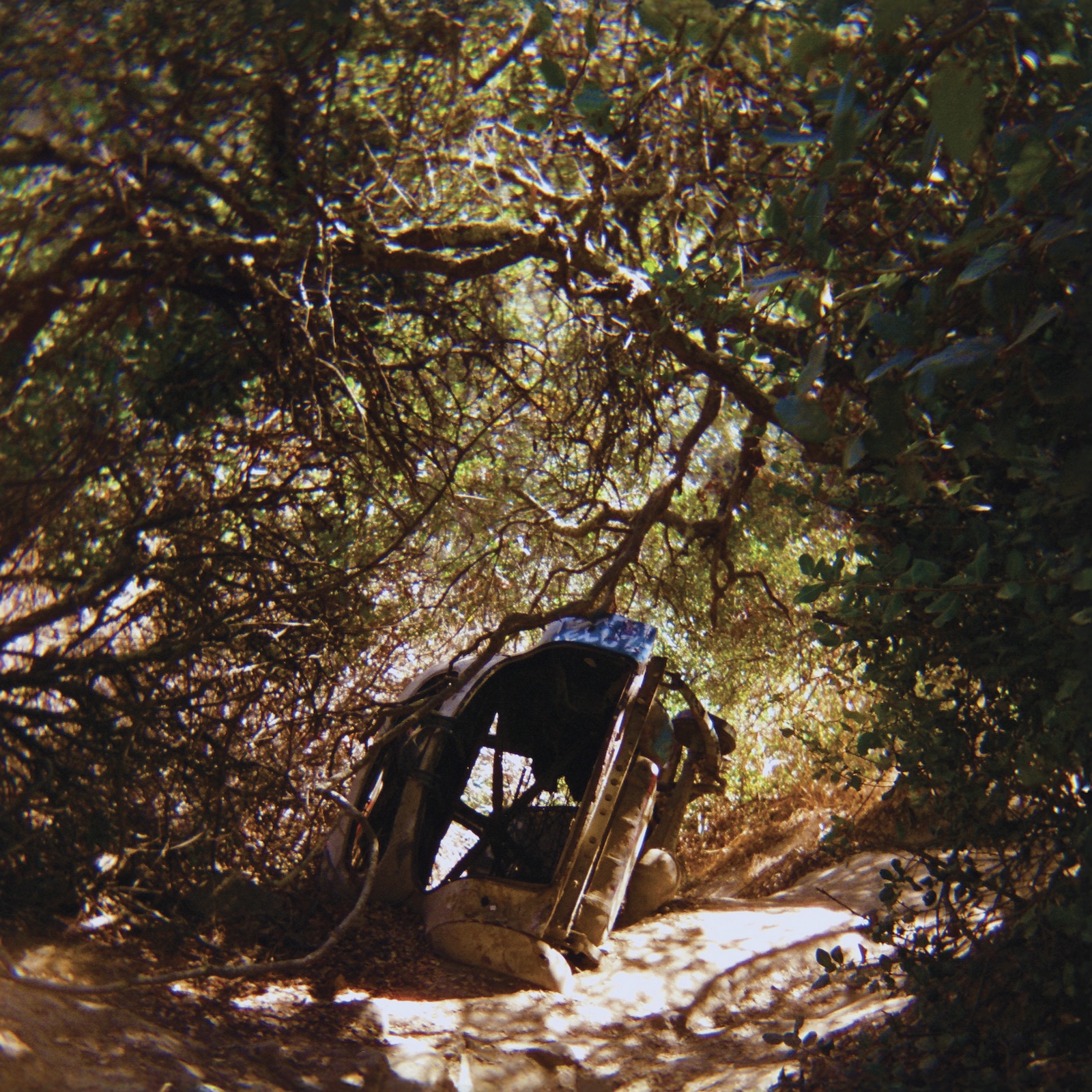
The Grip Weeds: Soul Bender

Grip Weeds Soul Bender Garage rock came out of the 1960s, a form of raw, back-to-basics rock and roll. The gateway drug for garage rock is the legendary collection Nuggets, originally compiled by future Patti Smith guitarist Lenny Kaye and released in 1972 as a two-record compilation of great lost tracks from the sixties. It has since been expanded into no fewer than five four-disc box sets, focusing on America, international, modern, Los Angeles and San Francisco. They represent an alternative view of the history of rock and roll, one where the big bands of the era are only heard through their influence. And it’s possible to hear all those influences in the three minutes it takes to spin out one of these songs. Part of the fun of garage rock is how it teases the ear, reminding you of something else but remaining fresh.

New Jersey’s Grip Weeds, named after John Lennon’s character in the movie How I Won The War, is a modern garage rock band that has just released their ninth album, Soul Bender. They are also in many ways the definitive band in this genre. The influences are there: the jangly guitars of The Byrds, the cascading drums of The Who, the harmonies of the Beatles, etc. But the beauty of the Grip Weeds is that they have assimilated their influences so well that they transcend them. On Nuggets it’s easy to say, “This band sounds like The Yardbirds” or “This could be a Kinks song.” The Grip Weeds sound like The Grip Weeds and simultaneously nobody else and everybody else. Many bands wear their influences on their sleeves. The Grip Weeds have them etched into their DNA.

Soul Bender captures the band at their best. It features the differing patterns of the 1960s in a distinctly modern weave. Released in June of this year on JEM Records and recorded at the band’s own House of Vibes studio, the album is a tour-de-force of melody, guitar crunch, a pounding rhythm section, and exquisite vocals. The result is reminiscent of a time long ago yet also timeless.

From the “Hard Day’s Night”-ish opening chord of the title track to the Odessey and Oracle feel of “Love Comes in Different Ways” the influences are there for trainspotters but make no mistake, this is an original band playing original music. Kurt Reil (vocals, drums), Rick Reil (guitar, keyboards, vocals), Kristin Pinell Reil (lead guitar, vocals), and Dave DeSantis (bass, vocals) have created a heady confection that is one of the best albums of the year (maybe the best).

The music on Soul Bender is varied without ever losing sight of the goal. From the loping duet between Kurt Reil and Kristin Pinell Reil on “Promise (Of The Real)” to the breathy psychedelia of “Column Of Air” to the Byrds-y “Gene Clark (Broken Wing)”, Soul Bender presents what is essentially a hidden greatest hits of a bygone era gussied up with a 21st century sheen and modern production values. The effect is never less than a joyful blast of what the radio should sound like today.

The secret weapon of the band is undoubtedly Kristen Reil. Aside from sterling harmonies and the occasional lead vocal (her voice on “If You Were Here” could have come straight out of Susanna Hoff’s mouth), she’s also an ace guitarist. Her lead guitar adds a level of excitement to the songs, particularly on “Conquer and Divide”, where she steps to the fore and plays two volcanic solos that lean heavy on the whammy bar. There’s a good reason Little Steven’s Underground Garage channel on Sirius named it the “Coolest Song of the Week.”

It’s heartening to hear new music like this. From their first album (House of Vibes) way back in 1994 the Grip Weeds have maintained an astonishing level of consistency in their work. Over nine studio albums (one of them, Strange Change Machine, a double CD set), plus a live album, a Christmas album (!), and a covers album (Dig) the band is still going strong, sounding as fresh now as they did when Nirvana and Pearl Jam were all over the radio. It’s no mean trick to sound so nostalgic and so new at the same time, but they pull it off with memorable tunes, great production, and incendiary playing. The Grip Weeds are the real deal.

Grade: A

The Death of Summer: Brian Wilson and Sly Stone, RIP

It’s been a rough week for popular music with the death of two of the most important figures in the culture of the last 70 years. On the surface, Brian Wilson and Sly Stone could not be further apart. Wilson was the sun-kissed, clean cut all-American kid singing pop songs with his family about surfing, girls, and cars. Stone was the perpetually high black hippie singing funk and soul songs with a racially and sexually integrated band about togetherness, self-empowerment, and enjoying life to the fullest. Wilson marked the first half of the 1960s, Stone was a product of the second half of that decade.

On further reflection, several striking similarities are also evident. Both were geniuses. Both bands were built around family members. Both made it into the 1970s with increasingly scattered results. Both were casualties of drugs and mental illness. Both were unbelievably influential on their peers and their descendants.

Sly Stone, born Sylvester Stewart in 1943, was a disc jockey, producer, and musician in San Francisco who led the Family Stone, a funk outfit that had a great love for all types of music and incorporated rock, soul, psychedelia, gospel, and pop into their sound and blew the doors off of the boundaries of the music scene. Beginning with his Top Ten hit, “Dance to the Music” he began a string of classic songs and albums that redefined the music of black America. This was not the hardcore funk of James Brown, nor was it the Memphis soul of Otis Redding, or the gorgeous pop symphonies of Motown. This was, well, all of that thrown in a blender. The result was unique to Sly and the Family Stone, but others were paying attention.

It’s simply impossible to imagine the sound of black music in the 1970s and beyond without hearing and understanding Sly and the Family Stone. Beginning with his first breakout albums, Music of My Mind and Talking Book, and culminating with the magisterial Songs in the Key of Life, Stevie Wonder had clearly been paying close attention to Sly. Without Sly, there is no Philly soul, no Jacksons, no Parliament-Funkadelic, no Earth, Wind, and Fire, no Spinners, no War, no latter-day Temptations. Follow the trail into the 80s and beyond and there’s no Terence Trent D’Arby, no Prince, no Red Hot Chili Peppers, no Fishbone, no OutKast, no Vintage Trouble. James Brown can rightfully claim the credit for inventing rap, but one wonders if the more music-oriented rappers would have picked up their instruments without Sly leading the way. All these bands and performers were paying homage to Sly Stone in their different ways. Even Talking Heads’ more funk-oriented songs from the early 80s were directly inspired by Sly.

Stone peaked with 1968’s album Stand! and the three singles that he released to close out the decade. “Hot Fun in the Summertime” remains one of the all-time great summer songs, as good as anything Brian Wilson’s brothers had released. The double A-side that he released at year’s end, “Thank You (Falletinme Be Mice Elf Agin)” and “Everybody Is A Star” pointed the way to the seventies on the first side and summarized Sly’s sixties on the second half.

Brian Wilson, the heart and soul of The Beach Boys, was a fragile genius who turned the California dream into a universal language. Born in 1942, Wilson’s early life was steeped in music but scarred by the abuse of his father, Murry, a domineering figure whose cruelty left lasting marks. It was a smack from the desperate wannabe songwriter Murry that rendered Brian deaf in one ear. Wilson’s genius took a while to become evident. The early Beach Boys, as enjoyable and as fun as they are, were mainly variations on a theme: surfing is cool, and life is best lived at the beach. But the genius was lurking all the time, poking his head up in introspective songs like “In My Room” that hinted at a more melancholy side to the songwriter. The musical and vocal arrangements were also getting more sophisticated. As a kid, sitting in front of the stereo with headphones on listening to the then-new Endless Summer compilation, I was drawn more to the intriguing arrangements of the music on “California Girls” and the vocals on “Help Me, Rhonda” than I was to “Surfin’ Safari”.

Brian Wilson Beach Boys

Still, nothing prepared the music-loving America of 1966 for the explosion of brilliance that was Pet Sounds. Surely the winner of any competition for “Worst Cover/Best Album” in history, Pet Sounds was Brian Wilson’s attempt to pick up the gauntlet the Beatles had thrown down with Rubber Soul. Brian has stated that his album was an effort to create something that had “more musical merit than the Beatles.” For their part, the Beatles flipped over the Beach Boys album. Paul McCartney still calls it his favorite album. It wasn’t the lyrics on Pet Sounds that were revolutionary, though they broke from surfing and cars. Singer Mike Love even complained about that to Brian, telling him to “stick to the formula.” No, it was the musical arrangements that completely upended rock music. This was music that demanded to be taken seriously. Even the brilliant musicians who provided the instrumentation, Los Angeles mainstays The Wrecking Crew, familiar and fluent in every type of music around at the time, were confused by what Wilson was asking for in the studio. Confused, but also in awe of the results. Harpsichords, tympanies, barking dogs, bicycle bells…nothing was off-limits in Wilson’s imagination. Anchored by “Wouldn’t It Be Nice” and “God Only Knows,” Pet Sounds remains one of the greatest albums ever recorded. And it was such a flop Capitol records rush-released a greatest hits album just two months later. The fact is that nobody (except other musicians) was ready to hear Brian Wilson’s genius yet.

Wilson’s brilliance reached its apogee with the following single, “Good Vibrations,” a song whose intricate arrangement stuns the listener to this day. But Wilson’s attempt at a follow up album, Smile, was mired in a sea of LSD, pot, and mental illness. He’d had a nervous breakdown in 1964 which led to him giving up touring to concentrate on the records, and now he had another, far more serious one. Smile was abandoned. Parts of it were released on the albums Smiley Smile and Wild Honey, providing a tantalizing glimpse into what might have been. While he “finished” Smile in 2004 as a solo artist, the fact remains that the full Beach Boys-treatment remains the great lost album of the sixties.

Wilson’s career was a rollercoaster of brilliance and breakdown. His mental health struggles, compounded by drug abuse and the manipulative control of psychologist Eugene Landy, derailed him for decades. Landy, initially a savior in the 1970s, became a Svengali-like figure, isolating Wilson until a 1992 lawsuit freed him. His wife and guardian Melinda Wilson died in 2024. Brian Wilson lived out his life suffering from dementia, a tragic ending to a tragic story.

Sly Stone’s life mirrored Wilson’s in its descent. Drug addiction, particularly cocaine, and erratic behavior unraveled his career by the mid-1970s. The Family Stone fractured, and Stone became a reclusive figure, his output dwindling as he battled personal demons. His later years were marked by legal troubles, financial ruin, and health issues, culminating in a prolonged battle with COPD that eventually killed him.

While their stories are tragic, the music they left behind stands testament to their genius. As the drugs got worse Sly Stone’s music turned dark, but his work from the sixties remains fresh, sunny, bold, and optimistic. It’s the perfect companion to the hot nights partying after spending the day on the beach, where Brian Wilson and the Beach Boys provide the soundtrack of the endless summer. The musical world is greatly diminished by their loss.

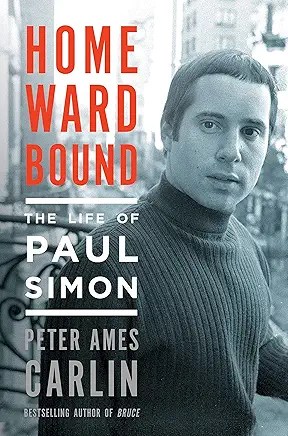
Homeward Bound: The Life of Paul Simon, by Peter Ames Carlin

Homeward Bound The Life of Paul SimonThe poet half to Art Garfunkel’s one-man band has always been an interesting guy. Like Bob Dylan, he was a rock ‘n’ roll fan who went deep into the folk music scene only to reemerge with a sublime combination of the two genres. He achieved massive levels of fame and fortune, gathering critical hosannas the entire time, was inducted into the Rock and Roll Hall of Fame twice and now, in his 80s, is still releasing music. All of this, but Peter Ames Carlin’s 2016 biography was the first serious attempt at capturing this life on the page. The story covers Simon’s entire life from his days as a baseball fanatic kid growing up in Queens, New York through his years with Garfunkel and on through his solo career. Simon was not a particularly prolific artist, his solo albums being years apart, but the high quality of the work from “The Sound of Silence” to Graceland and beyond is unassailable.

The musical journey begins in 1957 when an unknown duo calling themselves Tom and Jerry released a standard ’50s vocal group tune called “Hey! Schoolgirl.” Credited to Jerry Landis and Tom Graph, these were pseudonyms designed to obscure the obviously Jewish roots of Paul Simon and Art Garfunkel. The song became something of a regional hit, allowing Simon to namedrop it when attempting to make his way into the music industry. Simon struggled for years attempting to cash in on the success of “Hey! Schoolgirl” to no avail. He and Garfunkel parted ways as musical partners, though they remained friends.

Much like Bob Dylan had, Simon threw the dice on a career in folk music when that scene exploded in the early sixties, reuniting with Garfunkel. Unlike Dylan, success came slowly, resulting in an album called Wednesday Morning, 3 AM that went nowhere. Disheartened, he made his way to England where he had had success on a solo jaunt the year before. In England he attracted a large following, and even recorded an album called The Paul Simon Songbook, which was not released in the United States at the time but is a fascinating glimpse at many Simon and Garfunkel classics in their early stages.

When Simon achieved success he was unaware. Unbeknownst to him, the producer of Wednesday Morning, Tom Wilson, had decided to add some electric guitars, bass, and drums to the all-acoustic song “The Sound of Silence.” It was released as a single and Simon’s original reaction was anger, which abated once the royalty checks started flowing. From there Simon and Garfunkel were off to the races, scoring hit after classic hit.

The duo split, acrimoniously, in 1970 when Garfunkel decided to try his hand at acting, leaving Simon alone with his thoughts and a guitar. The result of that abandonment was Paul Simon, an excellent collection of tunes that proved Simon didn’t need the crystal-clear tenor of Garfunkel to succeed. As the seventies rolled on, Simon released only two more albums, both of which were extraordinary. One of them, 1975’s Still Crazy After All These Years even featured a reunion with Garfunkel on the brilliant “My Little Town.”

After two more albums, Simon released Graceland in 1986. The album generated an enormous amount of controversy because it was recorded in South Africa using musicians from that country at a time when artists were actively boycotting the apartheid regime there. The kerfuffle was overblown. Simon had fallen in love with the music coming out of Africa and wanted to share it with the world. He used black South African musicians, paying them twice what they normally would make, and brought more attention to the racist government of the country. Graceland was wildly successful and assured Simon’s place in the pantheon of rock and roll greats. His subsequent solo albums, despite critical acclaim, never matched that success.

Peter Ames Carlin’s book does an excellent job of assessing the career and events of Paul Simon’s life. It is comprehensive in its inclusion of detailed discussion of the music and is not afraid to discuss both the positive aspects of Simon’s life and the negative side of his personality (he wasn’t above claiming credit for the work of others). It also spends a lot of time, perhaps too much, on Simon’s relationship with Garfunkel, a lifelong series of reconciliations, reunions, and breakups that seems to have settled on a respectful distance. As Simon said in his Rock and Roll Hall of Fame induction, maybe he’d even record with Garfunkel again, before slyly adding, “No rush.”

There are a few obvious errors in the book, but those errors are minor in the whole. For example, in his discussion of the Simon and Garfunkel album, Parsley, Sage, Rosemary and Thyme, Carlin writes about the brilliance of some of the album tracks and then proceeds to list four songs from the Bookends album. At another point, he has Simon and Garfunkel performing on the same night as Jimi Hendrix and the Grateful Dead at the Monterey International Pop Festival. The errors may be insignificant, but they’re also sloppy and should have been caught in the editing stages. They also call into question the veracity of the author’s other claims.

Paul Simon is something of an anomaly in popular music. A short, balding, Jewish, well-read man who would seem to be most at home in the English department of New York University in Greenwich Village, he nonetheless emerged as one of the biggest, most successful stars of the last half of the 20th century. His work with Garfunkel, his initial splash in the industry, probably reverberates the most because their amazing singles created his legend, but it’s Simon’s solo work that truly transcends. He may never have written songs as good as “Bridge Over Troubled Water,” “Mrs. Robinson,” or “The Sound of Silence” in his solo career, but he and Garfunkel never came close to putting out albums as consistently remarkable as There Goes Rhymin’ Simon or Graceland. From a lyrical perspective, only Bob Dylan was as literate, and Simon’s words are far, far more accessible.

Carlin’s expansive tome is a well-researched and engaging summary of Paul Simon’s life up until 2015 or so. It misses a few albums, including the beautiful Seven Psalms which Simon wrote, recorded, and released at the tender age of 81, but provides deep looks into everything up until that point. The book aims to be the definitive look at Simon’s life, but can any biography be classified as such if the subject in question is still alive, active, and capable of great work? Regardless, though it may be incomplete, Homeward Bound: The Life of Paul Simon succeeds in giving the reader an in-depth understanding into the life and work of a legendary songwriter.

The Ruen Brothers: Ten Paces

Ten Paces by The Ruen Brothers

Imagine, if you will, an old black and white Western film set in John Ford’s treasured Monument Valley, directed by Sergio Leone, starring the cast of The Maltese Falcon. Now imagine the film has a pop/rock soundtrack instead of the usual Ennio Morricone music. This Twilight Zone spin on the old Westerns, combining them with Bogart’s cynical but honest gumshoe, Mary Astor’s femme fatale, and Sydney Greenstreet’s villainous “Fat Man”, gets its soundtrack courtesy of the Rues Brothers, an Americana duo from England.

The lightly picked guitar and the sound of ricocheting gunshots that open “Slow Draw” may grab the listener’s attention, but it’s the rich Roy Orbison-meets-David Byrne vocals of Henry Stansall that provides the deep hook of the music’s appeal. For Ten Paces, their third album, the brothers dive deep into the atmosphere of the odd combination of Western and film noir. The result is a song cycle that has a musical theme, and lyrical allusions, to another time and place. But just because it’s odd doesn’t mean it isn’t good, and Ten Paces is a very good collection of songs.

There is no plot or real concept to the record. This isn’t Tommy or Quadrophenia. It’s a hushed, mostly acoustic, somewhat downbeat affair with a cohesive sound that is not like anything else on the radio today. The Western feel to the music grounds the album in American country and folk but the songs themselves fit comfortably in neither genre. The album is classified as “Singer/Songwriter” in Apple Music, but there’s a little too much rock involved for that to be completely true. It’s impossible to imagine James Taylor singing “Hi-Yo”, a song about the search for gold that evokes the blood, sweat, and tears of the prospectors living in the hope that prosperity is right around the corner.

The imagery of gold appears again in “Silver to Gold” a love song that uses the titular phrase as a metaphor for a blooming relationship. These lyrical nods to the Western, often in conventional songs about love and loss, abound. A noose and hanging appears in the mid-tempo shuffle “The Fear”. Gunfight metaphors provide the lyrical hooks to the superb opener “Slow Draw”, “Bullet Blues” and “The Good Surely Die”.

“Is this a desert dream/Or a story in the West” Stansall sings on “Don’t Know What’s Come Over You”, a song of broken love with a pounding beat and a brief, out-of-place but still effective, synthesizer solo. Native American drums and the image of imprisonment highlight “Free As The Birds”. Only the closing track, “Long Road” is completely devoid of these nods and winks and is grounded in the present with its lyrics about turning on the radio and starting up the engine. But even here, the music keeps the connection with the rest of the songs alive with its subtle touches of pedal steel and acoustic guitars from Rupert Stansall.

Ten Paces is a return to form for the Ruen Brothers, an odd step in the opposite direction from Ultramodern, their previous album that tried to sound like its title with drum machines, processed vocals, and generally less-than-inspired songwriting. It’s a strong successor to their debut album All My Shades Of Blue, even if it’s lacking that album’s rockier tracks. This album deserves wider recognition than it has received, but when your music sits in another time and place obscurity is to be expected, if still lamented.

Grade: A

Vintage Trouble: Heavy Hymnal

Vintage Trouble Heavy HymnalIn the world of streaming music it’s virtually impossible for a band to break through into the public consciousness. Artists nowadays hope that their songs will be licensed to a commercial, or a video game, or a movie. Satellite radio exists, of course, but with so many stations to choose from, bands easily get lost in the shuffle. Today, albums are no longer the coin of the realm. The single has returned. Albums are still being made but that almost seems like a tradition more than an expression of artistry. The sad truth is that unless you’re selling (and streaming) in Taylor Swift-like numbers, a band today can’t make much (if any) money based on record sales. Money must be earned on the road, playing large and small clubs and theaters to a hopefully packed house.

In my mind this sets up an unfortunate conflict between the entertainers (the guys jumping around on stage singing their hearts out) and the artists (the guys sitting in a small room agonizing over which chord should come next in the song they’re writing). There’s just no money in artistry these days.

So it is that Vintage Trouble, a band that released their first record way back in 2011, took twelve full years by the time they got to their third album. For context, that’s as long as the Beatles entire career from their skiffle days until their breakup. Sadly, it also appears to be the last Vintage Trouble album, as the band announced that they are “on hiatus” in early 2024. While “on hiatus” can mean many things, their website has essentially shut down with only a message that they are pursuing individual and family endeavors. “We’ll miss you for sure. May we all continue as friends and supporters of one another” sounds a lot more conclusive than “See you soon!”

It’s a shame that this band was forced by the times to spend so much more effort on the road than in the studio. They released only three proper albums (a fourth, Juke Joint Gems, was collected from old recordings and released only digitally), so in the wake of their dissolution we have only a few records to fall back on. Equally sad, their final album, Heavy Hymnal, may be their best, pointing to a bright future that is no more.

More than their previous albums, The Bomb Shelter Sessions and 1 Hopeful Road, this is an album that feels like they’ve got something to say. From the machine gun rapid fire rapping of opener “Who I Am” to the Marvin Gaye-inspired closer “Repeating History” the album is by turns defiant and melancholy, sometimes within the same song. But regardless of the lyrical themes, every song has an infectious groove guaranteed to get you moving. Like all the best soul albums, Heavy Hymnal flows like a party from the boisterous opening salvo of “Who I Am” and “You Already Know” (which features two molten metal guitar solos from Nalle Colt) to the reflective closing of “Shinin'” and “Repeating History” with its mournful guitar solo that evokes Eddie Hazel’s legendary turn on Funkadelic’s “Maggot Brain”.

There are torch songs for slow dancers, like “Not The One,” and the beautiful “The Love That Once Lingered” but the accent here, more than on their previous albums, is on get-your-hands-in-the-air bangers. Elsewhere, the band channels Prince channeling Stevie Wonder (“Baby, What You Do”), explores dance rhythms (“Feeling On”), and even merges a slinky funk groove with power pop (“Shinin'”).

Vintage Trouble was a band with talent to burn. They approached their music fearlessly and in their time delivered three of the best soul/funk albums ever recorded. Their albums stand as testament to a love for music of many different genres. While at their core they were a soul band, they also touched on rap, rhythm and blues, dance music, and rock and roll. In this era of girl pop, streaming, and iTunes, they deserved better.

Grade: A