Grant-Lee Phillips: In the Hour of Dust

Grant-Lee Phillips In the Hour of DustAmericana came out of the dusty crossroads of folk, country, blues, rock, and soul. In its earliest iterations as “roots rock” it came in the shape of The Band, Gram Parsons, The Blasters, and others. It was always a responsive type of music. The Band were responding to the excesses of Sgt. Pepper and Cream. Parsons was responding to what he believed was the soulless aspect of modern country music. The Blasters were a breath of fresh air amidst the rhinestones and huge hair of the late seventies and early eighties, as well as a riposte to the punk ethos of burning down the past and starting anew. The Blasters wallowed in older styles of music and called their first album American Music. Throughout the eighties, nobody quite knew what to call this style of music that was neither fish nor fowl. Eventually the term “alt-country” was used to describe bands like The Jayhawks and Uncle Tupelo, and then that label gave way to “No Depression,” named after the Carter Family song covered by Uncle Tupelo. Desperate for a label that would stick, the Grammy Awards instituted “Americana” as a category in 1990. It was, and still is, something of a catch-all.

In 1991, Grant Lee Buffalo was formed, led by singer and songwriter Grant-Lee Phillips. The Buffalo were an important voice in shaping the sound. Their music was sometimes described as “folk punk” but that’s not really correct. Their sound was black and white in widescreen format: gritty, hushed, lyrical, atmospheric. Phillips was a truly gifted songwriter and lyricist, as well as being an uncommonly good singer (he was voted Male Vocalist of the Year in 1994 by Rolling Stone). The canvas on which he painted was America. Songs about the siege at Waco, Texas (“Lone Star Song”), the voodoo happenings of New Orleans (“Dixie Drug Store”), the undiscovered grave of Tecumseh (“The Last Days of Tecumseh”), and Johnny Cash (“Demon Called Deception”). Historical and popular culture figures trip off Phillips’s tongue like rain from the skies: John Wilkes Booth, Marie Laveau, Evel Knievel, John Wayne…Gacy. Famous American places are named, from Leavenworth, Kansas to South Rampart Street in NOLA, to the haunted hotel of The Monterey in California. Their sound was a combination of acoustic ballads and alternative rock’s hard edges.

Sadly, Grant Lee Buffalo never found a space in the marketplace. Too quiet for alternative rock, too rocky for folk, they split up after four excellent albums full of vivid imagery and emotional depth.

Grant-Lee Phillips’ solo journey, beginning with 2000’s Ladies’ Love Oracle, marked a shift from the lush, electric sprawl of Grant Lee Buffalo to a more stripped-down, folk-leaning sound that aligned closely with Americana’s core. Albums like Mobilize and Virginia Creeper showcased his knack for weaving personal and historical threads into songs that felt both timeless and urgent, drawing on influences from his Muscogee (Creek) heritage and the American South’s sonic palette. His voice—warm, clear, weathered, evocative, and soaked in sweetness—became the focus, carrying tales of love, loss, and resilience.

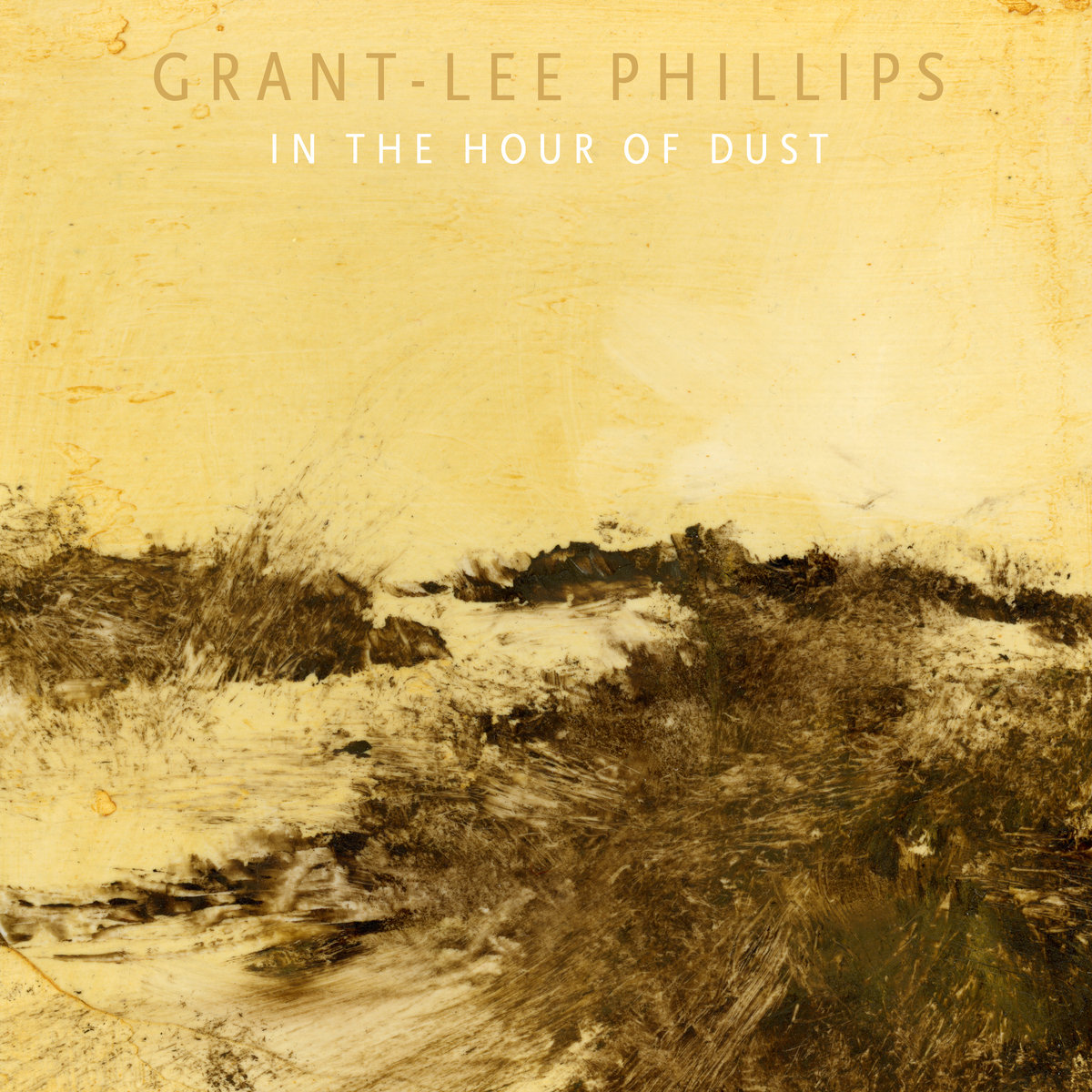
With his latest album, In The Hour of Dust, Phillips has once again proven himself to be one of the finest songwriters in the field. Self-produced and recorded with a small group, the record is a continuation of the sound he has carved out for himself since Virginia Creeper, over 20 years ago. The sturm und drang of the days when the Buffalo roamed are now a distant memory, replaced by some of the finest balladry of the times. Once again, the main weapon here is Phillips’s voice and softly strummed acoustic guitars, yet there’s an urgent undercurrent throughout the album the saves it from turning into Nick Drake territory, especially on tracks such as “Little Men,” “Bullies,” and “Stories We Tell.” While it might be nice to hear him break out the distortion pedal once again, those days are solidly buried in the past. “Lone Star Song” and “Homespun” are still there, available to listen, but it isn’t where his head is at these days.

Phillips calls on his Native American roots with “Did You Make It Through The Night Okay?” a particularly good song that blends light humor about strange days with a chorus that opts for cheer instead of doom. “Bullies”—with Jamie Edwards, Phillips’s first ever co-written song— takes the schoolyard bully and brings him into the adult world of boardrooms and government bureaucracies and then refuses to give any concessions to them. It’s typical of his defiant attitude toward the “little men who want to rule like Caesar” (“Little Men”), and his penchant for bringing politics into his art in subtle ways.

The album’s centerpiece is “Stories We Tell,” a beautiful lyric of self-doubt and affirmation married to a sprightly rhythm track that belies the subject matter of the song. There’s a sense of hope in the music even as Phillips sings of the “crooked lies” and “fables” that we tell ourselves, and that’s a common thread through the album. “Regret is a martyr that bleeds ‘what ifs,’ he sings, “and laments what might have been.” He dismisses the idea by calling them “all those fairy tales” even while acknowledging the very real feelings that are generated by the stories. “None of this is writ in stone,” is the message of a pep talk we all need to hear on occasion. Musically the song fits right in between the jauntier tracks like “Little Men” and “Did You Make It Through The Night Okay?” and the bedroom quiet of love songs like “She Knows Me” and tunes that bespeak of a desperate loneliness like “Someone.”

Grant-Lee Phillips’s career since the dissolution of his old band has been one of a remarkable consistency. While the quiet, whispered tones of much of his solo work can be a little much when listening in depth, there’s simply no denying that the man seems incapable of writing a bad song. With In the Hour of Dust, like his earlier triumph The Narrows, there’s enough going on musically to keep the interest and while his voice has certainly lost some of its bellow and upper range it remains a gorgeous instrument. He is simply one of the best Americana artists walking the stage today. Smart lyrics, a small band, and honey-soaked vocals. What’s not to love?

Grade: A

The Listening Post: December 2013

Hard, soft, and pop perfection.

  • Lightning BoltPearl Jam. Picking up where Backspacer left off, the tenth studio album from Seattle’s last survivors finds the band lacking energy. The album starts very strongly, delivering several high-octane rockers and one classic Pearl Jam ballad (“Sirens”), but somewhere around the 30-minute mark the songs suddenly start drifting. It’s almost as if the band was replaced with Pearl Jam soundalikes beginning with “Let The Records Play”, a stale rewrite of Vitalogy‘s furious “Spin The Black Circle”. There’s also a full-band version of one of Eddie Vedder’s solo ukulele songs, “Sleeping By Myself”, before the album closes with two somnolent ballads (“Yellow Moon” and “”Future Days”). What’s particularly noticeable about these tracks is how lethargic Vedder sounds. His vocal on “Yellow Moon” sounds like he’s just woken up. It’s surprising coming from one of rock greatest vocalists, but for much of the album Vedder simply sounds like he can’t be bothered. In contrast, Lightning Bolt features some of Mike McCready’s best guitar playing, especially on “Sirens” and the punky “Mind Your Manners”. McCready is an extraordinary guitar player who doesn’t get the credit he deserves; he’s capable of both shredding like the best heavy metal players and playing stunningly lyrical runs of great power and subtlety. Apparently Pearl Jam had begun recording the album and then stopped for a year while drummer Matt Cameron rejoined Soundgarden. This may be the reason the second half of the album sounds like it was recorded just to get it over. In 2006, Pearl Jam released what may be their best album, the intense, cathartic Pearl Jam, and followed it with Backspacer where the band sounded (for the first time) like they were just having some fun. Lightning Bolt, despite the strong first half, sounds like a band that’s running on fumes.
    Grade: B-
  • Walking In The Green CornGrant-Lee Phillips. It’s getting harder to identify Grant-Lee Phillips as the guitarist/vocalist with the alternative rock cult band Grant Lee Buffalo. His old band played a beautiful mix of tender, acoustic ballads, modern folk, and bone-crushing rock. As a live act they could blow the roof off the venue. Grant-Lee Phillips was the undisputed leader of the band; he wrote the songs, played the guitar, and sang everything with a voice that alternated between a blazing bellow, a note-perfect tenor croon, and a sweeping falsetto. His guitar of choice, a 12-string acoustic, was run through enough distortion pedals to create a powerful electric sound the equal of any of their more popular alt-rock brethren. The band was loved and respected by their peers, and played huge stages with the likes of Smashing Pumpkins and R.E.M. But Phillips’s solo career has been decidedly different. The Sturm und drang is gone, the distortion pedals locked away. What’s left is the quiet, tender stuff. That’s fine by itself, because Phillips writes and sings so beautifully. Walking In The Green Corn, a meditation on his Native American heritage, is full of lovely ballads. The instrumentation is very spare, and Phillips sings in a “don’t-wake-the-kids” voice throughout. It gives the album a quiet, dreamlike sound. It also makes the songs blend together. The album is a coherent whole, but the songs don’t stand out individually. Conversely, all ten of the songs are stunning but listening to all ten songs in a row is a bit boring. This was the problem that plagued Phillips’s last album Little Moon, which featured six straight ballads on side two. It makes the album difficult to review because the songs are so good, but the cumulative effect of them is a drowsy haze. As such, Walking In The Green Corn is a nearly perfect Autumn album to be playing in the background while enjoying the falling leaves and the first fires on cool nights, but it’s not something you’d play at a party or when you want an active listening experience. It’s a soundtrack, and a good one. But it’s not built for sitting by the stereo and listening.
    Grade: B
  • Nothing Can Hurt Me: Original SoundtrackBig Star. They’re probably the greatest lost band of rock history, an act whose legend far outstrips their actual accomplishments. But even as legends, Big Star remains largely unknown. They sold very few albums. The original, best, lineup released only one LP. Their third, and final, album is a notoriously difficult listen swinging between the pop perfection of songs like “Thank You Friends” and the stark, harrowing “Holocaust”. Now comes Nothing Can Hurt Me, the soundtrack to a new documentary about Big Star, featuring demos, alternate mixes, and random ephemera. The audience for this release is the same audience for all Big Star releases: a tiny, obsessive group of fans that hangs on every note. The beauty of the soundtrack is that it hangs together like a real album, making it a great place for a new fan to start. With the exceptions of “Thank You Friends” and “Back Of A Car” all the major Big Star classics are here and sounding cleaner, crisper, and better than ever. In some cases, like “In The Street” (known to some in a bastardized form as the theme song to That ’70s Show), the difference in the mix is remarkable. The vocals are clearer and the music practically explodes out of the speakers. In most cases, the difference is more subtle. What it all means is that this release is not really necessary. The essential Big Star albums remain #1 Record, Radio City, and Third/Sister Lovers, and they remain crucial listening experiences for anyone who wonders what the Beatles might have sounded like if they’d continued into the 1970s. But while it’s not necessary, there’s also no denying that this soundtrack is a festival of delights. For the die-hard fan the different mixes are great fun (and the new mix of Chris Bell’s solo song “I Am The Cosmos” is considerably better than the muddy mix on the original CD release of Bell’s album); for the new fan who wouldn’t know the difference this is still an album that has one perfect pop song after another. Based on the music alone, this soundtrack delivers in spades.
    Grade: A

The Listening Post: October/November 2009

Rockin’ the Pod the last couple of months:

  • Is This Real?Wipers. Coming from out of the Pacific Northwest, Greg Sage’s punk band Wipers were an enormous influence on the alternative rock scene that exploded out of Seattle in the early 90s. Kurt Cobain was a huge fan, and Nirvana covered two Wipers songs (“D-7” on Incesticide and “Return Of The Rat” on the With The Lights Out box set). One listen and it’s clear to see the influence. The album sounds very much like what you might expect Nirvana to sound like in 1980. Thick, sludgy guitar tones that wouldn’t have sounded out of place in 1991, plus some really catchy melodies. The subject of alienation and despair play their part as well. It’s unfortunately easy to picture a young Cobain listening to “Potential Suicide” on his headphones in his bedroom. Still, this is a remarkably good album and it’s easy to see why the Northwest alt-rockers took this band to heart. Had they come on the scene eleven years later, Wipers might have been huge. Grade: B+
  • Little MoonGrant-Lee Phillips. At this point, I’m not sure it’s possible for Grant-Lee Phillips to write a bad song. Pretty much everything he puts his golden voice to is meticulously crafted, lush, and strong. The problem, for me, is this: in my mind, Phillips is a prisoner of his former band, the spectacular Grant Lee Buffalo. Back in the mid-90s, the Buffalo were releasing brilliant albums filled with epic rock songs full of invention, drama, and intricacy and ballads in the finest traditions of American folk music. Since going solo, Phillips has released several albums of adult contemporary rock. Gone is the howl that sent shivers down the spines of listeners, gone are the bombastic hard rock songs with lyrics full of literary and historical references. In their place are vocals delivered in a half-whisper over a strummed, mostly acoustic background. His two most recent albums, Strangelet and Little Moon, contain a few songs that might charitably be described as rockers or, at least, “up tempo,” but for years I’ve waited and hoped that Grant would put down the acoustic 12-string and strap on the electric 6-string. On Little Moon, almost all the “rockers” are front-loaded on the album, leaving the second half sounding like he’s singing his child to sleep. My preference for rockers aside, the first half of the record is the best, from the feel-good opener “Good Morning Happiness” through the tough “Strangest Thing” and the folky title track, and peaking with the one-two knockout punch of “It Ain’t The Same Old Cold War, Harry” and “Seal It With A Kiss.” “Nightbirds” is a lovely acoustic ballad that closes out the first half. The second half is much more problematic. “Violet” is another acoustic ballad, not particularly interesting. “Buried Treasure” has the feel of a ballad from Buffalo’s Mighty Joe Moon, but “Blind Tom” is a ballad too far, a story-song where the story isn’t very interesting. “One Morning,” the fifth consecutive ballad, is also the best, managing to get some blood flowing again in the chorus. It’s brilliant. Unfortunately, it’s followed by another ballad, “Older Now,” which comes complete with a string section. By the time the album closes with the jaunty sing-along, “The Sun Shines On Jupiter,” it seems like the second half is twice as long as the first. There is no denying that almost every song on Little Moon is a stand-alone gem. Listened to in sequence, they leave you kind of sleepy and wondering whatever happened to the guy who sang “Lone Star Song.” Grade: B
  • Lady SoulAretha Franklin. Many moons ago, I had an Aretha Franklin compilation called 30 Greatest Hits. Despite my long-held admiration for Franklin, I could never get into the album. I think now that it was because it was simply too much. The best way to appreciate Aretha Franklin is to listen to her original albums, the way they were intended. Lady Soul, released in 1968, contains the singles “Chain of Fools” and “(You Make Me Feel Like) A Natural Woman.” Let’s face it: for those two songs alone, the album is going to rate highly. Add in great album tracks like “Money Won’t Change You,” “Niki Hoeky,” “Since You’ve Been Gone,” and the tough blues “Good To Me As I Am To You,” and you’ve got one of the best soul albums ever recorded. The album does have one or two flaws. Franklin’s got an unbelievably great voice, and once or twice succumbs to the temptation all truly great singers face: oversinging. She oversings Curtis Mayfield’s “People Get Ready” but still delivers a great version. Much less successful is her version of the Rascals’ song, “Groovin'”. I don’t think this soul girl had the hang of the laid back hippie “groovin’ on a Sunday afternoon” vibe. While she does a passable job throughout most of the song, she’s hampered by Mamas and Papas-like backing vocals and at the end sounds like she’s commanding her lover to “GROOVE!!!” after she tells him that life would be ecstasy with “you and me ENDLESSLY!!” Those minor quibbles aside, this is Sixties Soul at its best. Grade: A+
  • Dusty In MemphisDusty Springfield. As if to prove that soul wasn’t relegated to America, Ireland’s Dusty Springfield released her masterpiece in 1969, with the timeless “Son Of A Preacher Man” the centerpiece. Springfield’s got a great voice, though it’s nowhere as commanding as that of Franklin. The soul vibe coming from Springfield is decidedly mellower, with strings and a sympathetic backing replacing the grit of the American soul players. Dusty in Memphis plays like a more soulful version of the classic Bacharach/David songs that were brought to life by Dionne Warwick. Mostly, this works. “Just A Little Lovin,'” “Don’t Forget About Me,” “No Easy Way Down” and “I Can’t Make It Alone” are magnificent, standing shoulder-to-shoulder with “Preacher Man.” Nearly as good are the two songs she shares with Child Is Father To The Man, the début Blood, Sweat and Tears album from 1968: “So Much Love” and “Just One Smile.” Once or twice, the style fails her. “The Windmills Of Your Mind” sounds schmaltzy and “In The Land Of Make Believe” borders on easy listening, despite an engaging melody. Grade: A
  • Oh, Inverted WorldThe Shins. I’ve never seen it, but in the movie Garden State there is apparently a scene where Natalie Portman tells Zach Braff that The Shins will “change your life” before playing the song “New Slang.” Well, I wouldn’t go that far. “New Slang” is unquestionably a killer song and the highlight of a very good album, but on a “change your life” scale it doesn’t really measure up. The oddest thing about the record is that the sound of it reminds me of 1980s indie rock, and I wasn’t even aware that “indie” was a sound. This may be simply because they carry a lot of R.E.M. in their guitars. There are also elements of classic rock, from the opening of the first track, the magnificently-titled “Caring Is Creepy”, which channels the Beach Boys, to the Raspberries vibe of “Know Your Onion!” The first half of the album is the best. The songs that follow the centerpiece of “New Slang” are good but unremarkable, the two exceptions being the excellent power pop “Pressed In A Book” and the unlistenable “Your Algebra.” All told, this is a fine album with moments of brilliance. Grade: B+
  • Fleet FoxesFleet Foxes. This is a strong and fascinating début full-length album from these guys. Unlike many début albums, Fleet Foxes sounds like a fully mature band creating a fully mature work. The harmonies are stunning while the rootsy music is sympathetic and beautifully played. Songs like “White Winter Hymnal,” “Your Protector,” “Blue Ridge Mountains” and “Oliver James” have a timeless feel that makes them sound as ancient as they are contemporary. Only “Heard Them Stirring” and “Meadowlark,” while good, are not up to the level of the rest of the album. The biggest obstacle Fleet Foxes will face in their career is the need to expand. The sound of this album is the sound of a band on their third or fourth album, not their first. It will be interesting to see where this band goes in the future. As good as this album sounds, another one just like it would suffer more than most from familiarity. As it is, even on this album many of the songs blend together in their sound. But the sound is great. Grade: A.