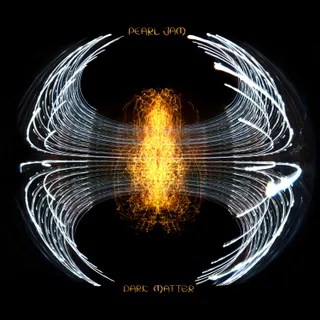
Alive, Again—Pearl Jam, Dark Matter

It’s easy to forget these days, 33 years after Ten introduced Pearl Jam to the world, just how much new music from them was anticipated. When their sophomore album, Vs., was released it broke all sales records for the first week of any release. But as with anything, familiarity breeds a certain level of contempt. Pearl Jam’s star is faded now, a totally expected reality in a day when rock music is all but dead and the band has assumed the status of “elder statesmen.” In an odd way, their current level of popularity is likely what the band hoped for before Ten was released, and what they wished for after that album turned them into multi-platinum, voice-of-a-generation, icons. The insane levels of fame the band achieved never sat well with the members, especially their guiding light Eddie Vedder, who would probably be just as happy selling albums out of the trunk of his car. They didn’t want to be bigger than the Beatles; they only wanted to be as big as Fugazi.

Pearl Jam’s reputation was carried on the back of their concert performances. They are one of the most exciting bands to ever take the stage. Their studio output, strikingly consistent, now sells a fraction of what those early albums sold and there’s no question the band has settled into their status as rock legends with nothing particularly new to say. Since 1998’s Yield, an album many (not me) consider to be their finest, they’ve released a string of good albums that would never, and could never, fire up a new audience like Ten, Vs., and Vitalogy did three decades ago. Binaural, Riot Act, the fun but lightweight Backspacer, the tepid and boring Lightning Bolt, and the experimental but uneven Gigaton all had their moments of greatness, but the band frequently sounded like they were going through the motions. Only on their criminally underappreciated eponymous 2006 album did the band show their old fire on any sort of consistent basis. The Pearl Jam album stands with their best work.

Now in 2024 comes another new album, Dark Matter. The album was hyped by the band with Vedder calling it “the best we’ve ever done” and guitar god Mike McCready extolling the virtues of the band’s new heavier (!) rock.

So is it the best, heaviest record they’ve ever done? Nope. Does that mean it’s not good? Also, nope. In fact, Dark Matter is the best album the band has put out since 2006, when the war in Iraq fired up Vedder’s righteous indignation and inspired some of the band’s most ferocious playing. The new album is far less political and more personal, though politics does enter the mix at times (fortunately not in the ham-fisted way it did on Gigaton).

Musically the stars of the show on this album are guitarist Mike McCready, whose revved-up solos are among the best he’s ever done, and drummer Matt Cameron. Apparently the guys in Pearl Jam pressured Cameron to really cut loose on this album, to play like he used to in Soundgarden, and the drummer responded. Dark Matter contains much of Cameron’s finest work, his best work with Pearl Jam, and is one of the great drum recordings of the rock era. He always tended to get a little lost in the shuffle of great drummers who came out of the alternative rock scene because Soundgarden was always something of a faceless band with the exception of Chris Cornell. Dark Matter is the definitive proof that Cameron is right up at the pinnacle of great drummers from Keith Moon and Ginger Baker to Dave Grohl and Jimmy Chamberlain. Throughout Dark Matter, Cameron swings like the great jazz drummers, plays fills like Ringo after a shot of speed, and pounds like Bonham. It’s never less than a thrilling performance.

From the outset, a pair of adrenalin-fueled propulsive rockers named “Scared of Fear” and “React, Respond” the mission statement of the album is evident. This is Pearl Jam as God intended them to be. The experimentation with different textures and rhythms from Gigaton is gone, and the band has clearly woken from the slumber in which they recorded Lightning Bolt. In their place is the fast-paced, stripped down sound of Vs., mixed with the adult songcraft of Yield. In short, Pearl Jam is still alive.

The intensity drops a few notches with “Wreckage”, which bears a passing resemblance to Tom Petty’s “Learning to Fly” before picking up again with the title track. “Dark Matter” may not be the fastest or punkiest track on the album, but it is certainly the heaviest. Matt Cameron provides a rock-solid anchor mixed with ridiculously fast fills as Mike McCready and Stone Gossard play slab-of-granite riffs and Eddie Vedder summons all his considerable passion into the vocal.

Throughout the album Pearl Jam isn’t afraid to embrace the contradictions that made them such an exciting and intriguing band from the beginning. Whether it’s arena-ready mid-tempo rock (“Won’t Tell”), sped-up punk (“Running”), acoustic-based rock ballads (“Setting Sun”), Who-ish ravers (“Got To Give”), or catchy pop (“Something Special”), they deliver some of the best songs they’ve done in their lengthy career. Best of all is “Upper Hand,” a nearly six-minute track that begins like a U2 outtake from The Joshua Tree, settles in to a beautiful ballad that features Vedder’s best vocal on the album, and then inexorably builds until it explodes into a volcanic McCready guitar solo.

Producer (and credited co-songwriter) Andrew Watt is a Pearl Jam fan who seems to be specializing in giving a boost to rock bands that have been showing their age (he also produced the latest Rolling Stones album, Hackney Diamonds, their best in decades). The album was written and recorded in just three weeks which tells me the key to the success of Dark Matter is that Watt didn’t give the band time to overthink things, unlike the previous two albums. The result is a late-era Pearl Jam album that hangs comfortably with their 1990’s prime releases.

Grade: A

The Listening Post: December 2013

Hard, soft, and pop perfection.

  • Lightning BoltPearl Jam. Picking up where Backspacer left off, the tenth studio album from Seattle’s last survivors finds the band lacking energy. The album starts very strongly, delivering several high-octane rockers and one classic Pearl Jam ballad (“Sirens”), but somewhere around the 30-minute mark the songs suddenly start drifting. It’s almost as if the band was replaced with Pearl Jam soundalikes beginning with “Let The Records Play”, a stale rewrite of Vitalogy‘s furious “Spin The Black Circle”. There’s also a full-band version of one of Eddie Vedder’s solo ukulele songs, “Sleeping By Myself”, before the album closes with two somnolent ballads (“Yellow Moon” and “”Future Days”). What’s particularly noticeable about these tracks is how lethargic Vedder sounds. His vocal on “Yellow Moon” sounds like he’s just woken up. It’s surprising coming from one of rock greatest vocalists, but for much of the album Vedder simply sounds like he can’t be bothered. In contrast, Lightning Bolt features some of Mike McCready’s best guitar playing, especially on “Sirens” and the punky “Mind Your Manners”. McCready is an extraordinary guitar player who doesn’t get the credit he deserves; he’s capable of both shredding like the best heavy metal players and playing stunningly lyrical runs of great power and subtlety. Apparently Pearl Jam had begun recording the album and then stopped for a year while drummer Matt Cameron rejoined Soundgarden. This may be the reason the second half of the album sounds like it was recorded just to get it over. In 2006, Pearl Jam released what may be their best album, the intense, cathartic Pearl Jam, and followed it with Backspacer where the band sounded (for the first time) like they were just having some fun. Lightning Bolt, despite the strong first half, sounds like a band that’s running on fumes.
    Grade: B-
  • Walking In The Green CornGrant-Lee Phillips. It’s getting harder to identify Grant-Lee Phillips as the guitarist/vocalist with the alternative rock cult band Grant Lee Buffalo. His old band played a beautiful mix of tender, acoustic ballads, modern folk, and bone-crushing rock. As a live act they could blow the roof off the venue. Grant-Lee Phillips was the undisputed leader of the band; he wrote the songs, played the guitar, and sang everything with a voice that alternated between a blazing bellow, a note-perfect tenor croon, and a sweeping falsetto. His guitar of choice, a 12-string acoustic, was run through enough distortion pedals to create a powerful electric sound the equal of any of their more popular alt-rock brethren. The band was loved and respected by their peers, and played huge stages with the likes of Smashing Pumpkins and R.E.M. But Phillips’s solo career has been decidedly different. The Sturm und drang is gone, the distortion pedals locked away. What’s left is the quiet, tender stuff. That’s fine by itself, because Phillips writes and sings so beautifully. Walking In The Green Corn, a meditation on his Native American heritage, is full of lovely ballads. The instrumentation is very spare, and Phillips sings in a “don’t-wake-the-kids” voice throughout. It gives the album a quiet, dreamlike sound. It also makes the songs blend together. The album is a coherent whole, but the songs don’t stand out individually. Conversely, all ten of the songs are stunning but listening to all ten songs in a row is a bit boring. This was the problem that plagued Phillips’s last album Little Moon, which featured six straight ballads on side two. It makes the album difficult to review because the songs are so good, but the cumulative effect of them is a drowsy haze. As such, Walking In The Green Corn is a nearly perfect Autumn album to be playing in the background while enjoying the falling leaves and the first fires on cool nights, but it’s not something you’d play at a party or when you want an active listening experience. It’s a soundtrack, and a good one. But it’s not built for sitting by the stereo and listening.
    Grade: B
  • Nothing Can Hurt Me: Original SoundtrackBig Star. They’re probably the greatest lost band of rock history, an act whose legend far outstrips their actual accomplishments. But even as legends, Big Star remains largely unknown. They sold very few albums. The original, best, lineup released only one LP. Their third, and final, album is a notoriously difficult listen swinging between the pop perfection of songs like “Thank You Friends” and the stark, harrowing “Holocaust”. Now comes Nothing Can Hurt Me, the soundtrack to a new documentary about Big Star, featuring demos, alternate mixes, and random ephemera. The audience for this release is the same audience for all Big Star releases: a tiny, obsessive group of fans that hangs on every note. The beauty of the soundtrack is that it hangs together like a real album, making it a great place for a new fan to start. With the exceptions of “Thank You Friends” and “Back Of A Car” all the major Big Star classics are here and sounding cleaner, crisper, and better than ever. In some cases, like “In The Street” (known to some in a bastardized form as the theme song to That ’70s Show), the difference in the mix is remarkable. The vocals are clearer and the music practically explodes out of the speakers. In most cases, the difference is more subtle. What it all means is that this release is not really necessary. The essential Big Star albums remain #1 Record, Radio City, and Third/Sister Lovers, and they remain crucial listening experiences for anyone who wonders what the Beatles might have sounded like if they’d continued into the 1970s. But while it’s not necessary, there’s also no denying that this soundtrack is a festival of delights. For the die-hard fan the different mixes are great fun (and the new mix of Chris Bell’s solo song “I Am The Cosmos” is considerably better than the muddy mix on the original CD release of Bell’s album); for the new fan who wouldn’t know the difference this is still an album that has one perfect pop song after another. Based on the music alone, this soundtrack delivers in spades.
    Grade: A

The Listening Post: March 2012

Spring comes early, bringing much in the way of change.

  • Born Under A Bad SignAlbert King. The first Stax LP by Albert King is really a compilation of his earlier singles. It’s also one of the great blues albums of all time. From the indisputable classics of “Born Under A Bad Sign” and “Crosscut Saw”, both perennials of bar bands everywhere, to lesser-known but equally compelling songs like “Personal Manager” and “As The Years Go Passing By” Born Under A Bad Sign is the sound of one of the great bluesmen at his peak. One listen and it’s immediately clear how much debt Eric Clapton owes to King. The debt is so deep that it would be easy to mistake almost any one of King’s tight, high wire leads for Clapton’s solos on the Disraeli Gears album. King is a deep, rich singer, and his stinging guitar work can be heard in almost all subsequent electric blues. When you combine this with the fact that his backing band on the album is Booker T & The MGs, one of the greatest, most sympathetic, bands in rock history, you’ve got a combination of blues and soul that can’t be beat. It is soul that is the secret ingredient here, replacing the grit and howls of traditional blues with a texture that makes these songs stand out in a crowd. Many of the songs here have been covered to death, but these are the versions that will last. Cream’s version of “Born Under A Bad Sign,” or Free’s version of “The Hunter” may be more well-known, but these are the timeless originals that will still be here long after the covers have faded.
    Grade: A+
  • Sloe GinJoe Bonamassa. Most blues performers are eager to flaunt their intimate knowledge of Robert Johnson, Muddy Waters, and Howlin’ Wolf. With good reason, I might add. Joe Bonamassa is something of an exception. He’s far more beholden to Cream, Free, and the British Blues Boom of the 1960s than he is to the founding fathers of blues. Bonamassa is a blues-rocker, the likes of which we really don’t see much anymore. As a performer, he’s considerably better than latecomers like the pedestrian Kenny Wayne Shepherd and the execrable Jonny Lang. However, he’s also not the 21st century’s Great White Hope for blues. Stevie Ray Vaughan, he’s not. What Bonamassa is, is a decent, if somewhat sterile, singer and virtuoso guitarist who is completely besotted with late-1960s blues rock. Sloe Gin suffers from the same malady that affects too many albums in the CD era—it’s too long. That problem can be solved by eliminating the eight plus minutes of the title track, a go-nowhere cover of a song once recorded by Tim Curry (!). Minus that particular time suck, Sloe Gin is a rock-ribbed exercise in simulated British blues, of a type not heard since the heyday of Rory Gallagher. In fact, if there’s a single guitarist whom Bonamassa most closely resembles, it’s Gallagher. Like the celebrated Irish guitarist, Bonamassa mixes his hard electric blues rock with acoustic guitar workouts. Perhaps somewhat ironically, it is these acoustic tracks the provide many of the highlights of this album. “Around The Bend” features magnificent finger-picking and a vocal that comes as close as anything he sings to true soulfulness. “Jelly Roll” is a fine, funky take of a song by John Martyn. “Richmond” is truly beautiful, mixing light acoustic picking with subtle accompaniment. “India” is an acoustic/electric raga that Michael Bloomfield would be proud of, and a track that owes some debt to Mountain’s “For My Friend” in its alternation of gentility and ferocity. It is these acoustic tracks that add flavor and texture to the album and that elevate it to a higher level. There are some great electric workouts, like “Ballpeen Hammer”, “Another Kind Of Love”, and the blistering “Black Night” and the balance of the album is smartly chosen songs played with lots of fire. Bonamassa may be lacking in some authenticity, but so were the majority of British bluesers that he calls his influences. But for those (like me) who complain that nobody’s making music like Cream, Blodwyn Pig, Led Zeppelin, or Free anymore…well, Joe Bonamassa is proof that such music still exists.
    Grade: B+
  • Other Worlds (EP)Screaming Trees. Even the best bands have to start somewhere. Screaming Trees started in 1985 with this 6-track EP, which is very much a product of the times. Far from the dark, swirly, guitar-heavy crush of their later albums, Other Worlds is nearly a tribute to Chronic Town-era R.E.M. It’s practically a parallel universe version of the début EP from Athens’s finest, right down to the herky-jerky rhythms that border on danceable, high vocals (good Lord, is that really Mark Lanegan singing?), and subtle lyrical psychedelicisms. Other Worlds doesn’t hold up as well as Chronic Town, mainly because R.E.M. emerged as a mature band with a distinct sound while Screaming Trees are still searching for their sound at this point. But “The Turning” (a different version of which would show up on their début LP, Clairvoyance, in 1986) and “Now Your Mind Is Next To Mine” (great title, that) are excellent examples of the early Trees sound, while “Like I Said”, “Pictures In My Mind”, and “Other Worlds” are very good. Only “Barriers” is lackluster. Screaming Trees did some great work later in their career, but this is the sound of a young band having fun and trying to figure out their path. Very good on the merits, but hardly essential listening.
    Grade: B
  • Live On Ten LegsPearl Jam. I have never seen Pearl Jam in concert, though I’ve seen all the films, videos, etc. They are an astoundingly good live band, maybe the best since the prime of The Who. As players, they are some of the best in rock music today. Matt Chamberlin is a ferociously good drummer, and Mike McCready doesn’t get anywhere near the recognition he deserves as a guitar player. Add in Jeff Ament’s bass, Boom Gaspar’s keyboards, and Stone Gossard’s rhythm guitar and you’re talking about a level of musicianship that most bands would kill for. And then there’s Eddie Vedder who brings a raw level of excitement and passion to his performances that remind you of Roger Daltrey. Vedder is not the stadium showman, à la Mick Jagger, Robert Plant, or Freddie Mercury. It’s abundantly clear that Vedder’s idol is Daltrey, whose powerhouse vocals and intense, contained sense of impending violence was like a bonfire on the Who’s stages. Live on Ten Legs is the band’s second live album, not counting the dozens (hundreds?) of “official” bootlegs they released as tour souvenirs in a successful effort to beat bootleggers at their own game. This album is not as feral as 1998’s Live On Two Legs, but it’s close. It gathers highlights from their 2003-2010 tours, and takes pains not to overlap any songs with the earlier album. What that means is that some of their live showstoppers like “Even Flow”, “Black”, and “Do The Evolution” are not here. But it also means that “Alive”, “State Of Love And Trust”, “Rearviewmirror”, “Jeremy”, and “Yellow Ledbetter” finally get an official live release. There are also two cover songs: Joe Strummer’s “Arms Aloft” works perfectly since there is a lot of similarity between Strummer’s music and Pearl Jam’s. Less successful is an attempt at “Public Image” featuring Vedder trying his best to mimic John Lydon’s snotty vocal delivery. It’s not a bad attempt, but it doesn’t really work. Pearl Jam and Public Image, Ltd. are very different bands. Similarly, a lengthy jam on “Porch” serves only to sap the power from the song. There are other flaws: the version of “Yellow Ledbetter” is surprisingly ramshackle, and “Jeremy” suffers from overexposure…even the band sounds like they don’t really want to hear it. On the other end of the spectrum, “World Wide Suicide”, “Love and Trust”, “Alive”, “Animal”, and “Unthought Known” are amazing, surpassing the studio versions in almost every instance. Mike McCready really shines on “Nothing As It Seems”. There is also a great version of “I Am Mine”, one of the most tuneful Pearl Jam songs ever recorded, and a song that deserved to be a huge hit single, but was released at a time when Pearl Jam’s star was receding. The album is a notch below Live on Two Legs, but it is conclusive proof that Pearl Jam is still one of the most incendiary live acts in the world.
    Grade: A
  • After The Flood: Live From The Grand Forks Prom June 28, 1998Soul Asylum. The Minneapolis band doesn’t get enough credit. They were so much more than “Runaway Train.” They had the good fortune of sticking around long enough to come through the door that Nirvana opened, unlike their real peers (and betters) The Replacements and Husker Du. Fortunately for Soul Asylum, their writing and playing peaked just at the time when alternative rock was becoming mainstream, and their hard-edged melodies were suddenly radio-friendly. Sure the awful video for “Runaway Train” was built for heavy consciousness raising rotation on MTV, but they actually found a few kids from that video, so all sins are forgiven. Besides, it was a truly great song until MTV beat it into your head every hour on the hour. In 1998, a huge flood hit Grand Forks, ND, destroying much of the town. As the waters receded, area high schools had a collective prom in an Air Force hangar that had been used as a refugee center. The prom band was Soul Asylum, which is the coolest thing I’ve ever heard since my brother’s high school class pooled their prom money and instead staged a concert by Edgar Winter’s White Trash. If you know the studio albums, there’s not much on here that you haven’t already heard in versions that are equally good or even better. Soul Asylum has always had a reputation of being a great live band, and it’s abundantly clear that they’re having a good time here. The songs are tight, loud, and bursting with exuberance. What elevates the album are the cover songs. The opener is a ferocious version of Alice Cooper’s “School’s Out” and the set closes with the all-time great prom song “To Sir, With Love” and a fantastic version of “Rhinestone Cowboy.” In between they work in a stellar version of “The Tracks of My Tears,” and a poignant “I Can See Clearly Now”. One can only imagine what the teachers and parents thought of their kids’ prom band covering Marvin Gaye’s “Sexual Healing,” inserting the F-word into “Rhinestone Cowboy,” and declaring that “suits are a pain in the ass.” But it’s Soul Asylum, and you can take the Minneapolis guttersnipes out of the gutter, but you can’t take the gutter out of the guttersnipes. This is a really solid album, with great cover songs, and well-played, well-chosen originals. The only misstep is not going further back in their repertoire, at least to some of the great tracks from their Hang Time album, but that strikes me as likely a record company decision.
    Grade: B+

The Listening Post: September 2009

What’s new on the iPod this month.

  • BackspacerPearl Jam. Nobody’s ever accused Pearl Jam of loosening up and rocking just for the sake of rocking, but they might start after this album. It’s a brief collection (less than 40 minutes) and has the loose feel of a band just having some fun in the studio. It’s not as powerful as their last, eponymous album (their best, to my reckoning), but it’s a consistently good listen. There are two tracks (“Just Breathe” and “The End”) that sound like leftovers from Eddie Vedder’s solo soundtrack to the movie Into The Wild, but the rest of the songs are solid rock. On the album opener “Gonna See My Friend” the band surges with a Who-like riff rocker powered by Matt Cameron’s fluid rolls. “The Fixer” is a killer single and one of the standout tracks on the album, along with the anthemic “Amongst the Waves” and the pensive “Unthought Known.” On “Johnny Guitar,” inspired by the cover of Johnny “Guitar” Watson’s album What The Hell Is This?, Vedder even discovers sex, right down to the tried and true rock lyric playing on the double meaning of the word “come.” Saucy Eddie! It’s good to hear these guys lightening up and playing Rock without trying to save the world. Grade: B+
  • Fear Of MusicTalking Heads. I’m really just getting around to Talking Heads. I know they haven’t been a band in about 20 years, but if you’ve never heard it before it’s still new music, okay? The Heads were always a band I never cared all that much for. I liked several of their early singles, but that was about it. Last year I finally gave a listen to, and fell in love with, their debut album ’77. I’ve just taken Fear Of Music out of heavy rotation. It’s a good album, with several songs that are just flat out brilliant. The triad of “Cities,” “Life During Wartime” and “Memories Can’t Wait” are so good that it’s kind of a shame the rest of the album falls far short of their mark. An early foray into world music (“I Zimbra”) is good, as is “Paper” and “Heaven.” “Air” comes closest to the high-water marks of the album but still falls short. After “Air” the album falls apart, the slide beginning with “Heaven” and accelerating with the dead weight of “Animals,” “Electric Guitars” and “Drugs.” Ending your album with three consecutive bummers is not the way to do it. Overall, a mediocre album, but “Cities,” “Wartime” and “Memories” are essential listening. Grade: B (on the strength of those three songs alone).
  • Deserter’s SongsMercury Rev. Brings “shoegazing” to a new level. This is considered Mercury Rev’s best album by critics in the know. If that’s true, I’ll pass on the rest of their discography. There are several odd pop gems on this album, like the opener “Holes,” “Opus 40,” “Hudson Line,” and “Goddess On The Hiway.” The rest of the album ranges from decent (“The Funny Bird,” “Endlessly,” “Tonite It Shows”) to unlistenable “avant pop” soundscapes (“I Collect Coins,” “The Happy End,” “Pick Up If You’re There,” and the final couple of minutes of the otherwise very good “Delta Sun Bottleneck”). Overall, despite the occasional gems, the high-pitched vocals and excess noodling make this a hard album to like. Grade: C-.
  • Sun Giant EPFleet Foxes. The first recorded effort (for Seattle label Sub Pop) by the harmony masters. This is my first exposure to the band and it’s a winner. There are only five songs on the EP, including the opening piece, a mostly a capella tune called “Sun Giant” that barely crosses the two-minute mark. While sung beautifully, it’s a slight tune, as is the EP closer, “Innocent Son.” It is the three songs in-between, “Drops In The River,” “English House,” and “Mykonos” that make this collection so good. The writing on all three songs push up against the wall of brilliance, and the performances of those songs, with their intricate harmony vocals and swirling, psych-folk musicianship, breach that wall. Grade: A-
  • My Old Familiar FriendBrendan Benson. The latest effort from songwriter/singer/Raconteur Benson is another fine collection of solidly written and performed tunes. The guy knows how to write a song, that’s for certain. Like all the Benson solo albums, there’s a bit of chaff in the fields of wheat. In particular, the album sags not too long after it begins. While it gets off to a great start with the ecstatic “A Whole Lot Better,” the paranoid “Eyes On The Horizon” and the ELO-inspired “Garbage Day,” the album falters with “Gonowhere,” the turgid “Feel Like Taking You Home,” and “You Make A Fool Out Of Me.” Fortunately, that’s the only bad patch on the album and, as bad patches go, it’s considerably better than a bad patch on an album by, say, My Chemical Romance. Even at his worst, Benson’s catchy and likable. The album gets back into high gear with the excellent “Poised and Ready” and “Don’t Wanna Talk About It,” and maintains that excellent standard through the closing “Borrow” which sounds like Wings rocking out on a level that old band rarely approached. Not a classic album, but a thoroughly solid and enjoyable one. Grade: B+