The Grip Weeds: Soul Bender

Grip Weeds Soul Bender Garage rock came out of the 1960s, a form of raw, back-to-basics rock and roll. The gateway drug for garage rock is the legendary collection Nuggets, originally compiled by future Patti Smith guitarist Lenny Kaye and released in 1972 as a two-record compilation of great lost tracks from the sixties. It has since been expanded into no fewer than five four-disc box sets, focusing on America, international, modern, Los Angeles and San Francisco. They represent an alternative view of the history of rock and roll, one where the big bands of the era are only heard through their influence. And it’s possible to hear all those influences in the three minutes it takes to spin out one of these songs. Part of the fun of garage rock is how it teases the ear, reminding you of something else but remaining fresh.
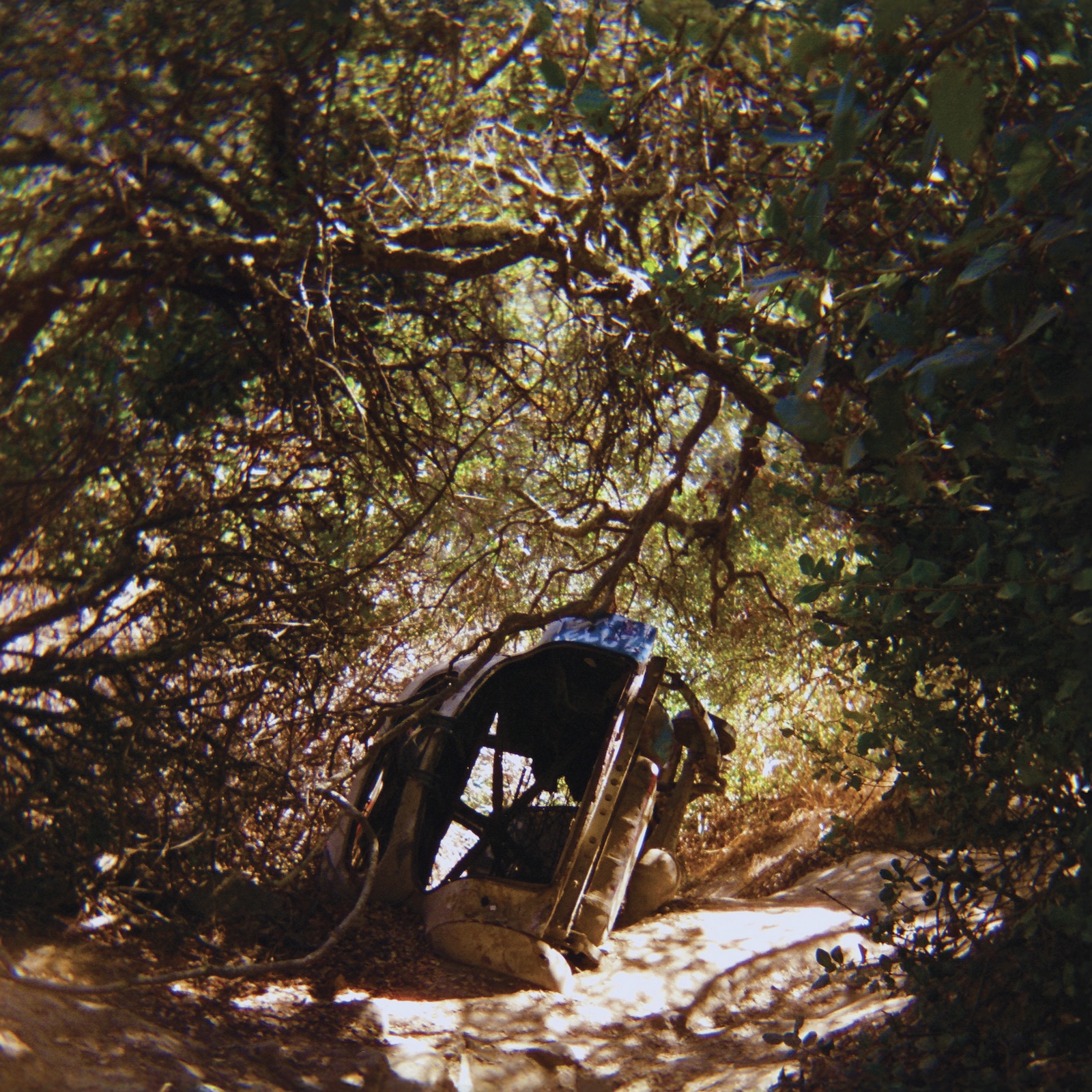
New Jersey’s Grip Weeds, named after John Lennon’s character in the movie How I Won The War, is a modern garage rock band that has just released their ninth album, Soul Bender. They are also in many ways the definitive band in this genre. The influences are there: the jangly guitars of The Byrds, the cascading drums of The Who, the harmonies of the Beatles, etc. But the beauty of the Grip Weeds is that they have assimilated their influences so well that they transcend them. On Nuggets it’s easy to say, “This band sounds like The Yardbirds” or “This could be a Kinks song.” The Grip Weeds sound like The Grip Weeds and simultaneously nobody else and everybody else. Many bands wear their influences on their sleeves. The Grip Weeds have them etched into their DNA.

Soul Bender captures the band at their best. It features the differing patterns of the 1960s in a distinctly modern weave. Released in June of this year on JEM Records and recorded at the band’s own House of Vibes studio, the album is a tour-de-force of melody, guitar crunch, a pounding rhythm section, and exquisite vocals. The result is reminiscent of a time long ago yet also timeless.

From the “Hard Day’s Night”-ish opening chord of the title track to the Odessey and Oracle feel of “Love Comes in Different Ways” the influences are there for trainspotters but make no mistake, this is an original band playing original music. Kurt Reil (vocals, drums), Rick Reil (guitar, keyboards, vocals), Kristin Pinell Reil (lead guitar, vocals), and Dave DeSantis (bass, vocals) have created a heady confection that is one of the best albums of the year (maybe the best).

The music on Soul Bender is varied without ever losing sight of the goal. From the loping duet between Kurt Reil and Kristin Pinell Reil on “Promise (Of The Real)” to the breathy psychedelia of “Column Of Air” to the Byrds-y “Gene Clark (Broken Wing)”, Soul Bender presents what is essentially a hidden greatest hits of a bygone era gussied up with a 21st century sheen and modern production values. The effect is never less than a joyful blast of what the radio should sound like today.

The secret weapon of the band is undoubtedly Kristen Reil. Aside from sterling harmonies and the occasional lead vocal (her voice on “If You Were Here” could have come straight out of Susanna Hoff’s mouth), she’s also an ace guitarist. Her lead guitar adds a level of excitement to the songs, particularly on “Conquer and Divide”, where she steps to the fore and plays two volcanic solos that lean heavy on the whammy bar. There’s a good reason Little Steven’s Underground Garage channel on Sirius named it the “Coolest Song of the Week.”

It’s heartening to hear new music like this. From their first album (House of Vibes) way back in 1994 the Grip Weeds have maintained an astonishing level of consistency in their work. Over nine studio albums (one of them, Strange Change Machine, a double CD set), plus a live album, a Christmas album (!), and a covers album (Dig) the band is still going strong, sounding as fresh now as they did when Nirvana and Pearl Jam were all over the radio. It’s no mean trick to sound so nostalgic and so new at the same time, but they pull it off with memorable tunes, great production, and incendiary playing. The Grip Weeds are the real deal.

Grade: A

Twenty Thousand Roads: The Ballad of Gram Parsons and His Cosmic American Music, by David N. Meyer

Trying to track down the Big Bang of any type of music is a fool’s game. Every genre has multiple antecedents. This is particularly true of rock music, which has many rivers feeding into its ocean. Several years ago, a new genre was coined: “Americana.” Truth is, there was absolutely nothing new in this genre. It goes back to Sun Studios and the initial blending of country music and rhythm and blues. Elvis Presley singing “Blue Moon of Kentucky” is as Americana as it gets. It was dubbed rock and roll.

Over the ensuing years, other threads were added to the tapestry. The Byrds brought folk music into the mix, and it was dubbed “folk rock.” They also incorporated country music into their repertoire. In 1967 Bob Dylan traded in his wild mercury sound for sparse instrumentation and acoustic music with John Wesley Harding. He was followed in 1968 by his old backing group The Band and their Music From Big Pink, an album of almost incalculable influence. The Beau Brummels, famed for their British Invasion-style hits “Just A Little” and “Laugh, Laugh” made a hard turn left with their country- and folk-inspired Bradley’s Barn LP. And it was called roots music.

The biggest musical shock of 1968 was likely the Byrds and their terrific album Sweetheart of the Rodeo. Here was an album that was made by a well-established rock group, but the sound was stone-cold country music. Although the Byrds had always dabbled in country, Sweetheart was a complete stylistic change. This was due to the influence of a country singer who loved rock and roll, Gram Parsons.

Parsons had been kicking around for a few years and had released an album with the International Submarine Band (so many bonus points for naming themselves after a Little Rascals joke). He befriended the Byrds’ Chris Hillman and was brought into that group. Such was his presence that even the founder of the band, Roger McGuinn, bought fully into the country sound.

It is here, from his time in the Submarine Band through his short stint with the Byrds and the Flying Burrito Brothers to his time as Keith Richards’s drug buddy and through his all-too-brief solo career, that David N. Meyer’s 2007 biography Twenty Thousand Roads: The Ballad of Gram Parsons and His Cosmic American Music stands as a definitive work.

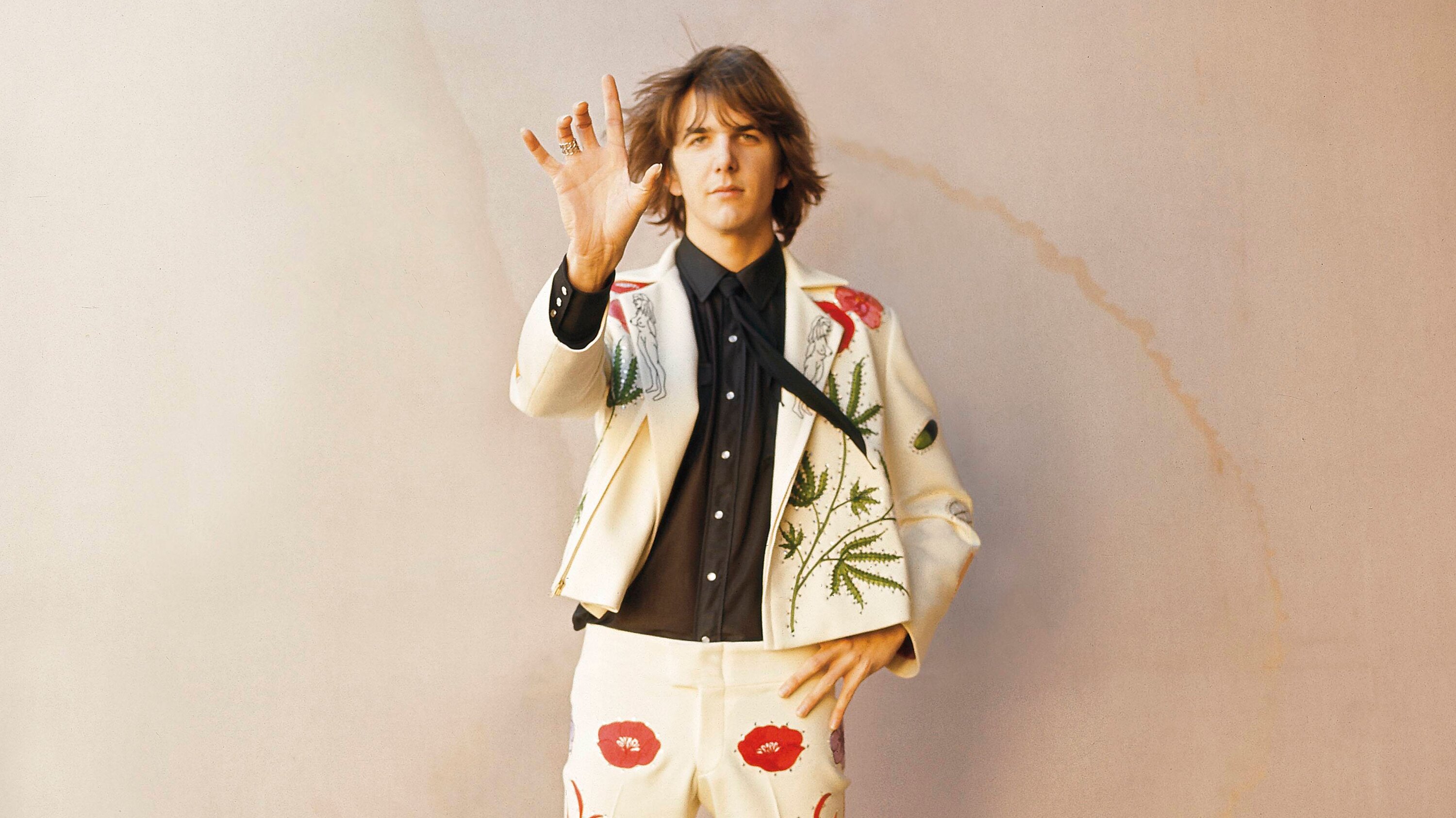
Gram Parsons

Meyer’s greatest achievement is his incisive exploration of Parsons’ musical legacy. He dissects what Parsons called “Cosmic American Music,” a blending of country, rock, soul, and folk with precise attention to detail. He frames the style as a radical synthesis of country’s emotional authenticity, rock’s rebellious energy, and soul’s spiritual depth. The book meticulously traces Parsons’ evolution from the International Submarine Band’s tentative experiments to Sweetheart of the Rodeo, which Meyer argues was a cultural pivot point for country-rock. His analysis of Parsons’ tenure with the Flying Burrito Brothers, particularly albums like 1969’s The Gilded Palace of Sin, highlights their blend of Nudie-suited theatricality and raw vulnerability. Meyer’s close readings of songs like “Hickory Wind” and “Sin City” reveal their lyrical and sonic complexity, positioning them as archetypes of Americana’s introspective ethos. His discussion of Parsons’ collaboration with his protégé Emmylou Harris on 1973’s GP and 1974’s posthumous Grievous Angel is especially good, portraying the duets as high art. Meyer convincingly argues that Parsons’ influence—evident in the Rolling Stones’ Exile on Main Street, Wilco’s experimentalism, and the alt-country movement—stems from his ability to transcend genre. This was a man who felt comfortable adding distortion to pedal steel (an unforgivable sin in country music at the time) and who did a fine rendition of “Cry One More Time” by Boston’s answer to the Rolling Stones, the J. Geils Band. With the Burrito Brothers he was also the first to record and release “Wild Horses,” predating the Stones’ classic recording on Sticky Fingers by a year.

The biography’s portrayal of Parsons’ life is equally rigorous. It’s clear that Meyer is a fan, but he’s able to look at the singer objectively. Parsons’s youth is portrayed as something out of a William Faulkner novel, born and raised fabulously wealthy in a highly dysfunctional family torn and frayed by alcoholism and tragedy. This context informs Parsons’ paradoxical character: a charismatic innovator whose idealism and prodigious talent was undercut by self-destructive tendencies. Meyer’s research—drawing on interviews with obscure associates and bandmates—illuminates Parsons’ relationships, notably his influence on Keith Richards and his creative partnership with Chris Hillman. The book avoids hagiography, candidly addressing Parsons’ heroin addiction, erratic behavior, and professional unreliability, which Meyer frames as both a personal failing and a byproduct of the 1960s counterculture’s excesses. This approach yields a complex portrait of the artist as a young man: Parsons as a catalyst for musical change, yet someone whose potential was curtailed by his inability to harness his own genius. Meyer’s vivid prose captures the era’s cultural ferment—Los Angeles’ Laurel Canyon scene, country music’s resistance to rock, and the transatlantic exchange with the Rolling Stones—making the biography a valuable cultural history as well as a personal one.

It must be said that the book gets off to a rough start. A reader would be forgiven for abandoning the story fairly deep into it. Approximately 30% of the book, almost the entire first third, is a forensic detailing of Parson’s family history going back to his grandparents. Page after page is filled with the minutiae of their business dealings, their successes, their failures, their trouble with alcohol, distant relatives, childhood friends. The subject of the book is barely a character and deep into the book there’s still plenty of discussion about his eighth-grade band and his high school years. This excruciating level of detail proves that Meyer did his research, interviewing virtually everybody whose life intersected with Parsons, but a good editor could have told him to summarize it all in one chapter. It’s an interesting detail that the Parsons family at one point owned a full third of the orange and citrus business in Florida, but you don’t have to read about every business dealing on the way to their fortune. The writing here is self-indulgent and unnecessary.

Once the reader gets past this, the story takes off, culminating in a motel room in Joshua Tree National Park. The story of Gram Parsons’ death from an overdose of morphine and tequila is tragic; the immediate aftermath is a sick farce. Meyer does not romanticize this story, as many have in the past. It is not the ultimate farewell to a shining star as Parsons’ road manager Phil Kaufman tries desperately to portray it. Kaufman’s theft of Parsons’ body, and the gasoline-fueled cremation of his naked, recently autopsied corpse in Joshua Tree is now the stuff of gruesome legend. It matters not that Parsons and Kaufman had pledged to do this in case one of them died. It was a reckless, drug-fueled promise that should have been broken, and Parsons should have been buried with dignity.

Twenty Thousand Roads is a much-needed biography of a figure that, as much as any single person, can rightfully be called the father of Americana. He was building on influences from Buck Owens to the Rolling Stones, but the sound coalesced on his wonderful solo albums and his work with the Flying Burrito Brothers. One listen to the heartbreak of “$1000 Wedding” or “Love Hurts” and the spinning road tale of “Return of the Grievous Angel” and you can hear the entire history of country music as well as the key to the future of the genre. Gram Parsons was the real deal, the performer that the Eagles desperately wanted to be, though they could not hope to measure up. You can hear Parsons’ influence through the subsequent years. It’s in the cow punk of Jason and the Scorchers, the Southern Gothic sound of early R.E.M., the alt-country stylings of Lone Justice, the Long Ryders, Uncle Tupelo, the Jayhawks, and so many more. None of those bands were labeled as Americana because the term didn’t exist until marketing departments became desperate to hang a label on the sound, but they all tie back to Parsons. Much of the modern sound of country (I’m talking real country, not that godawful “sittin’ in my pickup with my dog, drinking a beer, wearing my blue jeans and Stetson, looking to raise trouble” bro-country) owes allegiance to a singer who was scorned by Nashville for decades until the music scene caught up to him. He was, in the prescient song by fellow Burrito Brother and future Eagle Bernie Leadon, “God’s own singer.”

Vintage Trouble: Heavy Hymnal

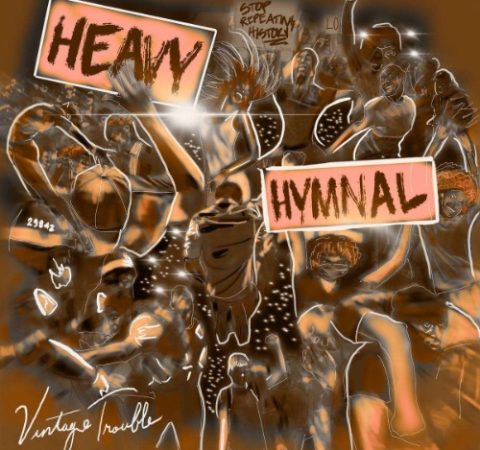
Vintage Trouble Heavy HymnalIn the world of streaming music it’s virtually impossible for a band to break through into the public consciousness. Artists nowadays hope that their songs will be licensed to a commercial, or a video game, or a movie. Satellite radio exists, of course, but with so many stations to choose from, bands easily get lost in the shuffle. Today, albums are no longer the coin of the realm. The single has returned. Albums are still being made but that almost seems like a tradition more than an expression of artistry. The sad truth is that unless you’re selling (and streaming) in Taylor Swift-like numbers, a band today can’t make much (if any) money based on record sales. Money must be earned on the road, playing large and small clubs and theaters to a hopefully packed house.

In my mind this sets up an unfortunate conflict between the entertainers (the guys jumping around on stage singing their hearts out) and the artists (the guys sitting in a small room agonizing over which chord should come next in the song they’re writing). There’s just no money in artistry these days.

So it is that Vintage Trouble, a band that released their first record way back in 2011, took twelve full years by the time they got to their third album. For context, that’s as long as the Beatles entire career from their skiffle days until their breakup. Sadly, it also appears to be the last Vintage Trouble album, as the band announced that they are “on hiatus” in early 2024. While “on hiatus” can mean many things, their website has essentially shut down with only a message that they are pursuing individual and family endeavors. “We’ll miss you for sure. May we all continue as friends and supporters of one another” sounds a lot more conclusive than “See you soon!”

It’s a shame that this band was forced by the times to spend so much more effort on the road than in the studio. They released only three proper albums (a fourth, Juke Joint Gems, was collected from old recordings and released only digitally), so in the wake of their dissolution we have only a few records to fall back on. Equally sad, their final album, Heavy Hymnal, may be their best, pointing to a bright future that is no more.

More than their previous albums, The Bomb Shelter Sessions and 1 Hopeful Road, this is an album that feels like they’ve got something to say. From the machine gun rapid fire rapping of opener “Who I Am” to the Marvin Gaye-inspired closer “Repeating History” the album is by turns defiant and melancholy, sometimes within the same song. But regardless of the lyrical themes, every song has an infectious groove guaranteed to get you moving. Like all the best soul albums, Heavy Hymnal flows like a party from the boisterous opening salvo of “Who I Am” and “You Already Know” (which features two molten metal guitar solos from Nalle Colt) to the reflective closing of “Shinin'” and “Repeating History” with its mournful guitar solo that evokes Eddie Hazel’s legendary turn on Funkadelic’s “Maggot Brain”.

There are torch songs for slow dancers, like “Not The One,” and the beautiful “The Love That Once Lingered” but the accent here, more than on their previous albums, is on get-your-hands-in-the-air bangers. Elsewhere, the band channels Prince channeling Stevie Wonder (“Baby, What You Do”), explores dance rhythms (“Feeling On”), and even merges a slinky funk groove with power pop (“Shinin'”).

Vintage Trouble was a band with talent to burn. They approached their music fearlessly and in their time delivered three of the best soul/funk albums ever recorded. Their albums stand as testament to a love for music of many different genres. While at their core they were a soul band, they also touched on rap, rhythm and blues, dance music, and rock and roll. In this era of girl pop, streaming, and iTunes, they deserved better.

Grade: A

X: Smoke & Fiction

smokeWhen X first came on the scene in 1980 they were hardscrabble punk poets who had the good fortune to be noticed by former Doors keyboardist Ray Manzarek, who was always a sucker for a band that wore their Doors influences on their sleeve. Those first four X albums (Los Angeles, Wild Gift, Under The Big Black Sun, and More Fun in the New World), all produced by Manzarek, still stand at the top of the Los Angeles punk scene from the late 1970s and 1980s. They were less aggressive than Black Flag, more tuneful than the Circle Jerks, less obnoxious than Fear, and, unlike the Germs, had written actual songs with melodies and choruses. Their combination of poetic lyrics, a punk rock rhythm section, and a Chuck Berry-loving rockabilly guitar player were unlike anything else on the scene. Their vocal harmonies were borrowed from Jefferson Airplane, their lyrical content from Jim Morrison. Though they came from the hardcore punk rock underground, that had more to do with their location than their actual sound. They were punk in attitude, but a rock and roll band in practice.

Unfortunately, X then signed to a major label and fell into the hands of less sympathetic producers than Manzarek. In the mid-80s all the rough edges were sanded down and X started to sound like every other band on the planet. Many of the songs were good, but the production was just awful and completely generic. Shortly after, guitarist Billy Zoom decided to retire from the music business. By the time the alternative rock explosion of the early 1990s was happening, they were barely performing or recording and they split.

It was a surprise when X announced a new album in 2020, and an absolute shock when Alphabetland was so good. The rough edges were back, the songwriting was as good as ever, Billy Zoom was back. In  30 minutes, X issued a defiant statement to the usual second-rate reunion album. While it may not quite measure up to X classics like Los Angeles or Under the Big Black Sun, it’s clearly a return to form for a mostly forgotten band.

Smoke & Fiction picks up where their previous release, Alphabetland, left off and proceeds to surpass that effort. This is X sounding as good as they ever did. I don’t know whether they had any “help” in the studio, but both John Doe and Exene Cervenka sound the same as they did in 1980, and Billy Zoom reels off one great guitar part after another.

From the opening whiplash riff and tight guitar solo of “Ruby Church” to the Chuck-Berry-on-speed recurring lick that marks the chorus transition of “Baby & All,” X races through one of the year’s best albums in less than 30 minutes. Along the way there are several self-referential lyrics that reflect on their career. 

“We were never just kids/We did what we did/To set each other free” they harmonize in “The Way It Is.” It could be about a relationship but easily doubles as a look back to the band that was featured in the 1981 Penelope Spheeris documentary about the L.A. punk scene The Decline of Western Civilization. In “Big Black X” they complete the circle to their first album with a reminiscence of their career (“Drivin’ state to altered state/Holdin’ foldin’ maps/On another pay phone break/A big black X on a white marquee”) and a love song to the city of Los Angeles 44 years ago, when the Hollywood sign was in disrepair and the Hillside Strangler was making his presence known. “We knew the gutter,” they sing, but “also the future.”

But it’s not all backwards-looking. On “Sweet Til The Bitter End,” the second track on the album but really the spiritual kickoff, they state “Let’s go around the bend/Get in trouble again/Make a commotion.” On the terrific title song, Exene sings of the fire that still burns inside her: “My soul still goes out walking/Over bridges that are burning/There’s lessons I keep learning/All the leaves are turning” before calling out faith in faithless times (“I still pray a little bit/But there’s no saint for this”).

Even the slower songs (“Face in the Moon,” “The Way It Is”) have power behind them. “Face in the Moon” rides a chugging riff as John Doe sings again about California, flying into Los Angeles from San Francisco and driving down the Hollywood freeway. It is, as always with X, an unflinching look at a California they love, but that they also feel is doomed: “From the freeway to the sky/You get your way with a thousand lies/An ugly life that seems so pretty/Stealing through this tin can city.”

Smoke & Fiction is, according to the band, their final effort. It’s as good a way to go out as any. X compromised their sound in the mid-80s under pressure from corporate suits but on their final two albums, released 27 and 31 years respectively after 1993’s Hey Zeus, they managed to do a nearly impossible feat: release new music that stands shoulder-to-shoulder with their music from nearly a half century ago, when they were young, talented, and burning with ambition. If you want to call them punk because they emerged from the same Los Angeles club scene that birthed hardcore, then they’re America’s greatest punk band. I prefer to think of them as just a rock and roll band with some punk rock nuance. Even with that broader classification they’re still one of America’s best bands.

Grade: A

Buried Treasure: Spooky Tooth, Spooky Two

Spooky_Two_coverA simple drum beat opens the festivities here, accompanied by various grunts from the singer who’s warming up in the wings, before the incredibly loud, magisterial organ comes in. Spooky Tooth has arrived and, with them, the beginnings of the Progressive Rock movement that would flower in the following years.

Like pretty much every type of music, Progressive Rock has many fathers. The Moody Blues introduced spoken word poetry, themed albums, and flutes into the rock landscape. The Nice, featuring Keith Emerson who had done a spell in Spooky Tooth before they recorded their first album It’s All About, brought classical influences and loud organs into the mix and served as the embryonic version of Emerson, Lake, and Palmer. But lost to the ages in this lineage is Spooky Tooth, a tight outfit featuring two keyboardists/singers that knew how to rattle walls with both their keyboards and their voices. Mike Harrison was a blues singer who took no prisoners, his powerful voice booming out like a less guttural version of Joe Cocker. His is the dominant vocal presence on the album, with Gary Wright (of “Dream Weaver” fame) joining in for impossibly high harmonies and the occasional lead.

“Evil Woman” is considered by many to be the album’s (and the band’s) defining moment and it’s safe to say that everything that made up Spooky Tooth is included in the song: gnarly guitars, loud keyboards, Harrison’s blues belting, Wright’s screaming falsetto. Their swapping of lines on “Evil Woman” is thrilling, though the song’s nearly nine minutes does get a bit wearing by the end. For me, the real gems on the album are the remaining tracks. While nothing says “Spooky Tooth” quite like “Evil Woman” does, the other tracks are even better.

“Waiting For the Wind” and “Feelin’ Bad” begin the proceedings with Harrison singing in his best bluesy voice and the choruses increasing in both volume and intensity. There really wasn’t another band who sounded quite like this in 1969, when Spooky Two was released. Keith Emerson’s Nice had a loud organ sound, but were far too wrapped up in their classical pretensions. Emerson played like Bach on speed; Spooky Tooth played like they were in the Cadet Chapel at West Point when God said “Let there be rock.”

Elsewhere, “Lost in My Dream” shows a psychedelic influence, “Hangman Hang My Shell On  A Tree” brings the album to a close with a lightly strummed guitar and heavy gospel vocal influences that build to a conclusion featuring the band playing and harmonizing as well as any of the other bands of their day. The album also features some guest appearances, though all are uncredited. Steve Winwood shows up on piano on “I’ve Got Enough Heartaches,” a plaintive gospel-tinged number. Joe Cocker lends his backing vocal to “Feelin’ Bad” and Dave Mason appears on the ballad “That Was Only Yesterday” playing his trusty guitar.

Perhaps the most interesting footnote to this album is the tough rocker “Better By You, Better Than Me” which caused an enormous controversy in the 1980s after the heavy metal band Judas Priest’s 1978 cover version got discovered by the Mothers of Prevention (as Frank Zappa dubbed them). The notorious trial that accused Priest of hiding in their music secret messages that led people to kill themselves, an absolutely ridiculous charge, was based on a cover of a Spooky Tooth song from this album. For the record, Judas Priest weren’t hiding backwards suicide exhortations in their music, and Spooky Tooth’s version of the song is better.

The band began to fracture after this album, though they hung on in name until the mid-1970s as a shell of what they were here. Guitarist Luther Grosvenor left to join Mott the Hoople and changed his name to Aerial Bender. Gary Wright became a session player who worked with George Harrison quite a bit and achieved massive success with “Dream Weaver.” Drummer Mike Kellie eventually signed up with the punk rock band The Only Ones, famous for their classic “Another Girl, Another Planet”. Bassist Greg Ridley joined Humble Pie.

Since Spooky Two was one of the forerunners of Progressive Rock, it also was not a victim to the excesses of that genre. Only one song here tops six minutes and the entire album is a tight, concise 37 minutes long. It would have been nice if Yes and ELP learned that lesson and remembered that they were writing songs, not symphonies. I’d like Prog Rock a lot more if they had.

Grade: A