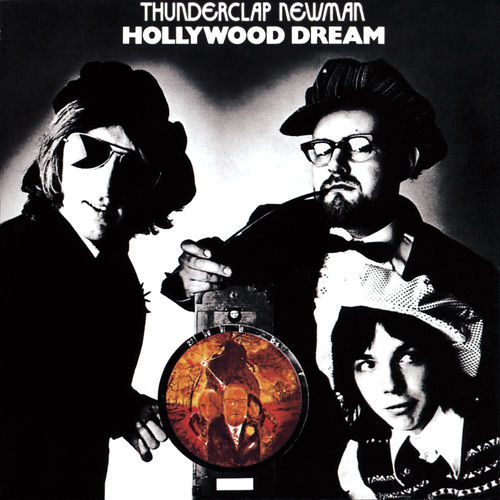
 Thunderclap Newman is a band that probably never should have existed. On paper, they shouldn’t work. There’s an overweight, jazz-loving multi-instrumentalist who looked nothing like the typical rock god of 1969 and who spent his days working in the post office. Then there’s the songwriting drummer who sang with a high, reedy voice. The guitar player was a 15-year-old…how good could he be at that age? Their producer was a genius who’d just released a sprawling two-record rock opera with his own band. Nothing in this cocktail should mix together well in any way, but they do—brilliantly.
Pete Townshend, ever the restless creative force while wrestling with The Who’s Tommy, assembled the band alongside manager Kit Lambert to spotlight the songwriting talents of his friend and former chauffeur, John “Speedy” Keen. What emerged in 1970 was Hollywood Dream, a wildly inventive, beautifully ramshackle album that captured a moment when British rock still had room for quirk, heart, and unfiltered imagination. This is anything but a polished product; it feels like a living, breathing experiment that somehow coalesced into something timeless.
The album opens with its anthem and statement of purpose, a track that still sends shivers down the spine decades later. “Something in the Air” features a soaring chorus, chiming guitars, Speedy’s high, thin vocals, and a revolutionary spirit in the lyrics. It hit Number One in the UK in 1969, knocking The Beatles’ “Ballad of John and Yoko” from the top spot, and the Top 40 in America. It’s a generational call-to-arms wrapped in psychedelic pop perfection with a wild, discordant piano solo, and it remains one of the greatest singles of its era. Even now, more than half a century later, it feels urgent and hopeful, like the air is thick with change. Townshend’s involvement as producer and bass player (under the name Bijou Drains) gives the song extra power without ever making it sound like so many of the heavier rock bands of the time. It would later be covered by Tom Petty and the Heartbreakers on their Greatest Hits album.
The rest of the album is one gem after another. “Hollywood #1” features a barrelhouse piano solo from Andy “Thunderclap” Newman that wouldn’t sound out of place in a saloon in the old West. It also hints that Jimmy McCulloch, the teenage guitarist, might be pretty good after all. The next song “The Reason” allows McCulloch to come to the fore with a blindingly incandescent guitar solo that seals the deal…the kid’s a prodigy. (There’s a reason Paul McCartney later hired him to be the lead guitarist for Wings.)
One of the absolute highlights is the Dylan cover “Open the Door, Homer.” The band takes Bob’s Basement Tapes gem and makes it their own with a loose, folksy charm that fits the band’s eclectic vibe perfectly. Newman’s piano work swirls around the melody, McCulloch adds tasteful guitar flourishes, and the whole thing swings with an easygoing warmth. It’s respectful without being reverent, and it slots beautifully into the album’s flow, showing how this ragtag group could interpret outside material and infuse it with their own personality.
Then there’s “Accidents,” a beast of a track that clocks in at nearly ten minutes. Yes, it’s too long—there’s no denying that in a streaming age where attention spans are shorter than a TikTok clip—but what a magnificent sprawl it is. McCulloch once again delivers some truly ripping guitar playing that cuts through the haze like lightning, full of youthful fire, fluid runs, and raw energy. The track builds and wanders like a trip down the river Styx, with dynamic shifts, solid drumming from Speedy, Newman’s reeds, and blistering guitar moments that reward repeated listens. It also features a true rarity in the world of rock and roll: Newman’s extended kazoo solo. The song, a sort of precursor to the Final Destination films about unexpected death, has emotional weight and musical ambition, moving from introspective passages to roaring climaxes. Flaws and all, it’s a great song that showcases the group’s willingness to take risks and push boundaries. Not everything needs to be radio-friendly; sometimes you just let the music breathe and the guitars wail. Ironically, it was released as a single that strips the song of its extended solos, sound effects, and other aspects. The single version, clearly a different take of the song and not just a remix, is still not radio friendly, but it highlights just how irrepressibly catchy horrible deaths can be. It’s available as a bonus track on the expanded version of the album.
The rest of the album maintains that high standard of inspired weirdness. McCulloch’s playing throughout is a revelation—sparkling with precocious talent and a tone that bridges bluesy bite with psychedelic swirl. Songs like “Wild Country” and the instrumental title cut “Hollywood Dream” paint vivid pictures with piano, guitar, and Keen’s distinctive songcraft. There’s a cinematic quality to the production, thanks in large part to Townshend’s hands-on approach. The album feels like a hazy, sun-dappled road trip through eccentric British countryside and Hollywood fantasies. Newman’s jazz-inflected piano and wind instruments add unexpected color, while McCulloch’s incendiary leads give the record real muscle. It’s not a slick album, and that’s precisely its charm. The seams show in the best way, giving Hollywood Dream a humanity and warmth that is missing in modern music.
Listening to this record today is a reminder of a time when record labels (and benevolent rock stars like Townshend) were willing to bet on unlikely characters and give them space to create. Thunderclap Newman didn’t last long—the band dissolved after some touring struggles—but they left behind this gem that deserves far more recognition than its “one-hit wonder” tag. It sits comfortably alongside other cult favorites from the era, full of melody, invention, and that indefinable British eccentricity that made the late ’60s and early ’70s such a fertile ground for rock music. If you love The Who’s more adventurous moments, a bit of psychedelia, or just beautifully off-kilter songwriting with some genuinely fierce guitar work, this is essential listening.
In the end, Hollywood Dream is a testament to the power of collaboration between misfits and the quiet genius of letting talented people be themselves in the studio. It’s optimistic, reflective, rollicking, and tender by turns, with McCulloch’s explosive solos on “Accidents” and “The Reason” standing as particular high points that demand to be cranked loud. Put it on, crank it up, and let it wash over you. You’ll be humming “Something in the Air” for days, air-guitaring through the sprawl of “Accidents,” smiling at the charm of “Open the Door, Homer,” and wondering why this album isn’t celebrated more widely. A true buried treasure.
Grade: A

